Monday, April 30, 2018

Ang Kasaysayang Pam-pook sa Lente ng Isang Blogger*


Ang Abril ay Buwan ng Panitikang Filipino.

Simulan natin ito sa isang pandaigdigang pangungutya na palasak pa hanggang ngayon. Ang mga aklat o sulating pangkasaysayan daw ay pampasikip lang sa mga silid-aklatan (“so much dead weight on library shelves”) at ang mga aklat na ito ay “the dullest of all the dullest book.” Bakit kaya walang gaanong tumatangkilik sa mga ito? Ano ang kaugnayan ng panitikan sa kasaysayan?

Ang Kanlurang Mindoro ay hindi magagawang makutya ng mga ganitong pananaw. Una, bihi-bihira ang nagsusulat ng lokal na kasaysayan sa atin. Ikalawa, wala naman tayong mga pampublikong silid-aklatan na pasisikipin ng mga ganitong sulatin o aklat. Bakit kaya? (At maraming pang “Bakit” ang kasaysayan ng ating lalawigan!)

Pero ang kutyang ito ay hamon sa atin na sumunod sa mga yapak ng mga sinauna nating historyador kagaya nina Rudy A. Candelario at ng mga yumaong sina Propesor Remegio A. Agpalo, Gil C. Manuel at Rodolfo Meim-Acebes. Isang pagpupugay sa kanila at sa kanilang legasiya.

Ipinapalagay ng marami na ang kasaysayan ay walang praktikal na gamit hindi kagaya ng matematika. Nakakauta pa raw magsa-ulo ng mga pangalan, lugar, petsa at kaganapan na parang wala namang magiging direktang kaugnayan sa ating pang-araw-araw na buhay. Kunsabagay…

Sabi ni Tip O’Neill, dating kasapi ng Mababang Kapulungan ng Estados Unidos, “All politics is local”. (“Ang lahat ng pulitika ay lokal”) at gayundin ka-totoo na ANG LAHAT NG KASAYSAYAN AY LOKAL. Upang mas lumawak ang kaalaman ng mga Filipino sa pambansang kasaysayan, kinakailangang paigtingin ang pananaliksik at pagsusulat sa mga lokal na kasaysayan.

“Hindi mabubuo ang pambansang kasaysayan kung hindi maganda ang lokal na kasaysayan,” wika ni Xiao Chua, isang kilalang propesor ng kasaysayan. Ano ang ambag ng mga manunulat ng Kanlurang Mindoro sa usaping ito?

Para sa mga nasa akademiya, sa mga kolehiyo at pamantasan, kailangang mahusay na maituturo ang pambansang kasaysayan sa tulong ng mga nakalap na kasaysayang pam-pook. Dapat na maging mausisa ang mga guro sa kasaysayan ng mga lugar na kanilang ginagalawan.

Ang mga kuwento ng mga henerasyong nauna sa atin o yaong mga naunang namuhay sa Isla ng Mindoro ay kailangang makalap, masulat at maalagaan bago ito tuluyang mawala sa mga susunod pang henerasyon. Lalo na ang mga Mangyan. Lalo na ang mga mahihirap na parang hindi kinukonsidera na mga pangunahing aktor ng kasaysayan.

Sabi nga ni Virgilio S. Almario, kahit ang Balagtasan ay naglalayon para sa mas mataas na panlipunan at pampulitikang mga tungkulin. Lampas sa paghahatid ng saya, pinapataas nito ang tradisyunal na papel ng makata bilang tagapag-hatid ng katotohanan sa sambayanan.

Ating balikan, kung ang lahat ng pulitika ay lokal, gayundin ang lahat ng kasaysayan. Tumpak lang na maipalagay, na ang mga Pamahalaang Lokal ay malaki ang maiaambag sa layuning ito. Una, dapat na ang mga opisyal ng pamahalaan ay may pandama sa panitikan, kasaysayan at kultura.  Papaano?

Pangarap natin na magkaroon ng isang Sentrong Pangkamalayan sa Kasaysayan at Kultura sa Kanlurang Mindoro. Ito ang magpapatatag sa samahan ng mga propesyunal, historyador, guro, at mga mag-aaral na nasa larangan ng kasaysayang pam-pook at mga pamana o legasiya.

Pagpu-pondo sa mga gawaing pananaliksik at dokumentasyon hanggang sa paglilimbag. At pag-aaral at pagsasa-praktika ng mga makabagong metodo ng pananaliksik.

Pagsasagawa ng mga manuskrito ukol sa ating mga natatanging ka-lalawigan kabilang ang mga lokal na bayani na magtatampok sa kanilang talambuhay at mga gintong kaisipan at dakilang adhikain. Ilan lamang ito sa maraming bagay na maaring gawin ng mga lokal na pamahalaan, lalong lalo na ang pamahalaang panlalawigan para sa kasaysayang pam-pook.

ANG KASAYSAYANG PAM-POOK AY MAKATUTULONG UPANG UNAWAIN SA TAMANG KONTEKSTO ANG ATING MGA NINUNO O SINAUNANG MAMAMAYAN. Dito pumapasok ang aking pahilis o pagkiling sa mga Mangyan. (Hindi po ninyo naitatanong, ako ay ang kasalukuyang Indigenous Peoples’ Affairs Officer (IPAO) ng Bayan ng Sablayan).

Ang papel ng Mangyan sa kasaysayang pam-pook ay dapat na masalamin at mabigyang-tampok. Ito ay upang malaman din ang kanilang kasalukuyang kalalagayan at mga suliranin upang matugunan ng mga kinauukulan batay sa epekto ng mga ito sa kanila.

ANG MGA KASAYSAYANG PAM-POOK AY MAKATUTULONG SA ATING PAG-UGIT KUNG SINO TAYO. Nasa mundo tayo ngayon ng estereotipo. Ang estereotipo ay ang pagtukoy o pagbanggit sa lahat ng negatibong bagay kahit hindi naman totoo. Ang direktang kahulugan nito sa wikang Filipino ay ang pamamaraan ng pambubuska o mabilisang paghusga ng isang tao sa isa pang uri o grupo ng mga tao.

Halimbawa na lamang, ang mga Mangyan ay hindi marunong mag-isip, mga tanga at mga bobo. Ang mga pinuno ng pamahalaan ay matatalino at may mas malaking maiaambag sa kaunlaran ng bayan kaysa sa mga Mangyan. Ang mga kababaihan ay “pambahay” lang at “pang-kama”, at marami pang iba. Magbigay ng halimbawa.

Sabi ni Victoria Plaut isang panlipunan at kultural na sikolohista sa Unibersidad ng California sa kanyang artikulong, “The Cultural Construction of Self and Well-Being: A Tale of Two Cities,” mayroon umanong mga ebidensya na tumutukoy na ang ating mga pook na sinilangan, tinitirhan o pinanggalingan ay may malaking kontribusyon at papel kung sino tayo at kung ano ang pananaw natin sa mundo.

Sa kanyang pananaliksik, malinaw umano na sa kambal nating mga pagkakaiba sa personalidad, ang kultural na pag-inog sa partikular na konteksto ng isang tao ay susing daluyan ng kanyang sarili at pagkatao.

Dagdag pa ni Plaut sa kanyang sulatin na isinalin ko rin, “Sa huli, pagdating sa pananaw sa kanyang sarili ng isang mamamayan ng isang pook at kanyang ganap na kagalingan, may malaking kinalaman ito sa lokal na kultura at kasaysayan” (na maaring nasusulat o hindi).

Ngayon, papaano mo sasabihin na walang praktikal na gamit ang kasaysayan kung katulad ng Pilosopiya ay naglalayon itong tuklasin kung ano ang tao, sino tayo at ano ang layon natin sa daigdig? Kung may kagnayan ito sa pananaw natin sa ating sarili, saang lupalop natin kinuha ang pananaw na wala itong praktikal na gamit o kaugnayan sa buhay natin?

Ang totoong gampanin ng isang historyador o guro ng panitikang pang-kasaysayan ay ang pagpapaliwanag na may kaugnayan at paralelismo ang kasaysayan at ang ating personal, espiritwal at panlipunang pag-iral.

(Akin-akin lang po yan.)

Tungkulin ng mga grupong pampanitikan at pang-kasaysayan na gumamit ng panlipunang kritisismo bilang isang pangkasaysayan metodo. Ito lamang ang ating sandata sa delusyon ng paggamit sa mga pansariling layon at adyenda ng mga elitista. Ito dapat ang ating kiling sa ating pag-iral (“existential bias” ang tawag ko dito).

Hamon sa ating mga historyador ang palaguin ang ating sarili sa ganitong kaisipan at layon na maaring nating tawaging “mental faculty”.

(Lalong akin-akin lang po ito.)

ANG KASAYSAYAN AT PANITIKAN AY MAGKA-UGNAY. Ang panitikan at kasaysayan ay magkaugnay sapagkat ang ating mga ninuno at maging yaong mga nabubuhay sa panahon natin ngayon ay gumagamit ng panitikan sa pagdodokumento at patatala ng mga pangyayari. Ang mga talang ito ay sumasalamin sa mga pangyayaring panlipunan sa bawat yugto ng panahon. Samakatuwid, ang panitikan ay nagsisilbing batayan ng kasaysayan dahil tumutukoy ito sa ating buhay pamayanan. Ang kasaysayan din ay kasalukuyang mga pangyayari na isinusulat sa panitik ng kasalukuyan.

Ang pagsusulat ng kasaysayan at panitikan ay dapat na kritikal sa mga nangyayaring masama sa paligid sapagkat kung babasahin din natin ang kasaysayan, ang panitikan ay dapat na mapagpalaya at nagbabadya at nagtataguyod ng karapatang pantao.

Layunin ng historyador at manunulat na magpamulat kung papaano ang katotohanan ay siyang magpapalaya sa ating lahat.

PAGLALAGOM. Ang aking pagba-blog ng kasaysayang pam-pook ay libangan lang. Ako ay isa lamang sa sinasabi ni Sass Rogando Sasot na “minimal blogger”.  Hindi para sa akademiya ang aking mga isinulat at isusulat pa. Hindi ko rin layon na maisa-aklat ang mga ito. (Pero kung may magka-interes, bakit hindi?)

Dalawang tao ang naka-impluwensya sa aking mag-blog. Si Philip Alcantara, dati kong direktor sa panlipunang apostolado ng Bikaryato Apostoliko ng San Jose at si Joma V. Cordova, bayaw ko sa pinsan. Una akong nagsulat sa Filipino pero sinanay ko na ring gumamit ng wikang Englis. Sa wikang ito ako nagsimulang mag-blog. Ngayon, ang lahat ng mga natatanggap kong pasasalamat sa mga taong naka-istorya ko ang nagbibigay-sigla sa aking magpatuloy.

Mas lalong hindi ko itinuturing na ako ay isang historyador dahil wala naman akong kasanayang pormal dito. Simple lang ang dahilan kung bakit ako nag-ba-blog ng kasaysayang pam-pook, makakalimutin ako. Masaya akong maka-alala at magpa-ala ng mga naganap at mga nagaganap para sa aking sarili at para sa aking mga kaibigan at mga mambabasa.

At sa aking pagsusulat hindi sinasadyang, sabi nga ni Dr. Arnulfo T. Villanueva na siyang direktor ng Sentro ng Wika at Kultura- Kanlurang Mindoro, sa kanyang liham paanyaya sa akin, ako ay makapag-ambag sa aking munting paraan sa pagpipreserba ng literatura at kasaysayan sa ating lalawigan. Salamat din sa aking dating guro sa Filipino na si Gng. Resyjane P. Tabangcura sa pagtitiwala sa aking kakayahan.

Itinuturing ko ang aking sarili bilang isa lamang obhetibong tsismoso at makabagong Lola Basyang o simpleng kwentista ng bayan sa net. Aksidente lang na may malawak na naabot ang aking mga panulat.

Salamat sa Diyos sa aksidenteng ito.

Sa pagtatapos. Ang mga may sariling adyenda sa pulitika at negosyo ay maaring gamitin ang mga alagad ng panitikan at kasaysayan. Sa kanila, tayo ay pawang mga taga-sulat lamang, taga-tago at taga-salansan ng mga sulatin o rekord ng mga tao at pangyayari sa ating lokalidad.

Gagamitin nila tayo sa kanilang interes.

PERO BIBIGUIN NATIN SILA!  

(Akin-akin lang po ito ulit.)


Maraming salamat po sa inyong pagtitiwala at mabuhay tayong lahat!
-------

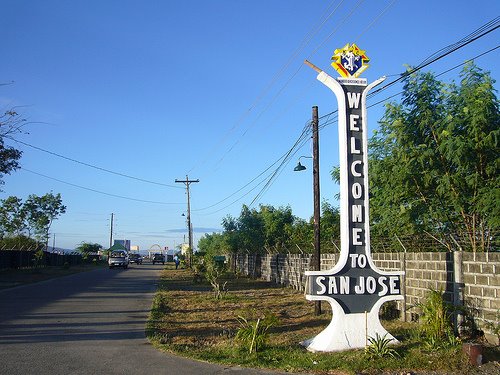
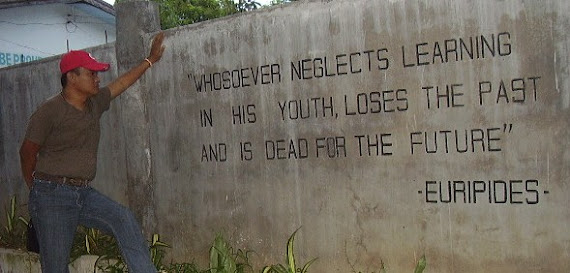
(* Pagbabahagi ng may-akda sa Mina at Minanang Panitikan ng Mindoro: Isang Tertulyang Pampanitikan noong ika- 26 ng Abril, 2018 sa Sikatuna Beach Hotel, San Roque II, San Jose, Occidental Mindoro. Larawang kuha ni Gng. Lhorie Moises)

Friday, April 27, 2018

Occidental Mindoro lass, Top 10 of the 2017 Bar Exams


She is the true beauty and brains Occidental Mindoro should be proud of.

Emma Ruby Aguilar, the 2011 Binibining San Jose made it to the Top Ten as tenth placer in the 2017 Bar Examinations. Aguilar, a graduate of University of Santo Tomas (UST) College of Civil Law, was born and raised in San Jose Occidental Mindoro. She was in Greece on an official travel when the result came out. She’s a nurse turned lawyer.

Her Facebook cover photo reads, “Dear God, I am placing 2018 in your hands.” Her FB post yesterday reads, “Still in awe for one of the biggest blessings God has given me! Thank you Lord for making me a lawyer (with a bonus) while we were on the plane from Istanbul to Greece. Literally and figuratively in cloud nine earlier!”  The news also came while her hometown is in the midst of its week-long fiesta celebration.

Aguilar was assigned in Sablayan, Occidental Mindoro in line with her short stint with the Department of Social Welfare and Development (DSWD)-Pantawid Pamilyang Pilipino Program after she finished Nursing also from UST, as cum laude. She later took up Civil Law. She garnered 88.40% in said examinations.

She is a grand daughter of former Regional Trial Court (RTC) judge Restituto Aguilar. Her father, Manny, is an engineer while her mother, Ruby, works in a bank.

The first ever Occidental Mindoro- born Bar Top Ten will take her oath on June 1 at the Philippine International Convention Center in Pasay City.

There were a total of 7,227 law graduates who were allowed to take the bar exams. The exams covered eight subjects: Political Law and Labor Law, Civil Law and Taxation, Mercantile Law and Criminal Law, Remedial Law and Legal Ethics and Practical Exercises.

---
(Photo: From Emma Ruby Aguilar’s Facebook page)


Tuesday, April 24, 2018

Fiesta is temporary, work must be permanent


On Labor Day, thousands or perhaps millions of workers will march on city streets to press for the ending of contractualization of labor. May 1, as I have pointed out time and again, falls on the Feast Day of my hometown’s patron, St. Joseph the Worker. The merriment appears to be endless like our working class’ demand to end contractualization commonly called as “endo”, slang for end-of-contract. The issue is not even part of political discourses in the whole non-industrial province of Occidental Mindoro much more mobilizations as such. The weeklong fiesta celebration starts today.

Endo just became the President Rodrigo R. Duterte’s presidential campaign promise showing that this administration who assured change remains under control of the capitalists. Philippines is controlled by the elite for the prominent legislators and politicians are also business tycoons and industry leaders demonstrating the link with wealth and power, politics and capital. The oligarchs remain strong and influential in this impoverished nation, then and now. What can one expect? Change, it appears, is still at the end of the dark tunnel.

The labor department’s DO 174 just institutionalized contractualization for it is a watered-down, weak and pro-capitalists order coming from the executive branch. The president tossed it to Congress for legislative action. Truth is, labor secretary Silvestre Bello III could easily end contractualization upon orders of his principal. It is crystal clear in Article 106 of the Labor Code that, “The Secretary of Labor and Employment may, by appropriate regulations, restrict or prohibit the contracting-out of labor to protect the rights of workers established under this Code.” For more than two decades, the labor department has adopted the weak approach and has chosen to restrict contracting arrangements instead of prohibiting “endo”. Since the beginning, the department’s method has been demonstrated to be a total letdown.

Truth to tell, festivities, like society in general, cannot exist without work. For work produces the vegetables and plants the farmers display and sell at the trade fair, the fishes and meats and all the food commodities that are abundant in the public market as the fiesta comes near. Work makes us taste and be nourished by the food that the service providers and caterers offer during banquets and boodle fights. Work makes the event organizers, make-up artists and dance instructors or choreographers in a beauty pageant show their crafts to gain respect. Work makes possible the aesthetic value of the floats, stages and all the physical preparations in all the fiesta’s activity venues. Let the contractual employees and the job orders of a certain local government unit and private companies not work in preparation and during fiestas, what kind of fiesta we will have?  For labor is an activity of a human person, physical and intellectual where s/he produces something different for perfection, to say the least, achievements. Work is dynamic and cannot be static. Work is a right and not just a privilege. Work must be permanent and not just temporary.

This blog entry is a humble tribute to those lowly clerks and employees at the Gaisano Mall, Jollibee and Mang Inasal and all the business establishments in San Jose. Including the kasambahays, the labanderas, the security guards, job orders and casual employees of the government especially those who are under the fangs and claws of contractualization. How many San Jose Fiestas will come before they finally enjoy the security of tenure, the living wage and all other rights assured by the Constitution?

This is the very day where the Latin words ora and labora are subdued by festivus. Many roamed in the streets for the grand festival but only a few hears novena masses honoring in prayers their patron saint. A time when only few Catholic workers are aware that Joseph is their patron saint, of the working class and the workers in general.

The existence of human being is for lasting work for creating what is valuable, useful, beneficial, noble, decent and beautiful, 24/7 and this can be truly manifested if the government, especially the executive branch, act on the end of the “endo” now!

Contractualization is the modern-day social leukemia creeping at the very veins of our society.  There is great deal of injustice arrogated by the elite and the value of work is adulterated seriously by way of contractualization of labor. But this reality can be traced back to the Industrial Revolution of yore where work has been reduced to mere commodity or merchandise, bought by the capitalists at the cheapest price and can be discarded when no longer needed like a used adult diaper. It appears that elite globalization or contractualization in particular, is anchored on this reef. Nonetheless, our work should not be something external or alien to ourselves.

Joseph, the foster parent of Jesus, is a Jewish carpenter, ergo, a laborer. Joseph, in nurturing Jesus throughout His years, reminds us that work is naturally inter-related with the work of the Divine and be given meaning through faith. Like Joseph’s parenting, work is doing something for someone else. And in Joseph's case, it is God's.We work not only for ourselves but also for others. We need to honor Joseph and the social class where he belong.

Truly I say to you, Fiesta is a fleeting thing while the dignity of labor isn’t. So, end "endo" now!
--------

Photo: GMA Network

Tuesday, April 3, 2018

Decorum on Colorum: The Passenger Vans in Occidental Mindoro, Part 2


Contrary to reports, it is not true that the Land Transportation and Regulatory Board or LTFRB is yet to receive any applications for franchise from van operators operating in the whole province now and in the past few years. The application of a certain van transport group had been processed since 2014, as I have stated in my previous blog entry. Unless if the LTFRB already considered all the applications null and void.

It appears that the LTFRB is painting a wrong picture here and some officials easily believe them.

As early as January 21, 2014, Mayor Eduardo B. Gadiano wrote to Atty. Wilson M. Gines, chair of the LTFRB, thru Atty. Roberto D. Peig, director for Region IV. In the letter, Gadiano endorses the franchise application of Mindoro Aircon Van Transport Cooperative, Inc. (MATSCOOP) to operate via San Jose, Occidental Mindoro to Abra de Ilog Port. Also in August 5, 2014, Gov. Mario Gene J. Mendiola made the same endorsement to same authorities and bearing the same prayer.

Both Gadiano and Mendiola cited the benefits of immediate release of the request for franchise of said cooperative, saying that it would contribute largely to progress and development of the province. Despite of this reality, the LTFRB then turned down the request. In the letter dated 19 December 2014, Sherielysse R. Bonifacio, DOTr’s assistant secretary for planning and finance said that “the proposed route of operation is currently served by existing transport services.” Apparently the mentioned “existing transport services” are the bus companies operating in Occidental Mindoro and one of them is Dimple Star Transport. The LTFRB seemingly has a moratorium issuing such franchise then. I just do not know.

As of this moment, only buses are insufficiently catering the needs of the commuters all over the province. With the massive crackdown against colorum vans, it is the general public that suffers the most. There are also reports of some negligence of bus companies coming from passengers especially those who are taking the Manila-OCM route and vice-versa. 

The MATSCOOP was issued by a Certificate of Accreditation by DOTC’s Office of Transport Cooperatives pursuant to Board Resolution No. 2013-09-04. MATSCO was represented by Mr. Camberlen F. Jimenez, a resident of Mamburao where anyone could fact-check the all the data I have presented here.

Not only that, seriously responding to the problem, the Sangguniang Panlalawigan headed by Vice-Governor Peter J. Alfaro approved Resolution No. 191, S. 2014, which is authored by SP Antonio A. Rebong, Jr., chair of the transportation and communication committee of the provincial board, asking for the same plea before the LTFRB. In short, there are transport groups, specifically passenger vans, who had been into intent of getting their franchise. Unless of course if the LTFRB already dumped all their previous requests.

The LTFRB and the concerned LGUs must hurry the tedious processes of finalizing the province’s Public Transport Route Plan (PTRP) and the consequent application (or re-application?) of all the public utility vehicles operating in the province as per the Omnibus Franchising Guidelines of the DOTr or DO 2017-011. 

In outright believing that there are no existing application for franchising, we are killing all our hopes for an inclusive, responsive and progressive transport industry in our province along with other economic gains the industry could bring to us. The solution must be win-win. Anything less is unacceptable! 

Allow me to reiterate what I have said in my previous blog entry, aside from chasing or running against colorum vans in my province, our local leaders must help these transport organizations in cutting down the fees for transport franchises and speed up its application process.

There are applications, believe me. But that depends on how they look at them now. I am a commuter, by the way ...

-----------

elnidoparadise.com

Wednesday, March 28, 2018

It’s the President’s Birthday Today


It’s the 73rd birthday today of President Rodrigo R. Duterte. According to his special assistant Bong Go, simple prayer would make the president "very happy" on his natal day. Certainly, the Philippine’s most powerful human equally needs a powerful prayer from a holy person like St. Theresa of Avila.

Theresa is a controversial figure, not unlike Digong. The people of her time thought that the Spanish nun is crazy because of her visions and locutions. Theresa tried to ward it off for she was frightened she could be truly under an evil spell or something diabolical in nature.

Digong is brave and despite of his usual cursing and indecency he is a prayerful man. In fact, he is a product of Catholic education. When he won the presidency, the first thing he did was to pray near the tomb of his late mother. It was a very solemn, thankful and earnest prayer.  Truth to tell, over Facebook, the president has its own prayer warriors.

When Theresa of Avila was so disturbed, she put herself under spiritual guidance of the Dominican and the Jesuit priests who eventually discerned that all of her graphic or felt experiences were coming from God. She had a vision of hell and made her realize that she had to save souls.

Whenever he is criticized, Digong is verbally countering. He put himself away from International Criminal Court or ICC after the Court receives cases alleging that Philippine security forces have committed crimes against humanity but still believing that God is behind him in this deadly campaign. He had a vision of heaven: a crime free society where drug personalities are all annihilated.

Teresa wrote a remarkable credible spiritual autobiography of her experiences. Digong remarkably and incredibly jokes about everything in the presidential podium. They both have extraordinary visions in very a contrasting way. But he dipped his hand into the dish (Today's gospel, Holy Wednesday or Spy Wednesday, by the way is Matthew 26: 14-25) while she didn't.  

While she is the patron saint of Sta. Teresa in Magsaysay, Occidental Mindoro, he is the worldly patron of the DDS.

And one of the rare things in common between President Rodrigo Duterte and St. Theresa of Avila is their birthday which is today, March 28.

---------

(Photo: hidayatullah.com

Monday, March 26, 2018

Decorum on Colorum: The Passenger Vans in Occidental Mindoro


We could not have an exact number of illegal passenger vans operating in the province today. They have been regular features of our main throroughfares in the last ten years or so replacing the jeepneys and the local buses plying the Abra de Ilog and San Jose routes. But aside from its unlawful operation (as far as the Land Transportation Franchising and Regulatory Board or LTFRB is concerned) this transport system is serving the commuters in general. The students, employees, the Mangyans, all people from all walks of life actually. But of course, there are accidents happening every now and then involving these vans but these speedy little vans are still the most receptive public transport system in Occidental Mindoro.

“Colorum” is a slang term used to describe a vehicle soliciting passengers without expressed authority from LTFRB while “decorum” on the other hand means a “behavior in keeping with good taste and propriety.”

In his recent visit to Sablayan in the aftermath of an accident last March 20, 2018 where at least 19 people died and 21 others were hurt when a Dimple Star Bus with plate number # TYU 708 with body number 7805 fell into the railing of a bridge in Patrick Pass, near the boundary of Brgy. San Agustin and Brgy. Batong-Buhay in this town, President Rodrigo R. Duterte ordered a massive crackdown of all colorum passenger vans in the land.

Both the so-called grand terminals in San Jose and Sablayan cater colorum vans. Through their respective legally-operating terminals, local governments are accommodating them or at least mum about the situation of colorum-ness. The Cooperative Development Authority (CDA) also considered some of them as legitimate. One cannot blame the LGUs for such inaction for they deeply know the importance of the transport system to the economy, not to mention its social importance. Minus the isolated cases of accidents, the transport system serves well the general public. 

In July 2016, Rep. Jesulito Manalo of ANGKLA Party-list re-filed a crazy bill penalizing as criminals the persons found to be operating or owning motor vehicles identified as colorum. Under the bill, colorum is classified six different ways including a duly registered and franchised unit plying a new route without permit. As a criminal offense, the operator and/or owner is liable under the Revised Penal Code and will be fined no less than Php 200,000 but not more than Php 1 million. That is if the bill is approved.

This criminalization of colorum came almost two years before the president issued its total crackdown announced in my home province just last week. Some think that this is a holistic approach to the problem and would finally eradicate the proliferation of such operations all over the land. His supporters lauded the president for this. In 2007, there are around 200,000 colorum public utility vans in the Philippines, according to LTFRB.  

But instead of cracking down, why not legalization? Meaning, officials have to make them have a cheaper and easy access to franchising of said public utility vehicles. The LTFRB may draft rules and regulations for legalizing or registering the colorum vans that have been illegally plying routes as PUVs.  They should be also be given an installment payment scheme.

This will also benefit the riding public in general because their usual patrons like me will be covered by insurance in case of accident.  Aside from trailing and hunting down the colorums, the LTFRB must alongside create programs aimed at ensuring the safety of passengers of the vans and other public utility vehicles. Aside from cracking them down, or being poured with gasoline and put to be set in fire (as what the president suggested) the LTFRB should also establish a satellite office here in Occidental Mindoro and facilitate the easy access of such licensing requirements for the so-called colorum vans.

Actually, many of the van operators been applying for their franchise since 2014 and already a big amount of money they spent in its processing but to no avail. The red tape in franchising must also be stopped. This should be aired is a meeting with LTFRB, if in case there will be one.

Meanwhile, every body,- the dispatchers, drivers and conductors, who are in the public van transport business in Occidental Mindoro are gravely affected by this closure. Including the families they need to feed plus the operators who are still paying off loans for purchasing their units. In the very peak season of the business, the opportunity for a more income was snatched from them. 

Instead of banning the vans in our main highways and bolstering the present crackdown, the LTFRB, the Land Transportation Office and other agencies of the Department of Transportation and Communications must lobby for amendments to the Public Services Law, or Commonwealth Act 1936, to meet the present realities in public transport.

To reiterate, the Duterte administration, instead of chasing or running against colorum vans in my province, he and the concerned offices under him must cut down the fees for transport franchises and speed up its application process. There must be a LTFRB express lane for this right here in our province. In addressing major highway-related irregularities, the law enforcers assigned to the job regularly be on the street like the PNP Highway Patrol Group.

I am more inclined to help my people rather than big transport companies and capitalists outside of my province. The local transport business helps the local revenue for it will just circulate around the province while in the case of big transport corporations based elsewhere, our money is siphoned from us. This is not an inclusive growth right from my lenses and senses.

This is the proper decorum on colorum to me…

----------

(Photo: Heraldion V. Manzano)


Wednesday, March 21, 2018

Dimple Star Strikes Again!


In July 2013, I lost a close friend when the Dimple Star bus going to Manila from San Jose flipped on the side of the road in Bongabong, Oriental Mindoro. The driver of the bus allegedly lost control of the vehicle as it was a rainy night and the road was slippery. The friend I am mentioning was Sister Myrna Suarez, the only fatality, a member of the religious congregation Daughters of Charity of St. Vincent de Paul. Sr. Myrna was on her way to Manila to discuss with her religious superiors the concerns of the Taubuid Mangyan tribal community with whom she worked in Sitio Balangabong, Brgy. Malpalon, Calintan, Occidental Mindoro.

October 2014. A Dimple Star from San Jose, Mindoro with plate number TYS 454 collided with a 10-wheeler truck along the Southern Tagalog Arterial Road (STAR) Tollway in Lipa City, leaving two people dead and 49 others injured. 

June 2017. Fifteen passengers of a Dimple Bus en route to San Jose town in Occidental Mindoro from Calapan were injured after the driver lost control of the vehicle, which served off the national road in Brgy. Nicolas in Magsaysay, according to reports.

And only last night, March 20, 2018, at least 19 people died and 21 others were hurt when, again, a Dimple Star Bus with plate number # TYU 708 with body number 7805 operating in Occidental Mindoro fell into the railing of a bridge in Patrick Pass, near the boundary of Brgy. San Agustin and Brgy. Batong-Buhay in Sablayan town of this province. The bus was traveling from San Jose going to Manila, contrary to the initial report of a Manila-based media network.

In an interview over GMA News as of 8:00AM today, LTFRB Board Member Aileen Lizada said that the Board is now conducting a franchise verification of the bus company. The action is aimed at determining how many units should be covered by the suspension order. She further added that it usually lasts about 30 days upon receipt of the order.


Arcris D. Canillo of Sablayan LDRRMO released the list of the fatalities early today. The list includes Rudy Bacani, Teresita Dupagan, Elizabeth Dela Cruz, Arno Panganiban, Marciano Ramos, Verginia Ramos, Erwin Ebienga, Lolita Bayle, Lea Borlado, Anselma Gomez, Gilbert Vanguargia Jr., Robert Jose, Gloria Gabuco, Geraldine Tarcena, Cely Pama, Nellie Alvaro, Rodolfo Santiago and Percival Flores. 

The victims were immediately rushed to San Sebastian District Hospital in Sablayan and Mamburao District Hospital. According to Canillo, the bus has around 40 passengers. 

Those injured are Alex Hernandez, Asuela Azula, Normina Lancian, Angela Bayle, Vanessa Bayle, Darwin Robles, John Harvey Perlas, Hanila Bermeo, Von Bayon, Khiera Mae Tulaylay, Raffy Acosta, Jess Driza, Kristine De Jesus, Brandon Perlas, Ace Tulaylay, Madelyn Tulaylay, Allan Sanchez, Mary Jane Dawis Caballes, Jessica Odena and Byron Hugo Burlado.

In the October 2014 incident, the Land Transportation Franchising and Regulatory Board (LTFRB) only suspended 18 units of Dimple Star for the period of just 30 days. It’s high time to investigate the bus company and our local leaders must push for its franchise’s revocation, if deemed necessary.

This bus company is already killing, though unintentionally, the citizens it is supposed to serve. They must compensate the victims the soonest possible time.

The gory accounts coming from the rescuers, the medical authorities, witnesses and the survivors themselves need not be retold here. Certainly, this horrible accident will long be forgotten. As far I could remember, this is the most worst vehicle mishap in our province's history.

Today, I pray for the soul of my friend Sr. Myrna and of those who suffered or died due to Dimple Star’s reckless imprudence, then and now.

If unity can be invoked in festivities, we have to invoke it more in times of tragedy …

------
(Photo: Ben Sachez’ FB post)


Monday, March 19, 2018

On the Resignation of Bishop Palang


The news on Pope Francis’ recent acceptance of Bishop Antonio P. Palang’s resignation came to my knowledge last Sunday, 5th Sunday of Lent. The official Pontifical action was released by the Catholic Bishops Conference of the Philippines’ (CBCP) and though I am now away from organized religion, the news made me reflect for a while and uttered a prayer for the spiritually-confined 71-year old and sickly prelate who is my employer since he was ordained bishop in May 2002 until my separation from the diocese’s social action apostolate in 2012.  

In John 12:20-23, the gospel that day, Jesus speaks about the grain of wheat that must fall (resign?) to the ground for its eventual fruition. The almost rotten seeds kept in a jar for a very long time ought to reach its true destination, which is the soil, to be truly productive and relevant. With this latest development in our Local Church, big social challenge is ahead of her.

Complete. The road we aim to tread must be complete as the important and divine events of the Holy Week: Holy Thursday, Good Friday, Black Saturday and Easter Sunday. We cannot allow one occasion of holiness and mystery be left behind. It is written, “When anyone is united to Christ, there is a new world. The old order has gone and a new order has already begun” (2 Cor. 5:17) for God is not a God of burned things and ashes but of renewed things, as I have written some years back.

Bishop David William V. Antonio was officially installed February 12, 2016 as administrator of Apostolic Vicariate of San Jose and now reappointed by Pope Francis to take full charge of the local church as mandated by the Roman Pontiff until the seat for the Vicar Apostolic is occupied.

Three years ago, Bishop Palang gained attention in the US when he issued an official statement in defense of his priest, Fr. Fernando Suarez, from a memorandum of the United States Conference of Catholic Bishops or USCCB alarming their local dioceses over Suarez’ healing masses there. The prelate protected him against the alleged “damaged caused to the reputation” of Fr. Suarez by the Conference in a statement he released April 20, 2015.

The vicariate’s pastoral nets must again cast into the deep sea of pressing needs, immediate concerns and urgent social questions via her pastoral and administrative thrusts. The seed’s falling is just a transition to a new life as emphasized in yesterday’s gospel. God aspire for a truly complete new life for our Church, His seed.

The Swiss critic and theologian Alexandre Rodolphe Vinet said centuries ago: “Resignation is the courage of Christian sorrow.” It is, indeed in this case...

--------

(Photo: Roderick Ignacio FB Account)


References:


Wednesday, March 14, 2018

Rest Now, Ka Bise


Rodolfo “Ka Bise” Acebes, the paraplegic author and local historian is now gone. He, to me, as far as writing local history is concerned, is a role model. His foosteps must be followed, so to speak.

I had a last chat with Ka Bise last May 2016 asking me to help him spread the news about the launching of his last book, “Mindoro: The Stepping Stone”. The milestone started when Ka Bise received a letter from Lucky Guillermo, top honcho of Spyron AV Manila, a national creative production company that has close partnership with (Douglas) MacArthur Memorial, one of the auspices of City of Norfolk, VA’s Department of Cultural Facilities, Arts and Entertainment. Guillermo’s letter contains this remarkable opening message: “Your book is definitely a good material in history. From a perspective, students and followers of World War II will have a fresh treat from your book.”  Acebes already published over half a dozen works to his credit and in the Introduction of “Stories of 100 Families”, he wrote, “People must remember the past. People should know that stories of the past, once impressed upon their memories, are indestructible.” These are the words, from the man who just left us, summing up his sterling achievements as a devotee of history that many of the influential residents failed to notice. Perhaps for one reason or another.

Ka Bise writes from his bed after that fatal accident in 1988 which paralyzed half of his body. In an interview for the Inquirer in 2008, Ka Bisi recalled, “After the accident, I went back to reading and writing to keep my sanity. I worked on a borrowed manual typewriter placed on top of three pillows on my right side.” He made more than two dozen of letters to the editors of various broadsheets and magazines. Maybe, just maybe, if he did not went through this trial, his writing potential would forever be imprisoned by his erstwhile happy-go-lucky attitude. He was with the National Bureau of Investigation (NBI) when the misfortune happened. Many lives were touched by the man as a writer, activist, paralegal and journo.  

As I have written in my tribute to him on his 61st birthday, Acebes’ reminded me of another great intellectual named Marcel Proust of France. Proust was asthmatic and dying and could write well only when bedridden. Ka Bise was my Bureau Chief at Mindoro Guardian in the late 90s and I still remember him lying in a lay half-suffocating in a room hazy with inhalation and his bedclothes serving as his desk. In our intimate moment way back then, he encouraged me to write a book.

Blaise Paschal and Lucretius too were at their best in writing their respective masterpieces and not eaten up by their severe illness, solitude and destitution. Such situation did not hinder these great men of science and prose to concentrate. They have special gifts that are easier to cherish than to describe. And we thank them all for their contributions to the world despite of their previous conditions when they are still alive. They are in no way forgotten.

And that includes Ka Bise…

-----

(Photo : Kenneth D. Pangilinan)

Wednesday, March 7, 2018

Is the spending for MIMAROPA-RAA 2018 lavish?


The 2017 health statistic shows that Occidental Mindoro is number 2 in the list of prevalence of malnutrition in MIMAROPA and yet, the province still come up with the money for a lavish hosting of a regional athletic meet. Well, meets like this need not be this extravagant or, pardon the word, wasteful.

The last time an event held in the province with this intensity is in 1970 and that was 48 years ago. True, this would boost local economy in a way and really an opportune time to put our province in the map. But these cannot be laid as excuses for such an excessive spending especially if our children, the fair hopes of our locality, are suffering from the debacle with regards to nutritional status.

As far as I know, the DepEd’s only main concern in each RAA holding, aside of course from the non-tangible development of youth in sports, is the safety of the athletes and delegates, the appropriateness and suitability of sports facilities and accommodation. The preparation, as others have observed, is more sumptuous than Palarong Pambansa, the national meet. The holding of RAAs provides an avenue for friendly competition that develops physically fit and upright individuals. It also serves as springboard in the development of desirable attitudes and values among the youth to become productive, responsible and worthy leaders and citizens of our country. So, the grandeur of the welcome and closing ceremonies are supposedly just optional and not the main menu.   

In 2016, the Municipality of Sablayan lost its bid to host the 2017 RAA to Municipality of Brooke’s Point in Palawan. Prior to the bidding, the municipality already put into place major requirements, especially sports facilities and physical structures. According to certain DepEd policy, hosting of a municipality in any province requires first the official nod of its governor and the municipality’s Letter of Intent must be endorsed by him/her. That is why Sablayan didn’t get it the first time. The following year, while the games are unfolding in Brooke’s Point, the MIMAROPA RAA Meet Board again convened for the bidding. Instead of endorsing Municipality of Sablayan’s second bid, the governor bid for the whole Province of Occidental Mindoro.

So, both the Municipality of Sablayan and the Province of Occidental Mindoro joined the process as competitors. There it was voted and approved by the Board that the 2018 RAA will be held in a Municipality in Occidental Mindoro (and later the provincial officials decided to hold it in San Jose). For the year 2019, an election year, the Municipality of Sablayan was officially selected to host the RAA.  Sablayan is next in line, as the song goes.   
  
I have heard from the grapevine that an estimated total amount of Php 17,856, 250.00 is allocated by the Provincial Government for the event broken down as follows: Opening Program and Grand Parade, Welcome Night, Solidarity Meetings, Unity Night, Closing Program, Incident Command System, Sports Equipment and Coordinators’ Meeting. Not included, of course, is the financial allotment for the physical construction of sports facilities and the newly-constructed Occidental Mindoro Grandstand which is allegedly pegged at Php 27M. In DepEd’s DO 14, s. 1999 on the Austerity Measures in the Conduct of Sports Meets it is stated, “Austerity measures shall be observed in the conduct of sports meets in all levels. Ceremonies shall be in the simplest mode and format, with entertainment numbers included without additional costs.”  The Welcome Night alone has a budgetary requirement of Php 6.2M and the purchase of sports equipage is marked at Php 5M, the two largest cuts of the pie. I have no qualms about the latter for the equipments can be used in other sporting events. It's the former that wowed me!

Obviously, there was financial sharing pact among the Provincial Government, the Office of the Congressman and LGU-San Jose other than that from private donors or outsources like, maybe, Senator Loren Legarda, who happens to be the guest of honour to grace the occasion. Same assistance from said internal sources is expected next year since the future host municipality is also part of the province like San Jose.

Based on the data from the state of nutrition for MIMAROPA, Occidental Mindoro ranked 2nd in malnourishment. The province has a total of 3,440 pre-school children that are underweight; 1,175 pre-school children are severely underweight. The province’s total number of malnourished children is 4,698. In sum, Occidental Mindoro’s malnutrition prevalence rate is 83.03% and a malnourishment precedence rate of 7.71%.  Ranked 1st is Palawan. Palawan as a province never bid for RAA but Puerto Princesa and Brooke’s Point, all belong to Palawan, already hosted the regional meet.

After the RAA, a backlash in the public coffer for the rest of the year is imminent. The chunk of big money allotted to the meet could be more responsive if forestalled to address the malnutrition issue and other health issues in general like manpower resources for public hospitals especially health care professionals like nurses. Not to mention the job orders or JO personnel stationed in health care facilities whose salaries are always delayed. Not to mention the shortage of medicines in said hospices. With such a huge cut in the MOOE and other expenditures in the year's Annual Investment Program (AIP), our agony on health care will be prolonged. Also, every time an indigent child-patient dies in a public hospital, say, San Jose District Hospital, due to diseases attributable to malnutrition and was not given proper medicines and treatment, people will think how improvident the province’s accommodation of the 2018 RAA is. This is how I see it and I may be wrong.

To be fair to all, among us Filipinos, hospitality and simplicity are bi-polar values which can be negative or positive, healthy or unhealthy. Depending on how we see and weight things in a given time…

--------

(Photo: CJ Dangeros)


Tuesday, February 27, 2018

When “Demons” Meet at Lent


When the president joked (?), “shot her in the vagina,” did you know that the genitals of women victims of Maguindanao Massacre were shot and slashed? This is what I’ve learned from Commissioner Karen Dumpit of Commission of Human Rights (CHR) speaking before the delegates of the 18th National Convention of the Task Force Detainees of the Philippines (TFDP) at Arnold Janssen Spirituality Center in BF Homes, Quezon City last February 22-24, 2018.

Being a former worker of TFDP in Southern Tagalog way back in the early 90's as its human rights education regional program coordinator, I was chosen as one of the delegates to said convention. So, I took leave of absence from work going to the big city. Ms. Dumpit, by the way, is the same lady commissioner who once said in an interview that there is no need to “get into the quagmire of ridiculing other people just to make a point.”

As I have posted in my Facebook account, we gathered in this turbulent time when humane treatment to the poor and the drug addicts are considered treachery to the republic. The present government and the fanatics of the sitting president treated the human rights advocates in the same footing with the drug addicts, the terrorists and the criminals. They are considered as obstacles to whatever the former Davao City mayor wants to come about.

Long before he joked (?) to, “shoot her in the vagina,” he first encouraged the police to attack human rights groups and advocates like those gathered at Arnold Janssen Spirituality Center that day, by saying,  “If they are obstructing justice, you shoot them.” Indeed, there is also a war waged against the human rights defenders. His fanatics, his blood-thirsty on-line warriors or trolls, believe that both the drug dependents and the human rights (HR) defenders are worthy of brutal eradication. To them, we are not just “destabilizers” but “demons” coddling the drug addicts and criminals. Sadly, HR concepts and HR defenders are demonized today more than ever.

“Duterte is just a continuum of Marcos,” says Ellecer Carlos of In Defense of Human Rights and Dignity Movement (iDEFEND). Duterte effectively “demonized” human rights but under the present regime, change solely rested on violent peace and order framework while the president’s economic program is only continued from his predecessors. It is more accentuated on the market growth than human needs.  The choking-choking TRAIN is just an example! 

As emphasized by Ms. Bembet Madrid, Program Coordinator of Fastenopfer/Swiss Catholic Lenten Fund, TFDP is an activists’ organization already embedded in the Philippine social system. Established in 1974 by the Association of Major Religious Superiors of the Philipines or AMRSP, it joined hands with victims of human rights violations and their relatives, workers, students, and other church-people, peasants and other democratic forces in the country in the struggles for human rights and democracy during the dark years of Marcos’ Martial Law and onwards. TFDP existed past over 7 Philippine presidents already, from Marcos the idol, to his avid fan Duterte. TFDP, according to Ms. Madrid, continue to remain relevant by being firmly rooted to the signs of times and grounded on social realities.

The president is so adhered to his unwavering stance against human rights even before he was elected to power. His on-line mobs are all behind him ready to throw accusations at anyone who are asking humane treatment for criminals and drug addicts. Despite of this, human rights organizations and defenders must press on. The theme is challenging: Human Rights Under Fire: Human Rights Defenders Stand Our Ground; Defend the Rights of All."

Lent threatens the demon (take note that I omitted previous quotation marks on the word) or the demonic dominion in many ways. On the first Sunday of Lent, we hear the Gospel on the temptation of Christ in the desert. Let us learn how Christ triumphantly won over the demon:  He decisively rejects all of these temptations and reaffirms His unwavering will to follow the path set by the Father, without any compromise with sin or the world’s logic.

Jesus does not entertain the demon like what Eve did at the Garden of Eden. We must take refuge to God instead and answer with force and not to laugh at the demon’s “jokes”. We, the Christian HR defenders and advocates are faith-bound in the good fight that Paul taught us. This Lent, let us strengthen our spiritual armor (ref. Ephesians 6) and like Christ, we, “demons” in the eyes of king’s men, must be tried and tested for the sake of the realization of authentic change towards God’s Kingdom…

==========

Photo : Emmanuel C. Amistad, TFDP

Resources: