Tuesday, December 14, 2021

Mindoro Landing Re-told

At daybreak of December 15, 1944, Gen. Douglas McArthur ordered the attack on Mindoro Island and heavy guns started shelling the beaches of San Jose-Pandurucan to clear the way for a ground troop. The said landing of US and Allied forces marked the liberation of the island from enemy occupation during the war. I would like also to state that though the US forces landed in San Jose, the invasion or "liberation" was island-wide.

It was Mrs. Douglas MacArthur herself said in her letter to the late local historian Rodolfo M. Acebes dated Dec. 15, 1994, during the 50th anniversary of the Mindoro landing, that, "Mindoro became the key that unlocked the liberation of the Philippines." Gen. William Dunckel, leader of the Mindoro ground forces, constructed the airfields that served as the staging area for the allied forces' third and final landing in Lingayen Gulf, therefore that comment of the general’s widow.

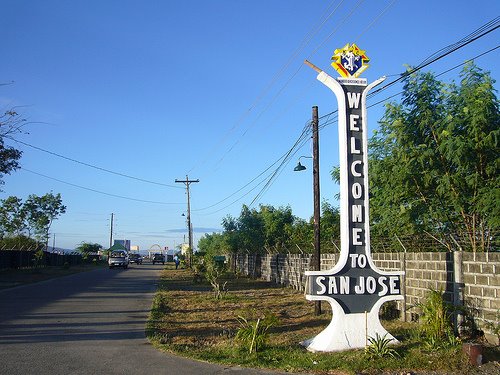
But in this era of historical distortion and fake news, such historical data seems not important at all. In this coming election, let us seek who among our politicians will truly strengthen our local history and will establish doable and serious plans on embracing our homegrown history and would not just lip-service them.  It appears that only a few know that the statue at the entrance of the San Jose Municipal Plaza and the commemorative marker at the Aroma Beach are very much related.

Landing Day

On that day, exactly 77 years ago today, heavy guns and artilleries begin bombarding the beaches of San Jose to clear the way for the attacking ground troops of the “liberators”. The attack was initiated by the ship USS Nashville, 8 destroyers, 31 landing crafts, 17 minesweepers, 143 small crafts, and 12 escort destroyers. Gen. McArthur’s order defied Pentagon’s stand that the Mindoro attack should be abolished because the US defense department believed that heavy Japanese forces are occupying the island and that could be risky for them to execute.

By 7 am,  11,780 soldiers under the 24th Infantry Division, 9,516 Army Air Force, and 5,901 service troops landed at the beach followed by Amphibious Forces carrying 16,500 soldiers with 27,600 tons of supplies. The battle was a big mismatch, so to speak. The Allied forces were too big for the enemy and the Japanese retreated to our boondocks. The only danger that distressed the GIs were the Kamikazee zero fighter planes that killed 120 Americans including Col. John Murtha, commander of the 310th Bombardment Wing when it crash-dived into USS Nashville. Later, a village in San Jose was named after the pilot who was killed in action at that time. The now known as San Jose Airport was originally constructed by the GIs and was named McGuire Airfield in honor of American 5th Air Force, Thomas McGuire who was killed in Negros before the Mindoro Landing. The present airport was a US airbase during the war and is still operational. 

MacArthur knew Mindoro well. To him, getting Mindoro meant dividing the Japanese forces in Luzon from those in Visayas and Mindanao, thus weakening the strength of the enemy. It had a solid ground where he wished to construct airfields for his assault in Luzon via Lingayen.

To MacArthur, with Mindoro in his hands, the island bastions of Iwo Jima and Okinawa stood between America and Japan. Militarily, the purpose of this landing was to secure sites for airstrips providing forward Air Corp bases to support later landings at Lingayen Gulf in Luzon. Without airfields closer to Manila it would be nearly impossible to seize and maintain air superiority in Luzon.  Airfields in San Jose would be much closer to the targets on the big island. San Jose, Mindoro is, roughly, 150 miles from Manila.

The Japanese force in Mindoro was not large and was eliminated in three days. The Army was assisted in the campaign by guerrillas from the local Filipinos from different towns of the island. They have already succeeded in various operations against the Japanese before the Americans came.

Faded Away

In the 1950s, according to my grandfather, December 15 each year is celebrated with a fiesta ambiance. Children from both private and public schools all over San Jose and the pioneering residents from all walks of life gather at the old San Jose Town Plaza to celebrate the Mindoro Landing or what they call “San Jose Liberation”. Musical bands are all over providing music to stage plays that depict the lives of our local town heroes like Fermin Baretto, Lawrence Cooper, Ramon Ruffy, Sofronio Untalan, and Vincent Fortune, Sr., and the rest of the southern Mindoro guerrillas. These are the stories that are indefatigably being re-told by our folks to their young children.

In the early 1960s, a statue is built at the entrance of the municipal compound to commemorate the historic event including the marker at the site of the landing at Aroma Beach some 2 kilometers away from the town hall.

Nobody remembered that the Mindoro Landing, aside from the establishment of the Philippine Milling or the Sugar Central in the 1920s, also paved the way for the looming progress of San Jose. With the arrival of the American liberation forces in Mindoro, UP professor, lawyer, and Romblon Assemblyman Gabriel Fabella, who himself came to San Jose to look for work, wrote: "Overnight, San Jose became a city, promising and very prosperous. Upon hearing this, almost everybody wanted to go to San Jose." Truth to tell, in this age of historical distortion and insensibleness, we, especially the youth, lost our sense of history and pride.

The celebrative commemorations were gone and the markers were watered down. There were initiatives both from the government and private sectors in the past, yes, but never been sustained. 

Bastions of Democracy

The motives are numerous, but this is the most important in a democratic society: grasp of history is the requirement of political intelligence that can be realized during elections. When we share our common memory, we share history. Without history, a society shares no common memory of what its core values are. History and Elections are integral parts of democracy. Sustainable and comprehensive programs on history must be on the bucket list of every politician when they face us during the forthcoming campaigns.

We need a bunch of politicians or local government leaders with the same passion when it comes to our local history. That is only a starting point, then our upcoming legislators need to initiate another public discussion openly and honestly on how to find other “hidden” historical places and how the existing sites like the Pre-Hispanic structures in Mangarin and the remnants of the Philippine Milling site in Central. 

It is sad to note that I am writing this in the midst of the Bangko Sentral ng Pilipinas' attempt to replace the portrait of World War II martyrs Vicente Lim, Josefa Llanes-Escoda, and Jose Abad Santos in our 1,000 peso bill and the removal by Philippine government of a female statue in Manila symbolizing "comfort women" during Japan's occupation. In case you do not know, the details on the death and the remains of Lim, Escoda, and Abad Santos are not known until today and this administration wants to replace them with a portrait of a bird. 

In the coming campaign period, why don’t we include this concern in history and raise fundamental questions to our candidates and see if they included them in their platform of government? Aside from other social issues, this will guide us if we are going to vote for a particular candidate or not. 

Or we will become a crash-landing community when it comes to political choices.

--------

 (Sources: https://corregidor.org/heritage_battalion/abbott/mindoro.html

https://corregidor.org/heritage_battalion/abbott/mindoro.html

https://manilastandard.net/mobile/article/166503

https://alchetron.com/Battle-of-Mindoro

https://newsinfo.inquirer.net/1526951/bsp-removal-of-heroes-on-p-1000-bill-questioned

//japan-forward.com/place-it-somewhere-else-duterte-says-of-uprooted-comfort-woman-statue-in-manila/

 Photo: pilipinasworldogs

Monday, December 6, 2021

SBM Diana Apigo-Tayag According to Oliver Roldan

There was a political satire comedy TV series called Veep that aired on HBO from 2012 to 2019 and one of the most unforgettable characters there was Gary Walsh. Gary is a personal aide to the equally fictitious Vice-President Selina Meyer, accompanying her at all times providing everything she immediately might need. America’s vice-president knows she’d crumble without him by her side.

Every political or public figure has a trusted man or woman around him or her. They are the close-in assistants taking care of various tasks for his/her principal. They undertake research, administrative support, and publicity duties rolled into one. They are somebody acting as political affairs chiefs providing constituency and personal assistance. During our days, we call them general factotum.

Vice-Gubernatorial aspirant and the incumbent Senior Provincial Board Member Diana C. Apigo-Tayag’s Gary Walsh is Oliver Roldan whom she met way back before she joined the contest for a seat in provincial board in 2019. This May 2022, Apigo-Tayag will be going against Abra De Ilog Mayor Eric Constantino.

Born on November 8, 1973, Bokal Diana came from a prominent family in Calintaan and San Jose. Diana’s parents are Eduardo Apigo, a former board member, and Antonieta “Neneth” Credo, a relative of the late Bishop Vicente Credo Manuel, SVD, DD, the first prelate of Occidental Mindoro. She is happily married to Mateo “Jeng” Tayag III, a businessman, the man in white shirt in the picture above.

If Gadiano-Sato is an inter-gender showdown for governor, so is the Tayag-Constantino face-off. This is a contest between a lawyer, a fiscal prosecutor for that matter, and a Certified Public Accountant but both businesspersons. Apigo-Tayag, a CPA by profession, is the owner of a known chain of gasoline stations and is involved in rice trading and milling, and trucking services in San Jose.  

Instead of directly interviewing said soon-to-be candidate for the province’s second-highest post, I opted to introduce Board Member Apigo-Tayag through her personal assistant Oliver Roldan.

How did you know your Ma’am Diana? When did you start working for her?

I met Bokal Diana way back in 2010 in a dancing studio for her favorite pastime is ballroom dancing. I was then a dance instructor as my part-time work. Nine years later, when I was informed that she is going to run for Board Member, I applied to be her assistant and she gladly accepted me. And so to speak, the rest is history.

What do you like most about her as a person? Her positive traits and characteristics?

She is very generous and a loving mother to her children, Sybil Madeline, Matthew Judd, and Benedict Jomari. She is very compassionate especially towards the less fortunate. Soft-spoken, humble, hard-working, and religious. She is a Marian devotee and has been active in various church projects and activities.

In your opinion, what qualities she possesses to be worthy of the vice-gubernatorial position?

She finished her Bachelor’s Degree in Accountancy at the Divine Word College of San Jose (DWCSJ). Despite having a child and being financially unstable, she finally graduated and passed the CPA board examination. In the first 3 months of her term as Senior Board Member, she served as acting vice-governor and was able to pass the 2020 Annual Budget. She recently received the excellence award for garnering the highest number of authored ordinances for 2019-2021. She is a good person, so effective and efficient and her work ethic is excellent. She has a heart of gold in public service.

Her most prominent legislation is the province’s Freedom of Information Ordinance and it manifests her adherence to such fundamental right. Leadership-wise, she is the Former Champion President of the Rotary Club of San Jose and Former Regent of the Daughters of Mary Immaculate-Mina de Oro Circle. She has her father behind her who is an experienced politician giving her pointers and pieces of advice. She also enrolled at the National College of Public Administration & Governance (NCPAG) and she gained the necessary professional expertise to deal with public policy issues, executive and administrative development, and the challenges of governance.

More importantly, Madam Diana, more than ever is now very ready to face the challenges of being the presiding officer of the provincial august body and be the province’s chief legislator. 

What are her dreams and aspirations for Occidental Mindoro and its people as she usually tells you and the rest of her staff?

Her dreams and aspirations for her province are a corrupt-free government as evidenced by her first-ever ordinance for freedom of information. She believes in bringing public service to the people. She wants a government that is mula sa tao, para sa tao.

Your most unforgettable anecdote about her?

During the campaigns in 2019 in Iling Island together with then gubernatorial candidate Ed Gadiano, we happened to meet a middle-aged indigent man making a casket for her pregnant wife who died because he was not able to bring her to the hospital in mainland San Jose that night due to the absence of a motorized banca that could transport his dying wife to a hospital across hostile waters.

I witnessed how Bokal Diana broke down to tears empathizing with the man and his little children. This sad incident and scenario moved her and Gov. Ed to include in their campaign the provision of sea ambulances for Iling and the rest of the island barangays and towns of the province.

(Click HERE for the separate story on the sea ambulances.)

But she is not all serious. She always burst into laughter over little things. Be it an awkward situation like how we nearly fell in a tricycle or my loud snoring every time I sleep in the van after a campaign sortie.

This is how my online interview ended as I realized that without Oliver, in one way or another, the veegee aspirant’s everyday chore would be difficult for they are like the fictitious Vice-President Selina Mayer and Gary Walsh, her personal assistant.

-----

(Photo: Oliver Roldan)


Sunday, December 5, 2021

Gov. Ed Gadiano and the “Sea Ambulances”

For 71 years of Occidental Mindoro’s existence, no governor, or local official for that matter was able to come up with an idea of acquiring a boat of this kind for the geographically isolated islands in the province, to provide first response emergency assistance and services to areas that are remote surrounded by or those can speedily be accessed through a body of water.

Only Gov. Eduardo B. Gadiano prioritized and realized the importance of such a life-saving vehicle. The words “sea ambulances” are emblazoned in their hulls but they are technically rescue or first responder boats or patient transport water vehicles. Four vehicles of this kind were recently purchased by the provincial government for such purposes including other health issues related to the pandemic.

The vehicles are placed under the management and supervision of the Provincial Disaster Risk Reduction and Management Office (PDRRMO). According to June Lee, the governor’s executive assistant for SAMARICA Area, the boats were dispersed in the municipalities of San Jose, Looc, Lubang, and Abra De Ilog-Paluan. These municipalities have coastal communities that cannot easily be reached by conventional ground vehicles. They will operate on a 24/7 basis and are part of the emergency response unit of the PDRRMO. This is part of the fulfillment of Gadiano’s campaign promise to the people when he runs for governor barely three years ago. (Well, this is practical, cheaper, and more real than helicopters.)

“For many years, the residents of Iling and Ambulong islands here in San Jose, have needed access to such life-saving transportation. It is the answer and the fast way to deliver and transport patients to San Jose District Hospital (SJDH) and any other health facilities or hospitals on the mainland. This can also deliver an effective rescue vessel and can act as a temporary sea clinic that can provide an immediate medical response to victims in need of emergency care,” Lee emphasized. Although far to be compared to medically fully-equipped sea ambulances in other countries, in each unit there is first aid equipment along with ventilator and airway management apparatus aboard.

One of Gadiano’s trademarks as a chief executive is his enthusiasm for rendering basic health services. Admittedly, there are still things to be improved in this aspect as a rookie governor overseeing the province’s general health program.

In other developments, there is a massive vaccination program continuously rolled out by the PGO. In the recently-concluded 3-day National Vaccination Drive in the province, the Occidental Mindoro PHO reported that a total of 62,209 persons were jabbed hitting the total target of  54,000 individuals and acquiring the Total Percentage Success Rate of 115.20%.

Gov. Ed believes that quality basic social services truly empower the people to greater productivity that would result in a better quality of life. His health program can be summed up by the following these strategies: bring the government closer to the people, have a firm grasp and mutual definition of their current needs, and establish unparalleled cooperation among duty-bearers and right-holders and all the stakeholders in the health sector. 

Visionary and always inspired (hence his “Ganado” moniker) Gov. Ed believes that the right to health and safety are two of the most important frontline services that one could offer to his or her constituents.

Politics is analogous to a sea ambulance for it delivers those who struggle to live and it carries the weak and almost hopeless people even if it travels on hostile water.

----

(Photo: Jasper H. Francisco)

Friday, December 3, 2021

Cong. Sato shares the Artaban Story

I heard the lengthy Christmas message of Cong. Nene Ramirez-Sato over 92.1 One-FM on the morning of December 3, 2021, where she shared the story of Artaban, a fictional character. It would be better if her camp have a social media version of this to share with our millennials via any available apps. By the way, the radio station is managed by my former co-worker at DZYM and a personal friend, Ms. Lalaine Karangalan-Aban. Catch it. The station will be airing it again for sure.

What Cong. Nene shared is perhaps a synopsis of a 1985 TV movie titled The Fourth Wise Man directed by Michael Ray Rhodes. Lest we forget, it isn’t biblical but worth sharing or pondering upon especially now that Christmas is near. It is based on Henry van Dyke’s classic novel, The Story of the Other Wise Man (1895), a fictional story set in Biblical times told in moderately comic expressions.

Cong. Nene Sato tells us about a Magi named Artaban (played by Martin Sheen of the Apocalypse Now fame) who sees a sign in the heavens that he hopes will lead him and his faithful servant to the Messiah. Artaban takes with him three precious gifts to present to the Child on the Manger. For 33 years Artaban pursues Jesus, only to miss Him on every occasion.

Along the way, Artaban uses his gifts to help people in terrible need. He now has nothing to present to the Messiah when he finds Him. The story concludes on Easter Sunday as Artaban, old and dying, finally encounters the new King, bringing peace to his life. Like Artaban, we may all be hopeful in our quest to uplift this province and by doing so honor our true Master in Christ.

Only a few politicians know how to tell a story not realizing that we Filipinos are story-telling and story-listening people. The electorates love the storytellers, especially those telling positive stories. This trait is one of the reasons why Nene Sato perhaps stayed in public service for 33 years. At 67, she’s still an effective storyteller, orator, and communicator.

What Cong. Nene just shared (and still sharing) today over the radio is a quest story. A quest story is an adventurous journey undertaken by the protagonist of a tale. The main character usually meets with and overcomes a series of complications, returning in the end with the benefits of knowledge and experience from his or her quest. The retelling of the story of Artaban by Cong. Sato in a very inspiring manner is so timely as we are already in the time of Advent.

Neuro-economist Paul Zak’s laboratory studies show that people listening to a story with a melodramatic curve release more brain substances associated with understanding—and that, in turn, prompts more generosity, or if I may add, votes. A politician must be creative for storytelling is a creative as well as transforming endeavor. So are the citizens like us in general.

Politicians or not, voters or not, here at home or from far away land, we all have our own quest story to tell about our province and country. We aspire for something for the benefit of our people and keep on trying that we will eventually be able to deliver in the spirit of participative governance and a sense of community. These are the same reasons why I blog and tell stories about local politics and politicians in a personal capacity since 2008 even before I entered government service.

In telling and listening to stories, we discover something we could accomplish together but let us also remember that Occidental Mindoro with all its socio-political logjams, - the out of order public health approaches, deforestation, unstable power supply and distribution, the negative effects of the Rice Tariffication Law,- cannot be prospered by sharing stories alone. I am also addressing this to myself.

It is wrong to divorce the stories we articulate from how we act politically.

-----

 Photo: PR Team San Jose


Saturday, November 27, 2021

Beyond the Sato-Gadiano Showdown

In military parlance as well as in classic literature, this duel is called “single combat” but in politics and sports, it’s simply a “one-on-one” fight. In Homer’s epic poem Iliad for example, the duels between individual soldiers include those between Achilles and Hector. 

Except for a few instances, it was usually a duel or face-off between two men. Opponents who are cream of the crop, the titleholders of their sides. It’s also a showdown between the Liberal Party (LP) of Josephine Ramirez-Sato and Eduardo B. Gadiano’s Pederalismo ng Dugong Dakilang Samahan (PDDS).

Again, adhering to the dictum “The heart and soul of elections is an informed electorate”, I am writing this second blog entry on Occidental Mindoro election aspirants. (Kindly click THIS to read the first part of the series.)

Born on April 1, 1963, Gov. Ed was raised by a poor but industrious family of farmers in Rang-Ayan (now Brgy. Pag-Asa, Sablayan). His father is Prudencio “Puding” L. Gadiano an Ilocano who served as Barrio Captain of the place and his mother is Corazon Lopez Baltazar of Nueva Ecija.

Cong. Nene, on the other hand, was born in San Jose, also in Occidental Mindoro on April 29, 1954, and daughter of Pacifica Ylagan and the educator Mariano C. Ramirez, San Jose East District Supervisor of the Department of Education back then.

Although both were born in April, his zodiac sign is Aries and she is Taurus. He is 58 while she is 67.

Unlike Gov. Eduardo Gadiano’s phenomenal victory against Mario Gene Mendiola in 2019, this is an inter-gender tussle, though it is not his first-ever. He won the Sablayan mayoralty seat against Edna Mintu, wife of the former mayor in 2010, who later became his political ally.

The Hebrew Bible also includes a few accounts of single combat, the famous being David against Goliath. When Gadiano won against a seasoned political titan Mendiola, he was considered by many political observers as a giant slayer like the biblical David or the children’s book character named Jack.

But in Japan’s 14th-century Japanese literature, a lady Samurai named Tomoe Gozen is highlighted as one who defeated men in various battles. She was a remarkable swordswoman and a warrior worth a thousand. She slaughtered a ferocious male Samurai named Uchida Ieyoshi who attacked Tomoe but she swung her katana and cut him to death.

Not unlike Tomoe Gozen, Cong. Josephine Ramirez-Sato used to figuratively slay a bunch of men since her political baptism decades of decades ago, from Atty. Emil Villamar, Gov. Peter Medalla to Cong. Jose Villarosa, Damsy Malabanan, Father Ronilo Omanio, including Mayor Juan Sanchez in 2019. Thus, Cong. Nene is used to winning in inter-gender matches in the past.

Now that the candidacy of Adrian Gatdula, the third gubernatorial aspirant, according to my source, hangs in a balance apparently due to SOCE issues, the head-on one-on-one clash between Sato and Gadiano is surefire. Their face-off is certain as the sun will rise tomorrow.

Lady’s first.

Undefeated

Josephine Y. Ramirez first ventured into politics when she served as vice-governor from 1988 to 1992 of Gov. Peter Medalla Jr. She first won as governor in 1992 dethroning Medalla, her former ally, and served until 2001. Jose T. Villarosa was governor from 2001 to 2004, then the lady lawyer regained the top executive political position from 2004 to 2013. 

Before she entered politics in 1988, Ramirez (soon to be Sato) accomplished a program on Instructions of Lawyers-International Law and Taxation at Harvard University School of Law and in 1987 she completed her Urban Studies and Planning at Massachusetts Institute of Technology. Before that, she graduated with a political science degree from St Theresa’s College in 1973. She then attended the University of the Philippines College of Law, where she emerged among the top graduates of batch 1978.

Looking back, Sato was elected governor for three consecutive terms (1992–1995, 1995–1998, 1998–2001.) Then served her first term as congresswoman from 2001–2004. After Sato's first term as a congresswoman, she again served for three consecutive terms as governor of our beloved province (2004–2007, 2007–2010, 2010–2013). Then after her sixth term as governor, she has again elected as congresswoman of Occidental Mindoro, a seat she occupies to this very hour.

A report by certain Jan Escosio posted on INQUIRER.net last October 22, 2021, states, “Sato has been in public service for 33 years now, providing quality leadership rooted in experience, competence, dedication, compassion, and a sense of urgency to act in the best interest of the people of Occidental Mindoro.” 

Sato holds the record of being the lone representative from the province who became a member of the powerful Commission on Appointments (CA) not just once but twice — in the 17th (2016-19) and the 18th (2019-present) Congress.

For three decades and three years now, she is generally considered the most powerful and accomplished lady politician in Occidental Mindoro’s history. She’s never been defeated and holds the record as the undisputed champion in his entire political career. In one of her campaign discourses in the past, she said that the one who will beat her has not yet been born. 

Apparently, she has an unfinished business to settle.

Phenomenon

Eduardo B. Gadiano is the most accomplished politician yet, from Sablayan being voted to the position of a provincial governor. In the political history of Occidental Mindoro, he is the only politician from the ranks who was able to gain the gubernatorial post.

Indeed, he went down in the province’s history as the only barangay captain, and the only municipal councilor, and vice-mayor, as I have said, who eventually became governor. However, a feat that cannot be easily accomplished, especially nowadays, when political overstaying is rampant all over the country. It would probably take centuries before one could break such a feat.

He took up Bachelor of Science in Agricultural Engineering at Gregorio Araneta Foundation and Bachelor of Science in Industrial Management at the Pamantasan ng Lungsod ng Maynila.

Anybody who rigidly followed the political career of the province’s incumbent governor knows that he scaled the political ladder from the ranks and that makes him a political phenomenon. He was Punong Barangay in Brgy. Pag-Asa, Sablayan, his place of birth, from 1994-1998, then became the town’s municipal councilor from 1998-2001 and concluded his term. Next, he was elevated to vice-mayor, completing his full 3-year terms from 2001-2010. He was elected mayor, finishing his full three-year terms from 2010 to 2019.

Under Gadiano’s watch, Sablayan gained four Seal of Good Local Governance (SGLG) awards, a coveted national award bequeathed by no less than the Department of the Interior and Local Government or DILG. That was in 2011, 2015, 2017, and 2018, respectively. The DILG bestowed Sablayan’s fourth Seal of Local Good Governance in 2018 and just four other LGU-awardees in the MIMAROPA Region.

He believes that an elected official cannot unceasingly join the political fray forever. Gadiano is confident that politics cannot be bottomless as there is a limit to everything like the rubber band’s stretching ability. It is so fluid that anything could happen in the end.

From the looks of it, he wants to continue the change he has started after he took office barely three years ago.

Agriculture and Health

Our province has a land area of 5,851.09 square kilometers or 2,259.12 square miles. In the 2020 Census, it was determined that the population was 525,354. It comprises 11 municipalities and 164 villages or barangays. Let us just focus on these two major concerns: agriculture economy and community health. These two are the most important part of the political discussion involving the gubernatorial candidates as Election Day approaches, as far as this writer is concerned. Of course, one should not overlook other issues and concerns experienced by our people which were included by the politicians in their platforms.

Since Occidental Mindoro is an agricultural province majority involved in rice farming, the biggest black-eye confronting our farmers is the high cost of production due to escalation prices of farm inputs. Because of our deforested watersheds, shortage of irrigation became a nagging problem. Occidental Mindoro’s river systems are no longer capacitated to the needed volume of water to make irrigation possible. This situation is aggravated by the recent implementation of the Rice Tariffication Law by the national government. It is now progressively causing an increase in income poverty in the province according to the local farmer leaders themselves. Agriculture is still the provinces’ economic driver.

According to a study conducted in September 2014 by Rosa Mistica C. Ignacio, et. al, of Yonsei University, Wonju, Korea titled “Health Status of the Residents in Occidental Mindoro, Philippines: A Way to Make a Healthy Community”, Occidental Mindoro suffers from lack of health workers compared with the total population of each municipality. Not to mention the scarcity and the upgrading of medical facilities and equipment and other health necessities.

The study has this conclusion: “Socio-economic support will provide a good occupation or stable income to the villagers, which could meet the needs of each household, such as good education, healthy lifestyles, and good reproductive and environmental health. Health programs do not guarantee a healthy individual and a healthy society, but a combination of health programs and socioeconomic support can help in creating a healthy community.” And due to Mandanas Ruling which will initially be implemented next year, with additional revenues intended for LGUs, therefore, there is a dire need for a governor who is good in financial and human resource management.

By prioritizing agriculture economy and community health, social protection programs, employment diversification, and sustainable economic empowerment, sustainable and pro-poor tourism, infrastructure development, investment in agribusiness enterprises, nutrition and combating diseases, and disaster risk reduction and climate change adaptation by increasing resilience and decreasing vulnerabilities, to mention a few, would easily fall in its proper places.

It is imperative that these two concerns, among other things, should not be left out in the campaigns and should be our basis for whom to vote for governor come 2022. Weighing who among the two aspiring provincial heads has doable, practical, and responsive socio-economic support in the campaign promise or agenda with the people, is essential than cheap discussions stirred and fanned by gutless, passionate fandom opinions and rantings. People will also judge them both by the character of their propagandists.

This cannot be just a contest of commanding interests, personal, desperate, and cowardly attacks, sound bites, and social media hype. 

We will not only vote for them

Understandably during elections, everyone and everything is so focused and so concentrated on how to vote and/or get votes for certain candidates. This gubernatorial election isn’t necessarily only about Sato and Gadiano. Voting is participatory governance at its best.

When we become more aware of the importance of one vote, we gain a better appreciation that all our votes are not for the politicians, but God and the country. We do not vote only for politicians. We vote for the province, for our people, those living today, and those who will come after us. Ergo, we will vote for our children and children’s children and of course, ourselves.

---

(Photo: Gov. Ed Gadiano’s FB Page)

Thursday, November 18, 2021

Meet Our Congressional Aspirants

Never in the history of the province has that election for its lone congressional district is this crowded. As of today, among those who have filed are the former city treasurer, a successful businessman, and Rotarian, a lawyer daughter of a known political clan in the province, a controversial DPWH engineer, an incumbent Sangguniang Panlalawigan member, and the current vice-governor.

Here are the 6 registered HOR contenders that you need to know: Peter Alfaro, Manuel “Noli” Leycano, Josefino “Jojo” Melgar, Mark Philip Ramirez, Leody “Odie” Tarriela, and Mariliza “Bunny” Villarosa-Kalaw.

I am publishing this blog entry believing that the heart and soul of elections is an informed electorate. 

The guessing game is on!

Peter (PDP-Laban)

Peter J. Alfaro is the sitting vice-governor of the province. He had been in the local political groove since he was just 20 years old when he served as Sangguniang Kabataan (SK) president from 1993-1996 and a former successive three-termer Sangguniang Panlalawigan from 1998-2007. He was a protégé and close political ally of Congressman Josephine Ramirez-Sato but not chosen recently by their groupmates to be her successor in the HOR.

After his SK stint, Alfaro worked as Computer Operator – I and got employment from the Provincial Government of Occidental Mindoro from 1996-1998. During his tenure as an ordinary employee, he was able to learn the trade and was considered by many as worthy of the position because of his readiness and for his all time-presence in the province immersing with the people even in far-flung communities. His longtime experience as a local legislator is one of his winning edges in the forthcoming polls. He is already a household name in OCM politics. He once worked as Provincial Agriculturist that is why he banners environment and agriculture.

Alfaro finished his Master in Public Administration at Occidental Mindoro State College (OMSC), he also took the Licensure Examinations for Agriculturists and passed with a score rating of 82.83%. I just do not know how his former union or latest separation (at least on paper?) with his former patroness would play in his bid.

Noli (Partido Para sa Demokratikong Reporma)

Dr. Manuel “Noli” Leycano is the former treasurer of the City of Pasay and upon his retirement in September 2020, he launched an organization called KNL or Kilusang Nagmamalasakit sa Lalawigan as his wagon to move onward with his candidacy as a congressman. Leycano was the provincial treasurer of Laguna for 14 years before he took over Pasay’s treasury in April 2010. He took up a Bachelor of Arts in Commerce Major in Management at the Divine Word College of San Jose and later finished his Masters and Doctorate Degree in Public Administration at MLQU.

Leycano was a former president of PHALTRA or the Philippine Association of Local Treasurers and Assessors and was strongly elected by 2,000 out of 2,700 of its members nationwide. He is married for 43 years to Maria Teresa "Tess" Santos Boongaling, granddaughter of the late Mayor Juan G. Santos of San Jose.

Noli Leycano was born and raised in Brgy. Barahan, Sta. Cruz, Occidental Mindoro, and an up-and-coming businessman in the municipality and served as OIC treasurer of San Jose and was assigned in Calintaan for the same position for about 6 years and assistant treasurer in his hometown Sta. Cruz for 2 years. He is a brother to incumbent Mayor Meriam Leycano – Quijano of Sta. Cruz.

Jojo (Nationalist People’s Coalition)

Josefino “Jojo” Melgar was once district engineer of the Department of Public Works and Highway (DPWH) and known for distributing pandesal to residents to woo voters since early this year. This is what I know about him as of yet.

Philip (Liberal Party)

Board Member Mark Philip Ramirez is an incumbent member of the Provincial Board and a relative of his running-mate Congressman Josephine Ramirez-Sato who is an aspirant for governor. In his Twitter account, he described himself as, “A public servant and pro-active legislator at (sic) the Province of Occidental Mindoro.” My information about him is limited at this point.

Odie (Pederalismo ng Dugong Dakilang Samahan)

Leody “Odie” Tarriela is the President/CEO of three more companies, the Triple 8 Auto Seat Cover, Inc., JC Leonie Holdings Inc, and the Tarriela Agri-Aqua Ventures Corporation. He is the Vice President and Treasurer of DAKKI Classic Concept Inc., creator of quality vacuumed-packed pillows in the country.

Overwhelmingly chosen by 120 Rotary Clubs from Manila, Pasay, Cavite, and Occidental Mindoro, he is the first Rotarian from the Occidental Mindoro Area who was elected as Governor of District 3810 until he finished his term lately. He showed exemplary leadership in the said world-acclaimed organization and successfully led various programs and projects for Rotary International.

He completed his Elementary Education at Looc Central School and Secondary Education at Looc National High School in Occidental Mindoro. He finished his college education with the degree of Bachelor of Science in Commerce Major in Accounting at the Far Eastern University in Manila. After completing his degree, he started working as an Accountant and rose from the ranks to become an Accounting Manager and eventually as General Manager. He was a greenhorn in politics but he is expected to get high numbers in the two municipalities of Lubang and also garner big votes from the province’s municipalities in the north and elsewhere.

Bunny (Lakas-CMD)

Atty. Mariliza “Bunny” Villarosa-Kalaw is the eldest daughter of former Governor/Congressman Mayor Jose T. Villarosa and previous Deputy Speaker Ma. Amelita Calimbas-Villarosa. Her husband is Atty. Teodoro Kalaw IV from the lineage of Teodoro M. Kalaw and Senator Eva Estrada-Kalaw. She is a lawyer with an MPM from the National University of Singapore’s Lee Kwan Yew School of Public Policy, an MBM from the Asian Institute of Management, and Juris Doctor from Ateneo De Manila University. Working as chief of staff of her mother at Congress way back then, she's in a way familiar with what she aspires for.

Atty. Bunny believes that connectivity between towns is important. She said if elected, she will legislate a Mindoro Railway System to promote and increase and craft laws on education, governance, health care, agriculture, fisheries, tourism, and business.  

She is new to politics but JTV is out to support her. Atty. Bunny has her intact voting base she inherited from his politician parents. That is certain about her, as certain as her sweet smile and pretty face and she is the only rose among the thorns, by the way. And the only lawyer on the list.

Imperatives

It’s a tall task ahead of them all for reasons that we are still in the pandemic therefore there will be great changes in the campaigns. Already now, sure thing they are building personal relations and linkages, making a personal presence at their most important occasions or events, having a personal touch in every way conceivable.

As aiming to represent Occidental Mindoro in Congress, each one of them must understand community issues, problems, and challenges and think of legislations with national relevance other than delivering basic public services and providing local employment and means of livelihood and other oversight functions.

The campaign period is just around the corner and rightly so, they are now in the process of saying relevant things to the right audience, crafting every propaganda or persuasive activity to each class and specific group of voters. They are now grinding their axes to come up with good and viable issues and messages or narratives coming out when the campaign period starts.

Their work ahead

We voters and citizens should base our opinions and decisions on things we know about them but we must first remember that, among other things, let us use the lenses of character and capability when we vote for any of them in due time. So, happy hunting, but remember, we are voters, not fans!

Congress is a deliberative body so spot for a congressional candidate who can communicate well and can discuss and articulate burning issues of the day. Also, their ability or capacity to explain their stand and concerns for public debate is the main meat in having their authored legislation passed in Congress, if ever.

Though our 6 congressional aspirants don't know how the campaign will unfold, they're keeping their powder dry. I am sure of that.

----------

(Photo edit: John Wenfred Mercene)

Sources:

http://nanovio.blogspot.com/2021/01/ex-future-congressman-peter-alfaro.html

https://rotary3810ry20202021.org/our-governor/

https://lifestyle.inquirer.net/391046/women-in-politics-a-conversation-with-atty-mariliza-bunny-villarosa-kalaw/?fbclid=IwAR2yTkv2PkPzbU1wCScF3JZfWIhFJZ9ZqI2YjTUeW9gb6CsJy5CEjzFdi24


Tuesday, November 9, 2021

Dante Speaks

In line with the week-long celebration of the 71st founding anniversary of our province which will culminate this coming Monday, Vice-Mayor Dante C. Esteban of Calintaan tried to reflect on the Arawatan 2021 theme that reads, “Kulturang Pinagyayaman sa Kasalukuyang Panahon, Nagkakaisang Mindoreño Tayo ay Aahon,” (Culture Enriched in the Present, United Mindoreño We Will Rise Up).

The numerology number 71, by the way, is said to be fixated on the present reality accompanied by introspection and intuition and that could be our driving spirit in this celebration. But before incumbent Vice-Mayor Dante speaks on the province’s 71st founding anniversary, allow me to travel you first down memory lane.

Island’s disunion

The grandest event in Mindoro’s history after World War II was its division into two provinces by Republic Act 505. The Act was approved on June 13, 1950, by President Elpidio Quirino and was finally penned into law on November 15 that same year. The division of the two coasts gave birth to both Oriental and Occidental Mindoro.

The inaugural ceremony was held in Calapan wherein the formal transfer of all official functions did materialize. RA 505 is the fruition of HB No. 640 sponsored by the then lone district representative Cong. Raul T. Leuterio. That was 11 years before the seasoned politician Engr. Dante C. Esteban of Municipality of Calintaan was born in Aguas, Rizal on September 19, 1961. That was decades before my high school classmate Dante graduated at La Salle de Araneta in Malabon, finishing his BS in Agricultural Engineering, and tied knots with Miriam Abellera who gave birth to Kevin Dave, now a general practitioner- physician. The family owns the DMK gas station chain in town. DMK stands for Dante, Miriam, and Kevin.

Place of leeches

In 1894, the early settler of the settlement, from a few kilometers south, saw a woodland suitable for farming. The arable land was adjacent to two big lakes full of leeches during the wet season.  “Leech” in Tagalog is “linta” therefore the place of leeches in the vernacular is called “Calintaan”. This is according to local historian Rudy A. Candelario.

The people of Calintaan rallied to local officials of the province that their barrio is created as a municipality. When Congressman Pedro Medalla, Sr. was elected to the Philippine Congress, he filed a bill for the creation of the Municipality of Calintaan.  On June 18, 1966, under Republic Act No. 4732, it was separated from Sablayan and created as another municipality.

From 1995 to 2001, VM Dante, a Seventh-day Adventist, served his constituents in this gradually progressing town which he once dreamed of turning into a city-like status, and was proposed to change its name to San Miguel years ago but to no avail.

Dante’s dynamism

The youth’s dynamism runs in Dante’s blood and it fueled his significant stint as assistant administrator and at the same time PESO manager of City of Caloocan and Quezon City, and as legislative staff at the House of Representatives before he joined the local political fray in 1995. At present, he sits as a member of the National Board of Directors (BOD) of the prestigious Vice Mayors’ League of the Philippines or VMLP and vice-president of the league’s provincial chapter.

This hardworking and intelligent Ilocano has been serving as his beloved town’s chief lawmaker since 2016. During his recent watch at the height of the pandemic, VM Dante organized the so-called Bayanihan at Ambagan para sa Bayan benefitting the municipality’s frontline workers and health providers, the TODA members, and its single parents. In partnership with Gov. Eduardo B. Gadiano and the Provincial Government, Calintaan got the highest number of beneficiaries of DOLE’s TUPAD in the whole province pegged at 944 slots. This November, in cooperation with the Philippine Commission on the Urban Poor a Food and Health caravan in Calintaan will already be rolled-out. Around 70 units of water pumps were distributed by his administration as a post-harvest intervention to tillers owning rain-fed farms.

There are many legislative and oversight actions and functions of the man that cannot be contained in this write-up for lack of space but showed how Dante’s dynamism was experienced by his constituents and the municipality he aims to serve in the future as local chief executive. “As we move forward as an emerging municipality of the province, we are steadfast onward our determination for the realization of our dream,” he said, addressing his people. Yes, the mayoralty position is next to Dante’s pick.

Anniversary message

As a citizen of this province and in celebration of its 71st anniversary, VM Dante Esteban said that our journey tells a lot about our culture that reflects our faith and celebration of life even in these challenging times. Numerous dangers and risks are threatening our culture, but these could not make us silent and adamant in serving our people-constituents,” concludes the Calintaan mayoralty aspirant.

He believes that we continue to rise and survive the hardships in the last seven decades because of hard work and the people of Occidental Mindoro endured because they persevered.

“We have reached this far because culture plays an important role in our life, political life included. Not just by the fact that it drives and leads the people to their way of life but it is also the key to our identity,” quips the forward-looking dynamic, culture advocate leader-servant. 

True enough, taking a cue from this year’s anniversary theme, politics decides culture at the macro-level while culture decides politics at a micro-level. Understandably, for culture to change positively, politics must be changed in the same manner. 

Methinks.

Happy 71st one and all from VM Dante and this lowly storyteller of our local history.

----

(Photo: Office of the Vice-Mayor, Municipality of Calintaan)


Friday, November 5, 2021

Like Father, Like Sonny

The expression “like father, like son” is used to describe a son who takes after his father in some way, either in terms of appearance or behavior. But in the case of Santiago “Tiaging” Javier, Sr. and Santiago “Sonny” Javier Jr. of San Jose, it was an example where a public servant passed on the tradition to his son and namesake who followed his footstep in politics. In the political history of the town, the reality of having two politicians who share the same name is a rare phenomenon.

Their Mangarin origin

Based on many historical accounts, Mangarin is one of the oldest settlements in Mindoro, and in the 14th century, it was greatly considered the center of trade between the Chinese and the Mangyans, the first inhabitants of the island. The settlement first appeared in history in 1679, when friars from the Order of Augustinian Recollects "established" it.

It was the midpoint of the municipal government during the American occupation but when the municipality of San Jose was created in 1910, the seat of power was moved to Pandurucan where it is situated today.

Santiago “Tiaging” Javier Sr. grew up in a big but poor family before the war in that fishing and farming community in the southern tip of the municipality though he was born in Pandurucan-Central, the site of the then Philippine Milling Company or the Sugar Central, on June 25, 1927.

Tiaging shouldered the responsibilities of helping his parents and siblings. “Tatay had a challenging and difficult life but it was not a hindrance for him, instead he tried his very best to make out of it,” says Dette Javier- Haug of his late father who served as a member of the provincial board of Occidental Mindoro. Ms. Haug now resides in the City of Ulm in Germany.

At that time, the whole province is not yet divided into two provincial districts. Unlike today that there exist two districts: District 1 is composed of Looc, Lubang, Abra De Ilog, Paluan, Mamburao, Sta. Cruz and Sablayan while District 2 is made up of Calintaan, Rizal, San Jose, Magsaysay. Before, the candidates for the provincial council coming from San Jose for instance, as an “at-large” district, are elected by the voters from all of the municipalities of the province.

“The election of Tiaging to the provincial political seat can be attributed to his teacher wife who had a swarm of relatives from the province’s northern municipalities especially on the island of Lubang and Paluan. The former Remedios Villar, Tiaging’s wife, is part of the well-known and pioneering Tria clan of Occidental Mindoro,” says Jimmy “Usog” Dela Cruz, a former teacher and local media practitioner and a previous municipal councilor and a barrio-mate. Incidentally, Jimmy “Usog” already filed his certificate of candidacy, seeking to return to the legislative halls next year. Moreover, the late Mrs. Javier, or Meding to his coterie of friends, was in the teaching profession for many decades and became well-known in the academic sector. She even became district supervisor of the San Jose East District of the Department of Education and it is her birthday now, November 5, and she would have been 94 today.

Tiaging became the trailblazer in the place in such an accomplishment. Since then, this old place in Occidental Mindoro became a seedbed of local politicians like his brother Ulysses and his son Sonny. Ulysses Javier, past councilor, ex-barangay captain, and the erstwhile board member, will again try to come back to the provincial board next year. Aside from the Javiers, the other politicians from the place are brothers Polding and Jimmy “Usog” Dela Cruz, Nathan Cruz, the incumbent councilor Arnel Argame, and Warren Sales, councilor aspirant for the next local polls and Mangarin’s former barangay captain. Sonny was born there on Dec. 17, 1963.

Here comes the son

Santiago Jr. only entered politics years after his father retired as a provincial board member in the 90s. When his father is already ill and aging, his only son Santiago Jr. or Sonny, took the helm and managed their family farm in Mangarin and elsewhere. He is a mechanical engineer by profession but he opted to manage the Gessnec, their family enterprises, and a business landmark in downtown San Jose. It is one of the successfully managed establishments in town. But people from practically all the barrios know him as one toiling in the fields, a farmer. He is married to Aurora Javier (nee Corpuz) who gave birth to their four big boys. 

Politics came knocking on his door in 1997 when he was first elected as barangay kagawad of Labangan Poblacion where their ancestral house in the town proper is located. He is a two-termer barangay kagawad and served until 2013. SB Member Sonny Javier was first sworn into municipal office in 2013 and now completing his full three terms as councilor. He reached this far like his father due to his diligence and humility. When he was first elected to the municipal council, residents from a place called Arik-ik (now called Antipolo), the hilly part of Mangarin, were amazed how the lowly farmer they always saw in the field made it to the town’s legislative body.

At present, Konsehal Sonny chairs the Committee on Public Utilities, Transportation, and Facilities. His milestone legislations consist of ordinances and resolutions in line with his committee.

Ms. Haug further stressed, “Sonny is by nature so helpful and with a big heart. It hurts him to see our people suffering from natural calamities especially during the time of the pandemic.” To his siblings, friends, and constituents, Councilor Sonny is a man who truly values reputation, accomplishment coupled with fear and obedience to the Creator.

Education, above all

All of his sisters are supportive of him, be it in material and moral terms. Since Sonny’s early years in politics, his sister, Dr. Eva Javier Bansil, an obstetrician now residing in San Fernando, Pampanga, has continuously extended educational assistance to less fortunate but deserving pupils of Mangarin. Their parents always tell their children that the best help they could give is by helping the poor kids in their studies.

“As his children, we are so thankful, proud, and lucky to have an education. This is the priceless legacy our father left us,” Ms. Haug says in recollection of her old man. The education that we have, along with his example of displaying faith in God by keeping your family intact and by serving the needy. God, Family, and Community are the focal themes of the pursuit of education and faith as what their parents always reminded them. Dr. Bansil and her late husband Dr. Arce Bansil showed unconditional love by taking care of their tatay until he yielded to lingering illnesses on January 9, 2012.

­Vice-Mayor Aspirant

Without a doubt, Ms. Haug believes that Konsehal Sonny is trying his very best to make his father proud of him. Especially his pop’s humility and firmness. Like his dad Tiaging, Sonny is a man of the masses and does not speak ill of anybody. His father too was a man of peace and has never been involved or suspected in any violent confrontations.

Santiago Javier Sr. helped Santiago Javier Jr. shape a political conviction by the way he molds his son’s personality towards his sustaining and developing social awareness. According to Konsehal Sonny in one of our chats in the past, as a chief legislator, the vice-mayor needs to lead the law-making process for we need laws to facilitate, enforce, protect, and resolve conflict for the greater good, rather than to benefit the few. With that, the vice-mayor must have the utmost character and untainted name deserving to the role of a leader in lawmaking, he told me. He already had a short stint in the position when he was appointed as acting vice-mayor in 2019. He learned a lot from that shift, he added.

Sonny is very much like Tiaging not only because they share the same name or they are a father-and-son. They are both men of integrity and can easily mingle with people from all walks of life.

Councilor Sonny Javier already filed his Certificate of Candidacy (CoC) and is ready to face all the odds this coming 2022 elections as vice-mayor of his town of birth, San Jose. The town that gave him and his father a great reason to live and the equally great opportunity to serve.

----------

Photo: Dr. Tilmann Haug

Wednesday, November 3, 2021

All Souls’ Day and the Petition for the Cancellation of BBM's Candidacy

Yesterday, All Souls’ Day, which was declared by President Rodrigo Duterte as a Special Working Public Holiday, a group of petitioners from the ranks of political detainees, human rights, and medical organizations that opposed the Marcos dictatorship filed a petition to disqualify Ferdinand Marcos Jr. from running as president in the May 2022 elections.

The Petition to Cancel or Deny Due Course the Certificate of Candidacy of Ferdinand “Bongbong” Marcos Jr. under Section 78 concerning Section 74, Article IX of the Omnibus Election Code was filed with the Commission on Elections (COMELEC), the country’s supreme poll body.

Fr. Christian “Toots” Buenafe, O.Carm.  was one of the petitioners and said that Marcos’ Certificate of Candidacy (CoC) is full of false material representations claiming he was eligible to be a candidate for the upcoming national polls when in fact he is not. They claim that BBM is a convicted criminal, ergo, cannot be a candidate. For the record, Marcos was convicted by the Regional Trial Court of Quezon City in a July 27, 1995 Decision for his multiple failures to file income tax returns. Apparently, BBM did not pay his taxes for 4 years so it could be classified as tinted with moral turpitude.

Having been convicted by final judgment of a violation of the National Internal Revenue Code (NIRC), Marcos is perpetually disqualified from holding any public office, to vote, and to participate in any election as mandated under the NIRC, according to the Petition. The Petition emphasizes too that the crime is one involving moral turpitude since, among others, Marcos and his family refused and continue to refuse to pay to the Filipino people roughly PhP 203.8 Billion in estate taxes, inclusive of interests, surcharge, and other penalties.

Fr. Toots through his private message to me this morning said that he is praying that the COMELEC will listen to their appeal. He also told me that, “The petition to disqualify Marcos Jr. to hold any public office is a test of the rule of law.” The petitioners' lawyer is Theodore Te, a human rights lawyer from Free Legal Assistance Group or FLAG and former spox of the Supreme Court. 

This is a question of integrity and would be a burden and a challenge not only to Marcos Jr. but to the poll body itself and also the petitioners for there would be a tedious legal battle ahead of them. Fr. Toots signed the Petition in his capacity as chair of the Task Force Detainees of the Philippines (TFDP), a church-based organization headed before by Sister Mariani C. Dimaranan, a Catholic nun jailed and tortured by the despotic martial rule of Ferdinand Marcos, Sr. in 1973. The late Sister Mariani, considered a pioneer human rights defender in the land and our province mate, was born February 1, 1925, in Lubang, (Occidental) Mindoro.

A dark and uncertain legal tunnel is ahead of us in this case but one thing is certain: of all the 2022 presidential aspirants, only Marcos Jr. has been convicted in a tax evasion case in court.

My short reflection for these two junctures: All Souls Day then reinforces our longing for a more just and legally upright society and our determination to act and build a nation where truth prevails and the laws and justice are implemented to all without fear or favor, particularly those oppressed and victimized by injustice. Our fellow Filipinos who have died, like Sister Mariani, live beyond the reach of this political condition, but they provide a mirror for us to judge how we participate and get involved in earthly affairs, especially in politics.  

The petitioners lighted a candle yesterday in this light.

------

(Photo: Philippine Star)