Thursday, February 20, 2014

‘Di Lang Mangyan Ang May Buntot


Sa isang bahagi ng aking buhay ako ay nagkaroon din ng buntot. Hindi lang ako. Kayo rin na bumabasa ng blog entry na ito, minsan ay nagkaroon ka rin ng buntot (sa likod). Babae ka man o lalake.

Tanong ko sa sarili nang mapanood ko ang episode ng Kapuso Mo, Jessica Soho noong Sabado, ika-9 ng Pebrero sa GMA-7, bakit pumapatok  pa ang hoax na ito na noon pang 1900s nagsimula. Una, dapat ay malinawan natin na ang pangunahing ugat ng ganitong mga kuwento ng katarantaduhan patungkol sa mga Mangyan, o sa lahat ng mga indigenous peoples (IPs) o katutubo sa buong mundo, ay ang tila likas nating discriminatory attitude towards them at hindi natin pagiging culturally-sensitive. Kasama na ang paggalang sa kanilang mga karapatan, lalo na ang pagpapahalaga sa kanilang kultura. Hindi ko po sinasabing guilty dito ang nasabing TV show. In fact, mabuti naman at binigyan ng pagkakataon ang mga Alangan Mangyan na mailinaw na ito ay isang mito at likhang-isip lamang at gawa-gawaan ng mga sundalong Kano. Very informative, no doubt, ang KMJS.

Sa nasabing episode ng KMJS ay sinimulan sa pagtatampok sa isang 35-anyos na taga-India at nakatira sa Alipurdar na dahil sa kanyang 14 na pulgadang “buntot” ay sinamba at pinaniniwalaan na reincarnation umano siya ng kanilang diyos ng mga unggoy na si Hanuman. Siya ay si Chandre Oraon at lumabas ang balita noong nakaraang linggo lamang na mababasa natin DITO. Bago pa umutlaw ang pagkakaroon ng buntot ni Oraon, lumabas rin ang isang urban legend noong 1977 na ito umanong si Evonne Faye Goolagong, na isang babaeng tennis star mula sa Australia na umano ay may buntot din. Dangan kasi namang itong si Goolagong (sa tunog pa lang ng apelyido) ay galing sa pamilyang Australian Aboriginal mula sa tribong kung tawagin doon ay Wiradjuri. Ang kakatwang kuwento na ito ni Goolagong, marahil, ay mula sa kantiyaw ng mga tagahanga ng mga nasapawan niya noon sa nasabing laro na dominated ng mga hindi katutubo. Malakas pa kasi sa kanilang bansa noon ang diskriminasyon sa mga aboriginals.

Dito sa Pilipinas, matapos ang Spanish-American War, ang Estados Unidos ay nagpadala ng mga sundalo sa mga kagubatan ng Pilipinas upang magsiyasat sa mga likas-yamang isinuko sa kanila ng Espanya. Lumabas ang ulat sa Amerika na ang mga sundalong Kano ay nakasalubong umano ng isang Igorot na may buntot. Kinunan nila ito ng larawan at ginawan ng kung anu-anong kuwentong paniwalaan-dili. Ginawa pa ngang postcard ang kinuhang larawan na ipinagbili pa mismo ng mga Pilipinong taga-patag sa mga turistang Kano noon. Mismong tayong mga taga-patag ang unang nag-exploit nito para pagkakitaan. Doon unang pumutok sa buong mundo na ang mga katutubo natin ay may buntot. Kunsabagay, hanggang ngayon naman ay maami pa ring NGO na anila ay makatao at maka-Diyos ngunit pinagkikitaan lang ang mga katutubo.

Maraming mga mamamayan sa mundo, lalo na ang mga Kano, sa kuwento hanggang sa ito ay patulan ng United States National Museum na nagsagawa nga ng isang opisyal na imbestigasyon ukol dito. Sa lathalaing TheStraight Dope ni Cecil Adams na lumabas noong July 15, 1977 ay ganito niya ito ipinaliwanag matapos itong idineklarang peke : “Anthropologists speculated that the original confusion may have resulted from imperfect observation of Igorot rituals: one tribal dance required animal costumes, which were made, of course, complete with tails.” At nang lumabas ang kuwento tungkol sa buntot ni Chandre Oraon na taga-India na isa ring katutubo, kamakailan, muling nabuhay ang kuwentong bayang ito na may buntot nga ang mga katutubo sa Pilipinas.

Sa totoo lang, lahat tayo, tulad ng sinabi ko sa itaas, babae man o lalake, ay nagkaroon ng buntot. Ang lahat ng mga human embryo ay mayroong buntot na ang sukat ay about one-sixth of the size of the embryo itself. At habang ang embryo ay na-de-develop bilang isang fetus, ang ating buntot ay na-a-absorb ng patuloy na paglaki ng ating katawan. Dagdag pa ni Adams sa kanyang ginawang research: “Occasionally, a child is born with a "soft tail," described by one embryologist as containing "no vertebrae, but blood vessels, muscles, and nerves, of the same consistency …” Kitam. Maaaring ganoon nga ang totoong kuwento sa likod ng buntot ni Oraon.

Pero tiyak ko na ang pinagmulan ng kuwento ng mga “buntot” nina Goolagong at mga Mangyan at ng iba pang mga katutubo, aboriginals o indigenous peoples, ay may mahabang kawag ng pang-uuyam o pagmamaliit sa likod ng diskriminasyon sa kultura sa ating mga kapatid sa kabundukan….


------
(Photo: Barriodeoriente.com)

Wednesday, February 19, 2014

Mall But Terrible


I have heard from the grapevine that a mall will soon be open in Occidental Mindoro particularly in San Jose, the town where I was born some 624 full moons ago. I am not so excited about this news unlike the Gen-Xers over social networking sites. Development for me is not measured by the presence of malls, be it SM, Robinson or Gaisano, or any building for that matter but by positive figures in an instrument called Quality of Life Index (QLI). According to Wikipedia, QLI is, “…based on a method that links the results of subjective life-satisfaction surveys to the objective determinants of quality of life across countries.” It dwells on 9 factors to determine the score namely: health, family life, community life, material well being, political stability and security, climate and geography, job security, political freedom and gender equality of a certain municipality or country. If we performed well in all of these factors, this would be the true sign of development before any prominent physical economic barometer used by many like malls or gigantic commercial establishments are put into place.

We need malls but not yet. What we need initially is to pass through a QLI and consequently get a good QLI rating first. In our sister province particularly in its capital town of Calapan, numerous malls exist. First was Citimart followed by Robinsons (neo Calapan) and in 2012, Gaisano and Puregold became both operational. But unlike Oriental Mindoro, Occidental Mindoro is still short of important and stable public utilities which is first and foremost is the reliable source of power or electricity including transport facilities and other infrastructures like roads and bridges. Trust me, to shopping mall investors, with this prevailing reality, placing their investment here is foolishness. The province’s five seaports are doorways to neighboring provinces and regions. The people of Oriental Mindoro are united against any project detrimental to their environment that’s why farming will forever be their main livelihood next to tourism. Speaking of which, Puerto Galera is a huge revenue earner.

Compared to Oriental Mindoro, we are far behind in every aspect of QLI. We are politically unstable, culturally diverse, spiritually misguided and socially unaware and as a consequence, we are still economically flaccid.

What San Jose need at this point are not malls but projects and programs both in private and public spheres that would integrally answer those concerns and factors rather than, again, malls that would only siphoned money from the pockets of the masses, the fishers and the farmers. Mall owners and capitalists are channels of “side effects” of the dominant hyper consumerist culture. The shopping mall, for me, is the basilica, the grand temple of our culture of consumption and acquisition where money is god, goods and gadgets are altars, brochures are bibles and the sales clerks are acolytes.

These giant malls are continuous to branch out outside Manila and virtually scattered all over other provinces. Malls to some are extensions of the country’s capital for they offer products that cannot be accessed in the locality. Branded and expensive t-shirts, caps, underwear, bags, cosmetics, modern electronic gadgets, toys, vitamins and practically all those products being advertized in our TV screens. Not to exclude other “health” services like a full body massage, foot spa or liposuction and the list is almost endless. But do we REALLY need them? We cannot find cheap but quality farm implements and inputs or fishing gears at the mall. The things truly needed by majority of our people. Indeed social scientist Henry Fairlie maybe right when he wrote, “The most important fact about our shopping malls is that we do not need most of what they sell.”  But like the gremlins, malls in the country continue to multiply while our eyes are wet with their air conditionings and their food courts are feeding us with foods that are alien to our taste buds. Malls are of course found in such provinces, towns and cities where said business is feasible.    

SM Malls in the country, according to 2012 report, have expanded by 10%. SM Malls have grown from 23 in 2005 to 37 in 2010 or an average growth rate of 12%. In addition, SM Investment’s reported capital expenditures which will fund shopping mall and other property projects has been slated to increase by 16% to Php 65 billion in 2013 from Php 56 billion in 2012, again, according to Wikipedia. If this is development, is this for us or for them? Local politicians who would benefit from it through straight or crooked (as politician or businessman, or both) means included!

While our leaders are neglecting the importance of QLI, having a mall in our midst is certainly not a true priority. This mall of our dream is a mall but terrible…

----------
(Photo: Skyscrapercity.com)


Wednesday, February 12, 2014

Darwin and Valentine


Today is Darwin Day and this day aims to commemorate the anniversary of the birth of Charles Darwin on 12 February 1809. The day is used to highlight Darwin's contribution to science and to promote science in general. Today is Darwin’s 205th birthday. The day after tomorrow is Valentine’s Day. The day honoring Saint Valentine, a widely recognized third-century Roman saint commemorated on February 14 and associated since the High Middle Ages with a tradition of courtly love.

Both believers and the non-believers do believe in “love”, no doubt. True, “love” is a more than physical response or biological reaction among humans. For all of us, regardless of our religion, beliefs, creed, nationality, physical appearances, sex and other differences; love is real and not a just myth. To put it more accurately, all humans are believers of love as a concept, feeling or action. Only for the non-believers, all of life is only sensory, only material, thus love is just a biochemical event.

Despite of this, there are people, especially those who favors science over faith, does not believe in anything spiritual or metaphysical. For them, we just evolved from animals so “love” is just evidence that we, humans possess certain instinct or hormones (especially sex hormones!) that are common to animals, our true ancestors. According to those who follow this line of thinking, whenever we express or show love or affection towards another human being, this has nothing to do with spiritual or metaphysical realms and we are just verbalizing our instinct being the highest form of animal to preserve our specie as we evolve as human beings. This is the scientific explanation, according to them, that has evidences in science and not just superstition. For them, nothing is sacramental, metaphysical or spiritual in a loving relationship. But we both agree that love is real. I root love in the soul and its connection with the body, the connection between the metaphysical and the physical and our relationship with God and fellowmen contextualized in the things happening around us. Love, for me, is physical evidence of faith and of spirituality and it goes all the way of all other things and all aspects of life and all experiences of living.

When I get home on Valentine’s Day and I am going to hug my wife and because I am a believer, that way, I am not only expressing my love to my  most cherished and my most favorite organic matter or biochemical mass or my favorite species in the planet whose ancestors are apes. It’s an outright unromantic and idiotic and it does not look like and feel like love. Looking and thinking that way towards my wife, my beloved, would be crazy, if not absurd!

After that, maybe, my wife would whisper to me her “I love you” and give me a kiss that would remind us of our wedding some twenty years ago. In her “I love you”, because she’s a believer, she is not simply expressing her latest interior emotional sensation which is subject to change at any moment for any reason. Her sincere “I love you” to me is as solid as a rock that could be liquefied only through tedious process and extreme circumstances that are beyond imagination. That “I love you” cannot be a profession of the unreliable and the unstable feelings.

This Valentine’s Day, may we reminded of these words from Frank Conin : “Love may be the nearest, most obvious, most unmistakable proof of God’s existence.” It may be true that Valentine’s Day originates from paganism and many Darwinians are atheists. Pagans and atheists, like Christians and other believers, all I know, are also capable of loving and being loved in return...

--------
(Photo : mrtopp.com)


Thursday, January 30, 2014

Ninjudges


A judge is expected to stay fair, firm and cunning like the Teenage Mutant Ninja Turtles as a team. All the judges in the land are privy to Rule 1.03 of the Code of Judicial Conduct which states that, “A judge should be vigilant against any attempt to subvert the independence of the judiciary and should forthwith resist any pressure from whatever source intended to influence the performance of official functions.”  If judge so-and-so is bias toward this-and-that influential political faction and patron/s, to whom would the non-partisan and impoverished citizens rely and trust in order to get equity and justice?

Without accusing anybody, a corrupt judge for me is not only the one who trades rulings for cash. Aside from cash, it could also be in the form of perks or material benefits in exchange of his/her judgement. But nonetheless, corruption in the judiciary may come in subtle but equally destructive form.  When he or she does these things, big or small, petty or grand, intentionally, though what motivates him/her is another issue, she or he still commits a crime. But over and above, we must dare ourselves sue them for anything short of this is trial by publicity. Or mere politicking.

Specifically, I was told by my lawyer friends that a dishonest judge in technical terms can ignore evidence, twist rules and procedure, obstruct the record, retaliate, manufacture facts or ignore others, allow infirm claims or dismiss valid ones, deny admission of evidence prejudicial to the favored party, suborn perjury, mischaracterize pleadings, engage in ex parte communication and misapply the law, among other things. Do our judges in mind guilty in any of these? That I do not personally know. Positively put, the most honorable judge whenever s/he decides for a case, s/he is solely accountable to the Law and to God and not to the motives of any mortal.

It was then President Joseph Estrada in his June 30, 1998 inaugural speech as the 13th Philippine President referred to those judges as "hoodlums in robes”. All I know is there’s a 2005 survey among Philippine lawyers and judges nationwide showed that 49 % knew of a case in which a judge was bribed but said they failed to act because they could not prove the charges. In 2008, the Berlin-based Transparency International has also ranked the Philippine judiciary as among the most corrupt in the world and on the same level as the justice systems in Rwanda, Russia and Nepal. The situation is alarming. And it is more alarming if politicians make them just pawns sacrificing the integrity of the whole justice system. Having mentioned such, immediately we remember Chief Justice Renato Corona for allegedly amassing ill-gotten wealth as reported in this news item and all those nameless and faceless hoodlums in robes.

Aside from the Supreme Court on swift administration of justice against erring judges, the citizenry, even at the local level could place their share. The initial step we should take locally is to establish an independent body (especially composed of faith-based leaders) as our channel of salvation from judicial corruption. A province-wide group to encourage attorneys, judges, public officials and the media to perform their duties with ethics and responsibility, and promote laws that would discourage them from abusing special privileges. Concerned citizens, non-partisan groups should be organized and established like those we find in cyberspace like THIS site and THIS too.

Judges are our servants and taxpayers pay them to administrate our laws. Aside from being fair, firm and cunning like the Teenage Mutant Ninja Turtles and to move from popular culture to historical characters, like Fathers Gomez, Burgos and Zamora or Gomburza, their heroism must have a profound effect on many Filipinos....

-------
(Photo: Indervilla.com)


Thursday, January 9, 2014

Viva San Sebastian!


Is Sablayan’s patron saint also the patron saint of homosexuals? Is Saint Sebastian really a gay icon? Some secular authors, mostly gay men, believe he is. Well, to begin with, Sebastian was an early Christian martyr killed in 288 on orders from the Roman emperor Diocletian. Through the years, he is the subject of countless artworks that show him being shot with arrows. We people living in Sablayan are familiar with that very scene embodied in a statue we find at the gate of our parish church. Sebastian’s feast day, as we all know, falls every January 20. The Colegio de San Sebastian or CDSS here was also named after him.

Yes, many Catholics abroad, especially those who are gays believe that Saint Sebastian is indeed the “Patron Saint of Homosexuals”. But is he officially really? The gay community all over the world portrayed the saint in various ways as gay but I will not describe them here because personally for me they are all extremely unacceptable if not sacrilegious like Ted Fusby’s 2001 painting called “St. Sebastian”. Besides, there is no solid historical evidence to back up such claim.  I am not a homophobic and my gay and lesbian friends know that. I really respect respectable (repeat, R-E-S-P-E-C-T-A-B-L-E) people who belong even to the LGBT circle. Those who wear cassocks or soldier uniforms included.

Catholic apologists are firm in saying that the men and women who created the gay icons saw the baroque paintings of Sebastian which depicted him tied to a tree, half naked, with a muscular body, and young facial features. They are the Renaissance and baroque artists whose works inspired an explicitly homosexual cult of Saint Sebastian in the 19th century. They, according to the Catholic writers, then decided to pervert his image and turn it into pornography like that of Fusby. St. Sebastian also made it to the popular culture. Tennessee Williams for one named his martyred gay character Sebastian in “Suddenly, Last Summer”.  In Frederick Rolfe's novel, “The Desire and Pursuit of the Whole” published in 1934 features a hero with a character named Sebastian Archer. For me, it matters not if St. Sebastian was gay or not. I’m judging Sebastian, or any individual for that matter, on his/her faith, manners and deeds and not on his/her sexual preference.

Sebastian was a soldier, a Christian who was raised and schooled in Milan and a captain of the Praetorian Guard, a band of elite of archers who were well trained in combat. Since the Roman Empire hated the Christians, Sebastian did a lot of clandestine or underground works, so to speak, to avoid persecution. He protected those who are being tortured and murdered for their faith. It was said that when he was finally discovered to be a Christian, in 286, he was handed over to the Mauretanian archers who pierced him with arrows. He was healed, however, by St. Irene. He was finally killed by the blows of a club. But Sebastian, like the early settlers of Sablayan, never abandoned their faith and their trust in God especially during times of crises, be it man made or natural, the Moro pirates’ attacks or tidal waves or both. St. Sebastian's appeal is universal. In a world that often overwhelms us, we Catholics look to him in hopes of sharing in the vitality that made him steadfast in life and in faith like the early residents of Dongon, Sablayan’s first community or settlement area. These are the traits of our forebears that we should inherit and keep alive.

Officially, Saint Sebastian is the Patron Saint of Athletes because he was a centurion and extremely fit and able to withstand long physical endurance, but certainly not of homosexuals, even though there are many homosexuals who are also extremely fit and able to withstand long physical endurance. But I have no qualms if gay people pray to him and become their role model and example. Especially the gay people who are also somewhat “tied to a tree” by people and powerful institutions, especially those faith-based, of power and shot with “arrows” of prejudices, typecasting and unfair treatment.

Viva San Sebastian! Advance fiesta greetings to all and through the years, may we all be gay, I mean, happy.....

--------
(Photo : saintssqpn)


Thursday, December 26, 2013

Of New Year, Praying and Planning


Creating a new year’s resolution is great especially if we are resolving a certain problem whether personal or related to the community where we belong. Needless to say, if we don’t have any plan, it may be doomed before it ever gets started. Well, majority of individuals who make a new year’s resolution end up breaking it. We must not expect the same for our community planning.

I was first involved in the Buttom-Up Budgeting or BuB though the local poverty reduction action planning workshop in Sablayan way back in January 31, 2013. I found out too that the whole essence of BuB planning and budgeting process can be captured in a short prayer of St. Thomas of Aquinas which was originally recited in Latin that could guide us through the coming year.

The BuB, now called Grassroots Participatory Budgeting Process (GPBP) became a buzzword among civil society organizations (CSOs) all over the country and of course, the officers at all levels of the Department of the Interior and Local Government or DILG. I even suspect that it even followed them in their sleep. Here in Occidental Mindoro, again, I had the opportunity to mingle with the CSOs of Paluan and Mamburao for the conduct of the Municipal CSO Assembly as an initial step in the BuB for Fiscal Year 2015. As you could recall, I have posted the account of my first experience with the CSOs in the province through this ENTRY.

The CSO Assembly is an inclusive meeting of all CSOs in certain municipality to be facilitated by the DILG, usually the MLGOO, together with the respective Municipal Planning and Development Offices or MPDOs with the assistance of an accredited CSO by the National Anti-Poverty Commission (NAPC) and that’s how I came into the picture. I am a PO-NGO by heart.

The GPBP/BuB approach is guided by 3 principles: convergence, participation and empowerment. It aims to achieve community empowerment by encouraging citizens to take active roles in the community by articulating their needs to the government and determining what projects are responsive to their needs. The CSO Assembly in Paluan was held at the Senior Citizen’s Building last December 17 while in Mamburao it was held at the Municipal Gymnasium on December 18, 2013.

Aside from rare instance of meeting CSO leaders, I also met the two lady MLGOOs in said two municipalities and instantly became my friends. They are Mesdames Yoly Rose T. Jordan and Maristela H. Guillermo of Paluan and Mamburao, respectively. They, along with their respective MPDCs initiated said activity. I handled/facilitated their selection of members and co-chair to the Local Poverty Reduction Action Tear or LPRAT and the other signatories to the Local Poverty Reduction Plan (LPRAP). The GPBP is an enabling strategy of the administration of Pres. Benigno Aquino III in realizing governance reforms. Aside from the election of LPRAT representatives and selection of LPRAT co-chairperson and the CSO signatories to the LPRAP, there was a series of orientation and updates rendered by Ma’am Apple Jordan and Ma’am Maris Guillermo in their respective AOR that very day.

The process stimulates partnership between local government and civil society until participatory governance is put into praxis. Mayor Ed B. Gadiano is one of the staunch believers of this imperative partnership between the LGU and the CSOs. He, as we all know, came from the ranks of the CSO before he entered politics. The result of all the local planning and budgeting is the convergence of plans and priorities as projects are harmonized at the national level by national government agencies in their programs and budget for implementation.

Of course there are still gaps in implementing the BuB/GPBP in the province and that need to be addressed by the participating national agencies especially the DILG and NAPC. Anyway, there’s no such thing as finished project in all dimensions of public service. Also, there’s always a room for improvement in local governance. Am I right? CSOs that have constantly involved and engaged in local governance definitely could enhance the delivery of services to our fellow Mindoreno, our people. This should be our collective prayer while allow me to greet you all a prosperous new year!

As I have said, for me, the BuB/GPBP spirit was put into capsule in this prayer that “survived” through many new years: “Ingressum intruas/Progressum custodias/Egressum intuas (Look after the preparations/Survey the results/Harvest the fruits)….

-------
(Photo : UNDP.org)


Friday, December 13, 2013

Sablayan DTTBs & RHUs


DTTB stands for Doctors to the Barrios. It is a program of Department of Health (DOH) pioneered in 1993 by then Health Secretary Juan Flavier. The program encourages medical graduates to consider spending a couple of years or so of their professional practice in some of the country’s poorest and most remote barrios and sitios where healthcare needs are prevalent. The program, according to current DOH Secretary Enrique Ona, is aimed to address this gap by providing “equitable healthcare services to all areas of the country by deploying competent, committed, community-oriented and dedicated physicians to serve inaccessible areas.” The Rural Health Unit (RHU) of Sablayan North located at Brgy. Pag-Asa, catering the health needs of people from Barangays of San Agustin, Ilvita, Claudio Salgado, Pag-Asa, Victoria and the rest, has now a DTTB in the person of Dr. Camille Carissa A. Asuncion, MD.

She’s no doubt another DTTB! I'll decode that acronym later.

Mayor Eduardo B. Gadiano through the Municipal Planning and Development Office (MPDO) and the rest of the members of the Local Poverty Reduction Team (LPRAT) initiated last year the Bottom-Up Planning and Budgeting (BuB) for 2013. The LGUs are key vehicles in poverty reduction through BuB. Assisted by the officials of the Department of the Interior and Local Government or DILG under Provincial Director Ulysses E. Feraren, participants of the planning and budgeting process have identified the need for two DTTB in our municipality. The DOH responded positively and dispatched, initially, the young doctor from Calaca, (or was it Nasugbu?) Batangas. The BuB by the way is a process that ensure the inclusion of the funding requirements for the development needs of at least 300 of the 609 selected focus LGUs in the country. Our town included.

Aside from DTTB, another program of the DOH is called Health Facilities Enhancement Program or the HFEP. By year 2014, according to data from the Provincial Health Office, the Occidental Mindoro Provincial Hospital in Mamburao is expecting Php 6,693,000.00 for facility enhancement specifically for medical equipment. Allotted for the Sablayan District Hospital on infrastructure is half million pesos while for medical equipment is pegged at Php 4,083.000.00.

The LGU now has two Annex RHUs with corresponding two full-time doctors. RHU-Pag-Asa is headed by Dr. Asuncion while in Ligaya, Dr. Meldie D. Soriano, MD is at the helm. The 2 RHUs were inaugurated only last April 9 and October 30 of this year, respectively. According to Dir. James F. Fadrilan, CESO IV, Regional Director of DILG-Mimaropa, Sablayan is the only town in the region which has two municipal/RHU extension buildings.

In our 2013 Annual Investment Plan, people from the Municipal Health Office with regards to maternal care, have projected an increased facility-based delivery by 40%. The 2 RHUs intend to bring health services closer to the people especially those who dwell in far-flung communities specifically with regards to Basic Emergency Obstetric and Newborn Care or BEmONC.

Let us go back to DTTB. Every DTTB in the country is expected to develop health systems, projects and programs based on the priority needs of the locality. Including the management of the mobilization of resources for projects and programs related to public health and RHU operation through an established inter/intra-agency partnership and collaboration, among other things stipulated at the MOA between the LGU and the DOH represented by Mayor Ed and Dr. Ariel I. Valencia, MD, MPH, CESO III, Director of Community Health Department (CHD) of Region IV-B.

In all aspects of President Simeon Benigno S. Aquino III’s “Kalusugan Para sa Lahat”, health service providers in Sablayan generally fared well. They, to paraphrase the Hippocratic Oath, always preserving the finest traditions of their calling and the long experience of the joy of healing those who seek help, especially our stakeholders in programs and projects under IPAO, the Alangan and Taobuid Mangyans of Sablayan. They risk their lives and limbs defying dangerous trails and other hardships to render their avowed duty and mission. 

Aside from the two women physicians that I have already mentioned, my kudos too to all women health care practitioners or health service providers of Sablayan I rubbed elbows with like Mesdames Anna Marie Sheryll R. Kenept, Mary Jinky E. Ani, including my bosom friend in Nurse Jho T. Manzano.

In their own rights, they are DTTBs too: Dedicated, Truly Talented and,… Beautiful…

----
(Photo: Sablayan Herald)


Monday, December 9, 2013

Middle of the Road


Margaret Thatcher once said, “Standing in the middle of the road is very dangerous; you get knocked down by the traffic from both sides.” Well, our people won’t figuratively stand in the middle of the road the moment roads and bridges in our beloved Occidental Mindoro would not be hellish anymore like what I have said in the my blog entry some years back called “Ruts and Roads”.

Well, as I have written, there were two programs on roads and bridges for the whole of mainland Occidental Mindoro then. In case you do not know, the first ambitious road program in the province started in 1981. It was a component of the Philippine Government's Rural Roads Improvement Program supported by a $62 million loan approved by the World Bank (WB) to Marcos government. That year, the construction of national road began connecting the 170.6 kilometer-road from San Jose to Mamburao. In the early 80’s, said project was marred by problems in many aspects like severe mismanagement, inadequate planning, corruption and over-bureaucratization. The road construction program was part of the Mindoro Integrated Rural Development Program or MIRDP. The project is not completed due to different reasons,- both natural and man-made, rolled into one. This I have learned from Volker Schult who extensively wrote about Mindoro Island in the mid 80s.

Next is the second grand project. In January 7, 1999, the Loan Agreement No PH-P188 was signed and paved the way for the Mindoro West Coast Road Improvement Project. The total loan amount was 9,621 Million Yen from the Japan International Cooperating Agency (JICA) and the executing agency is the Department of Public Works and Highways (DPWH). The project was “completed” in December 2005. The infrastructure includes construction of Busuanga Bridge, the road junction to Rizal, some road pavements in Sablayan, San Jose and Mamburao sections,- among others, including the much feared Patrick Pass.

Then the chop-chop scandal came into the picture. But let us forget them, err.. that, and put our hopes in the light at the end of the tunnel. With this recent development on our roads and bridges, we are already at the middle of the proverbial road to progress.

But now, the Mindoro West Coast Road Improvement Project under Road Upgrading and Preservation Project (RUPP)- Upgrading and Improvement Component which is also under JICA in Loan Agreement No. PH-P247. The loan started in March 2011 and its expiry date is July 31, 2023. My source here is the Department of Public Works and Highways (DPWH) Region IV, by the way. The program generally provides a well paved upgraded roads and bridges reliable and safe to all travelers and road users. It is would also reduce travel time and vehicle maintenance, etc. It is composed of 4 Contract Packages (CPs): The CP II (Rizal-Calintaan Section), CP III (Calintaan-Sablayan Section), CP IV (Sablayan-Sta. Cruz Section), CP-IV-A (Sablayan-Sta. Cruz Road Section).

I need not specify technically each program of work and or its major work items so be advised to ask the Provincial Government specifically the Provincial Planning and Development Office (PPDO) or the DPWH about it (Or I could send it to you via PM through my FB account if you request for it) due to lack of space.    

But I am sharing you the following project cost for the individual CPs: for CP II its Php 292 M; CP III its Php 1,269 M; CP IV its Php 439,947,573.28 M; for CP IV-A Php 285.5 M. Nobody asked me but I am a participant to Provincial Development Council Meeting last December 8, 2013 in San Jose representing our CSO. The meeting was attended by almost all of the province’s municipal mayors led by Gov. Mario Gene J. Mendiola himself and Cong. Josephine Ramirez-Sato.

If I may reiterate, more than ever, what we need now is committed citizens’ arm to monitor such projects. Concerned citizens must hit the road for this.

And not just figuratively stand in the middle of the road… 

-----
(Photo : Flicker.com)

Friday, November 15, 2013

Occidental Mindoro’s 63rd Founding Anniversary and Service Contract 53


A twin is celebrating their 63rd birthday today. Occidental and Oriental Mindoro were a single province before they were legally separated November 15, 2013 by virtue of Republic Act 505 in 1950. In Mamburao, Occidental Mindoro’s capital town, as I write this piece, festive atmosphere invades the air. It ranges from boxing matches to beauty pageant, from trade fare to street dancing, from variety show to parlor games, from the grand opening parade to the culmination night. One thing does not change. Our leaders are still focused on agriculture and tourism as the main decisive factors of the province’s economic progress and development. The theme of the Arawatan 63 states, “Sama-samang tahakin, matuwid na landas ng agri-turismo pag-ibayuhin, Occidental Mindoro paunlarin”. So, taking cue from the event’s theme, extractive industries like oil and gas exploration and exploitation were NOT a priority in our province’s agenda at least for the next twelve months.

According to researchers, in a Mangyan society, Arawatan spirit is experienced throughout the year in every activity or endeavor. The Mangyan’s livelihood is basically agricultural and Arawatan is employed by the people in their activities. Thus, Arawatan’s spirit is about stewardship of the earth.

Incidentally, congratulations to LGU-Sablayan for grabbing the Best Booth Award and the Street Dancing Contest for Arawatan 2013. Sablayan's street dance and the winning booth depicts the richness of our town’s natural resources, bountiful harvests, our coastal and marine richness and other ecological gems that needs to be protected from dangers posed by destructive development projects, if I may emphasize, like oil and gas exploration and exploitation. I am specifically pertaining to the Service Contract 53 Exploration Period in target municipalities of the whole Mindoro Island covering 724,000 hectares of land and sea. 

My point is this: Leaders in impact areas such as ours should not swallow right away, line-hook-and-sinker, what Pitkin Petroleum (Philippines) Ltd or the consequent laws themselves are offering.  For one, massive displacement of the Mangyans from their livelihood and economic areas is a possibility. How could they practice their customary and traditional slash-and-burn farming if pipe lines and oil/gas tanks are all over their ancestral land and domains?

I was informed that just a few months ago, a meeting happened in Manila and another in Calintaan where representatives from the provincial government and the oil company plus the Mangyan leaders in the province attended. I do not know what exactly happened on that two occasions. You may ask the province’s focal person on Mangyan affairs and concerns on the matter. Nevertheless, its Project Description needs to be thoroughly scrutinized.

Truth to tell, environmental and social impacts of onshore hydrocarbon (oil/gas) exploration and exploitation activities have been extensively documented all over the globe and which we all need to know. For netizens, it would be helpful if we study via net, for instance, oil and gas cases in the tropical forests of the Amazon.  

I do not wish to discuss here the detailed and specific environmental and social impacts of oil and gas exploration and exploitation. That I’ll save for the forthcoming information and education campaign that I will be attending in the future in both in my private and public capacities as a social advocate or on my next blog entries for sure. 

Meanwhile, a happy anniversary to all and congratulations to the people from Sablayan's tourism office and the Sablayan National Comprehensive Highschool (SABNACOHIS) for a job well done including the event organizers from the PGO.

But still I am into opinion that the spirit of Arawatan and the objective of Pitkin did not come from the same life-giving breath being the former is evidently sacred than that of the latter… 

--------

(Photo: Sablayan Herald)

Monday, November 4, 2013

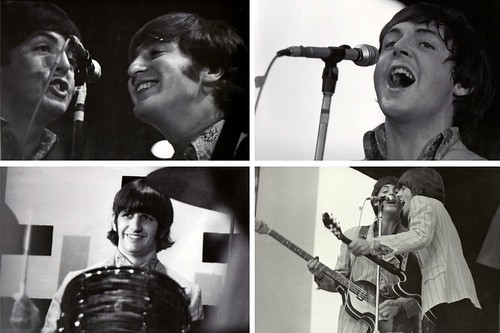
Beatles and Imelda


Exactly 50 years ago today when the Beatles performed at the Prince of Wales Theatre attended by Queen Elizabeth of England and Princess Margaret including Lord Snowdon and they gazed fondly among the crowd. According to some accounts, the arrival of the four charming guys from Liverpool drew more attention than the arrival of the Royal Family that evening.

On that same year, the Beatles released their debut album called “Please, Please Me” and it became an instant hit around the globe. The Fabulous 4 instantly became a phenomenon. Teenage girls screamed like crazy and the aired was filled with their music like “She Loves You,” “Till There Was You,” “From Me to You” and other hits. Songs that are also played by The Harmonizers in San Jose’s music lounges in the 70s like Balalaika and You & I.

It was November 4, 1963 when John Lennon, the chief Beatle, delivered the most intriguing and mischievous rant in pop-culture history: “For our last number, I’d like to ask your help. Will the people in the cheaper seats clap your hands? And for the rest of you, if you’ll just rattle your jewelry…” John made this comment before playing “Twist and Shout”, as I have said, with the Queen and the Princess among the audience.

Three years later, John, Paul, George and Ringo visited the Philippines and performed at the Rizal Memorial Football Stadium in Manila together with Pilita Corrales and Reycard Duet as front act performers, among others. The legendary quartet stayed in the country from July 3-5, 1966 for a two-day concert proper.

When the Beatles visited the Philippines, their first and only visit in the country, they unintentionally turned down a breakfast reception offered by Imelda Marcos at Malacanan Palace. Brian Epstein, the manager, politely declined on behalf of the Beatles as it had never been the group's policy to accept such invitations from government officials and first families, but the group soon found that the Marcos regime was unaccustomed to accepting "no" for an answer.

After the snub was broadcast on Philippine television and radio and everywhere, all of the security measures disappeared. The police and security officers were gone and their entourage had to make their way to Manila airport on their own. At the airport, road manager Mal Evans was beaten and kicked, and the band members were pushed and jostled about by a hostile crowd. Once the group boarded the plane, Epstein and Evans were ordered off and the former was forced to give the tax authorities £6,800 worth of Philippine peso notes from the shows, and had to sign the tax bond verifying the exchange before being allowed back on the plane, according to some Beatles’ historian.

In a nutshell, George Harrison described what happened in an interview after the tour, “They took us away and drove us down to Manila harbor, put us on a boat, took us out to a motor yacht and put us in this room. It was really humid, Mosquito City, and we were all sweating and frightened. For the first time ever in our Beatle existence, we were cut off from Neil, Mal and Brian Epstein. There was not one of them around and, not only that, but we had a whole row of cops with guns lining the deck around this cabin that we were in. We were really gloomy, very brought down by the whole thing. We wished we hadn't come. We should have missed it out. As soon as we got there, it was bad news.” They were not provided with hotel accommodations either.

Entertainment authorities believe that the Beatles were invited to Manila not to just play music to its fans. The whole thing was a savvy political setup for the Beatles to implicitly endorse the Marcos government. The party hosted by Mrs. Marcos was a cleaver photo-op where the Beatles will be seen having lively chat with Madam Marcos, ambassadors, senators and other Marcos-elected cronies. The 300 specially invited children being entertained by the Beatles would be the heart-softening section of the whole event. Local and international press would surely cover the event. Images showing the Beatles sharing a tea with Mrs. Marcos and shaking hands with government officials would project an image to the world that the Beatles endorses the dictatorship of Marcos. According to a blog posted last January 23, 2012 that can be accessed HERE.

Earlier this week, Mrs. Marcos, 84 and now a congresswoman, was again in the news. She was admitted to the hospital after she returned to Manila from Ilocos Norte, reportedly due to fatigue and her unstable blood sugar level. No matter what, Imelda, like that shameful and horrible Beatles’ stay in Manila, is part of our dark days in history. Both have taught us a lesson or two, undeniably.

The former first lady is widely criticized for her extravagant lifestyle, amassing a massive collection of shoes and spending heavily on jewelry, even as most Filipinos remained trapped in poverty. Not unlike Janet Napoles of today and her cahoots in the Senate.

But when the Marcos government was toppled in 1986, analogical to that famous remark of John Lennon exactly half a decade ago today in England, the impoverished Filipino clapped their hands while the elite just rattled their jewelry.

Or they rattled us, the poor, with their expensive jewelry and them, those who just rattled their jewelries after EDSA, are our new and apparently beat-less tyrants….

-------
(Photo: FlickRiver)


Tuesday, October 29, 2013

Investiture at OMSC


I traveled back to memory lane while inside the Occidental Mindoro State College (OMSC) campus attending the Student Teachers’ Investiture and Pinning Ceremony last Friday, October 25, 2013. My eldest daughter belongs to Section A of the college’s Teacher Education Batch 2014. Dr. Arnold N. Venturina, the SCC President II together with the TED faculty are all there to grace the occasion, so supportive of their students. Getting a cue from the inspirational message rendered by Dr. Rosalinda C. Gomez, the soon-to-retire Vice President for academic affairs, I am into thinking that the symbolic event is the donning of the mantle of responsibility with a pledge coming from the student teachers to dispense their duties to the best of their abilities. Ma’am Gomez compared them to sprinters who are already on the last lap of their scholastic race.

During the invocation, I said a little prayer for the student teachers that may they truly find an ever cooperative cooperating teacher that would thoroughly orient them to the new environment, plan with them for the teaching experience, review and provide feedback, evaluate their performance, among others.

While watching the whole ceremony unfolds before my very eyes noticing how misty were the eyes of many of the parents, during the candle lighting ceremony and the reciting of the pledge of commitment and the rest of the program, I came to know that it is indeed the most significant phase of life of a college student. It represents the bridge between professional preparation and professional practice. Student teaching is a period of guided teaching when the teacher candidate takes increasing responsibility for leading the school experiences of a group of learners over a period of consecutive weeks. 

The major goal of student teaching, I just realized, is to provide an opportunity for the student teacher to make practical applications of knowledge, learning principles, and techniques of teaching. They need the opportunity to experience the pressures of full-time teaching and the corresponding rewards (or even punishment) resulting from it. And in the end, the community will judge them. 

Yes, I took the same route way back in the late 80s but I nearly failed due to my involvement in student activism coupled with gallivanting. Without the intervention of my former English mentor, Ma'am Vicky G. Madayag, my adviser in our school paper, and my former girlfriend (also nicknamed Vicky) asking my instructor in Practice Teaching or Education 10 to give me a chance and rectify my errors (?), I could not gotten my diploma and was not able to get my licensure exam!

I got the biggest surprise of the night when Dr. Venturina before his speech mentioned my name, asked me to stand up along with a couple of alumni sitting behind our children. He referred to me as a “prolific writer”. By the way, Dr. Venturina, is my junior way back in high school, circa late 70s. People around us gave us a round of applause to which I feel a certain awkwardness. But it warmed my heart, nevertheless. The good President reminded the students of his 6Rs: Read, Recite, Recall, Rewind, Re-envigorate and and Renew. For him, the sum total of all these is renewal. He said, “When we renew ourselves, God gives us authority to share.”

But all her through her college life, I have only imparted a single “R” to my daughter, Rashida Anawim, pertaining to her studies. Read. Read up on teaching. While your training may introduce you to many good things, there is always more to learn. Since your father is always away, do not rely much on me with your lessons and assignments. That’s why whenever I travel to Manila, I always buy books and other reading materials for my children.

Saint Catherine, Patron Saint of Teachers, please do not bring their cooperating teacher into temptation of just treating these future teachers as errand boys and girls.….

-------
(Photo by: Yobhel Novio)


Thursday, October 24, 2013

Little Things


The race is on for Barangay Elections on Monday and the candidates are all campaigning, doing little offenses that are against the rule and the Commission on Elections or COMELEC can do nothing much about it except giving stern warnings. Generally, people do not see it harmful or they simply do not pay attention to small things, come election or not. Giving liquors with election paraphernalia stuck on its bottle is an election offense but the people in general, especially those who love to wine and sing, see nothing wrong about it. They let it pass. Anyway, it is just a small thing, they say.

When I was a teenager, I was caught by my classmate peeing under a mango tree inside the campus and being the OD (Officer of the Day) she reprimanded me right after I am done. She rushed to another lady officer nearby and said, “Nahuli ko Ma’am, umiihi sa pader.” The latter just ignored her gesturing her to join her platoon and said, “Wala ‘yan. Maliit na bagay lang ‘yan.” Then I left the scene fuming mad and whispered to myself, “Yan and akala ninyo!” 

Those were the days when I still do not know who Benjamin Franklin was. He who said, “A small leak can sink a great ship.” (All pun intended!) But seriously, what we call small or little things are merely the causes of great things. When we accept or not that bottle of brandy from a politician bearing his or her sticker, is the point of departure which, in general, decides the future of our electoral culture and mindsets.

This reminds me of a story written by Vincent Barry which appeared in page 7 of the June 1999 issue of Readers Digest which I read while resting on a hammock tied under the mango tree (again?) in my mother’s backyard in Bubog one lazy Saturday morning.

According to the article “No Harm, No Foul?”, the author witnessed an argument between a shopper and a produce manager. While the shopper (a mother) was carefully selecting grapes, her son was also eating some of the fruits.  The manager gently informed the child that the grapes were for sale, not sampling.  The mother sprang to her child’s defense.  “Oh, for heaven’s sake,” she said indignantly.  “It’s such a small thing.”

Barry wrote his observation: “I wondered where she’d draw the line between ‘small’ and ‘big.’ The only distinction the child made was between what he wanted and what he didn’t.  And he wanted those grapes.”

Whether the mother corrected her son in private, no one knew.  “But her public message was clear and direct: stealing ‘small stuff’ is OK; indeed, it’s not really stealing at all,” Barry concluded.

In the context of elections this Monday, if we allow such “little” infraction with the law, we are sending the same message to our children: such election offenses are not offenses at all. The drunkards only wanted wine but do not want electoral reform.

Re-reading that issue of Readers Digest made understand another quote from Benjamin Franklin, “A little neglect may breed a great mischief.” Now I only pee outside of the toilet during unavoidable circumstances or force majuere situations. Like while riding on a bus and my urinary bladder is about to burst, full with Red Horse. There are small things indeed that breeds great, big, gigantic things.

But on the reverse, there are truly little things coming out of big things. Both literally and figuratively. 

Remember the two lady cadets?...
----
(Photo : Wikipedia)
.


Tuesday, October 22, 2013

I, Caveman


Two of the most prominent, exotic and majestic caves in the province are Cansubong Cave in Iling Island, San Jose and Purnaga Cave in Magsaysay. The latter’s interior portion, according to a certain story I stumbled upon, contains several compartments of stalactites and stalagmites with the size of a small cargo container or as big as cathedral. It is also found to have guano deposits and water pools and believed to be extended adjacent to Oriental Mindoro. Iling Island is so rich with underwater caves they say and those caves became burial place of ancient Chinese traders centuries ago. To tell you frankly, I haven’t been to any of those two wonderful creations of nature. Even in Sablayan’s prominent Matingkay, Carungcaban and Agsuli caves, I haven’t been to. Not that I am a claustrophobic but I do not have a chance and that’s all.

I was wondering, during pre-historic times, the walls of cave were the modern day “blog sites”. Stone Age “bloggers” “post” their entries through its walls (Now I know the origin of the word “wall” in Facebook!). Our caves must be protected and conserved no doubt, more than our cyber sites. Caves indeed are considered natural and non-renewable resources with important scientific, economic, educational, cultural, historical, and aesthetic values.  They are also home to specialized mineral formations with unique and diverse flora and fauna.

The protection and conservation of caves is mandated under Republic Act 9072 passed on April 08, 2001 otherwise known as the “National Caves and Cave Resources Management and Protection Act”.  Under this Act, the DENR is tasked to formulate, develop and implement a national program for the management, protection and conservation of caves and cave resources. As of today, over 1,500 caves have been recorded since the start of the implementation of the Caves Management and Conservation Program in 1994, with still a significant number of caves yet to be discovered and mapped, even here in our province.

On June 13-17, 2012 there was an orientation-workshop on caves and cave resources conservation and management and that training resulted to the commitment of forming the Provincial Cave Committee (PCC) who will act as a legislative body and the Provincial Cave Assessment Team (PCAT) who will conduct the actual assessment of caves in the entire province of Occidental Mindoro. In his letter to the 11 LCEs of the province, Conrado A. Espejo, Jr., our Provincial Environment and Natural Resources Officer or PENRO, said that the PCC is chaired by the PENR Officer, vice chaired by the mayors where the caves are located and members are consist of the towns MENRO, Municipal Tourism Officers, including security personnel and school administrators. Here in Sablayan, I was nominated by our LCE to be part of the PCAT. It's not yet final, mind you.

Whew!

Well, the following are threatening our caves and making them in great danger: increased demand for recreational sites, vandalism, treasure hunting, mining, pollution, illegal collection of cave resources and rapid urbanization. In social networking sites, on the other hand, dangers are posed by senseless posts, cyber bullying, shameless spamming coming from what other netizens are referring to as megalomaniacs and sociopaths.

Well, if experts believe that the cave paintings sent messages, like my blog site, to other people passing through or living in them in the future, and in that case, I am a caveman…

------------

(Photo: TMCNET.Com)


Saturday, October 5, 2013

100 Days


It is expected that in the following weeks, many of our newly-elected local chief executives, mayors and governors from all over the land, would go public and report their accomplishments on first 100 days of office. Though not mandated by the Department of the Interior and Local Government or DILG, mayors and governors are not precluded to do their own version of the State of the Nation Address or SONA. The Local Government Code of 1991 is silent on the matter but some people from DILG are encouraging them to have their own state of the province, city or municipal address. This way, their respective constituents will know what their leaders are doing.

If ever, with great enthusiasm, I am wondering what would be the salient points and gist of our new provincial governor’s State of the Province Address (SOPA). What were his major achievements in the past four months? When and where it will be held? Aside from his achievements or accomplishments as the new governor, presumably the people are eager to know what are his administration’s plans and what we would expect for the next 3 years, until the end of his term come 2016. That’s what we want to hear so we pray he will render his widely covered SOPA before us.

Our governor, though he have been into politics and public service for quite a long time, has to prove his critics wrong that he is just living in the shadow of his predecessor. There are people, in their wildest and malicious imagination, who consider him as a mere follower, if not only a loyal double of the province’s current representative to Congress, his political patroness. For his critics, without her, he’s nothing. So, now is the best time for him to independently deliver using his own decisions, prerogative and choices, including his very elusive smile especially during photo-ops.  

Now as a governor, I am looking forward to see more from the man. We, people of Occidental Mindoro deserve more. We deserve not only information but bright future too. He deserves not only to prove his worth but cooperation as well from the people, friend or foe, political affiliation-wise.

But being an experienced local chief executive, our governor would not have a hard time doing his responsibility for the general supervision and control over all program, project, services and activities for the province. Our governor hopefully would bring about, effectively and efficiently, concrete and lasting changes to Occidental Mindoro, our beautiful province with its equally beautiful citizens.

As a resident and a taxpayer, I want to be enlightened on what are the important and essential legislative measures he initiated or about to initiate, proposed or about to propose to the Provincial Board, among others.

During the first 100 days, every local chief executive like a governor, especially those who are new to their current position, has to do some staffing changes based on her/his initial analysis of the LGUs staffing pattern. Determine, too, its fiscal status and the Budget Call. Source of support and resistance must be identified and ultimately call for cooperation with the local bureaucracy. Start to interface with the local legislative board, strengthen the linkages with every municipality and if possible, every barangay, be it his political turf or not. It is also essential at this early phase of leadership to re-organize the local special bodies along with the review of the progress of the year’s Annual Investment Program or AIP and finalize the preparation of the following year’s Executive Budget.

Our governor is aware of all of these and he’s open for suggestions coming from opinion shapers like this lowly blogger. I am 100% sure of this.

And in case you do not know, we are now celebrating the 22nd Anniversary of the Local Government Code of the Philippines. Through Presidential Proclamation No. 63, October was declared as the Local Government Month, with the second week of October as the Local Government Week and the 10th day of October as Local Government Day in the country, in line with the signing of the Local Government Code of 1991, the bible of local governance, with the theme, “Kilos Progreso, Makilahok sa Pag-asenso” that embodies a call for united and concerted action for national progress.

Going back to our topic, the first 100 days is a period when one LCE implement doable commitments to the people, especially during the campaigns and those things that are found in their Social Contract with the people. The LCE and the people under each department should and must document, disseminate and celebrate small wins.

The first 100 days mark is the end of the beginning. Let us see if he fell from this early stage (no pun intended!). Knowing the early goings of all the LGUs present administration is important and the transition period matters so much.

By the way, in the absence of the state of the province, city or municipal address, local leaders can report their accomplishments to their constituents by submitting their local governance report to the DILG or by posting it at the bulletin board of the provincial, city or municipal buildings or at their respective websites. That is acceptable already, says DILG.

Posting them on Facebook, too, would be cool...

---------
(Photo grabbed without permission from Gov. Mario Gene J. Mendiola's Facebook account)