Tuesday, January 25, 2022

Mintu Be

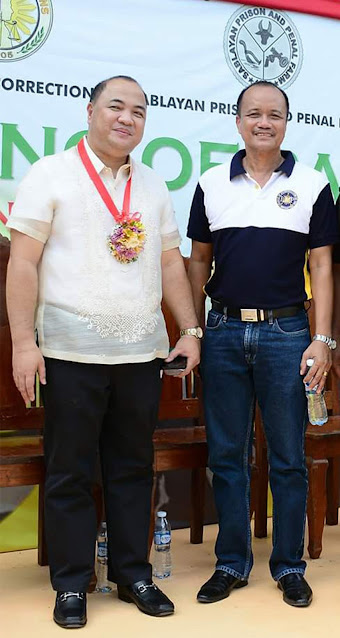
For tourism to be sustainable, it must be community-based and community-driven. Community-based tourism provides economic incentives for residents of poor rural communities to strengthen the protection of the natural assets which are the capital of ecotourism development. This is what he believes in. It is a convergence of people, nature, and places to the maximum. This, of course, necessitates politicians with a vision. Even if that politician came from far away Tanza, Cavite, or somewhere else. He is now 86 years old for he was born on January 26,1936.

During the incumbency of Mayor Godofredo “Doring” Mintu as local chief executive, he vied for a bankable ecotourism program for Sablayan. He looks forward to sustainable and pro-poor tourism programs which highly consider the plight of the people and their base resources as a barometer of its bankability. And many more projects, programs, and activities that this blog entry is impossible to accommodate because of lack of space. These are initiatives on health, social services, education, agriculture, the environment, especially infrastructure, name it.

Doring Mintu’s leadership and confidence in exploring possibilities even in the elevated and unchartered realm put the town in its right place under the sun. This is the role that the good mayor has chosen: a model municipality for the whole province to greatly consider. And he succeeded in many ways.

No doubt, Mintu is considered as one of the initiators of the municipality’s progress. A former sleeping town of Occidental Mindoro located at its geographical center. Famously called “Doring”, Mintu became the longest-serving mayor of Sablayan which became a first-class municipality during his tenure. His son, Board Member Edwin, is gunning for the vice-mayoralty seat this coming May.

After EDSA Revolution, Mintu was appointed mayor, got the mandate of the people through an election, therefore, served from 1986 to 1998. As one of the pillars of the so-called Dream Team of Josephine Sato and Ricardo “Ding” Quintos, he also won the mayoralty post in 2001 and served until 2010, and after that, he retired from politics. From 1998 to 2001, under Governor Sato, Doring Mintu served as her vice-governor and he made the whole town proud. 

Mintu and Sablayan are meant to be. They are destined for each other, like his wife Edna, the former councilor.

The businessman turned politician is also a sportsman, a good golfer at that. There is a golfers’ group called Alabang Club 515 in 2003. The group is named as such because the sun usually rises at 5:15 a.m. and golfers like to greet daylight with a tee shot. The club has 65 members who are a mix of professionals, senior executives, businessmen, and entrepreneurs including Mayor Doring Mintu of Sablayan. As a seasoned parbuster, he lives his life of service always in full swing. 

It’s Mayor Doring’s birthday today.

Hit ‘em straight, Sir, and Happy Birthday!

------

Thursday, January 20, 2022

A Narrative on Few Sablayan Pioneers (1940s-1970s)

January 20 is the feast day of the town’s patron saint, the martyr Sebastian of Gaul. On its civil side, Sablayan was converted into a full-fledged municipality on January 04, 1906, under Act No. 1820 of the Philippine Commission according to some accounts. But its founding year is a subject of debate among researchers until today because to some, the town was established earlier in 1902 when Sablayan was separated from Mamburao. Nonetheless, 1902 was officially considered by the municipality as per practice and tradition ultimately became the official founding year of Sablayan.

Many of its citizens today, whether in their civic or religious roles, could rightly claim that they have served the town the best that they could. In this narrative, I considered sharing a bit about Father Ludwig Halász, SVD, and erstwhile political clans from the 40s to pre-EDSA Sablayan like those in the pedigree of Paulino G. Legaspi, Loreto V. Urieta, and Leoncio A. Ordenes including businessman Fraterno T. Mendoza, Sr., and those I will mention in passing. Let us celebrate their memories and contributions to Sablayan’s faith, governance, and economy.

Happy fiesta and blissful 120th founding anniversary to the people who have roots in Sablayan, here, and in other places. Also to those who left this municipality due to some inevitable circumstances.

Father Sablayan

On Ash Wednesday in 1958, Bishop Wilhelm Duschak, SVD, on a breakfast table, told Father Ludwig Halász, SVD to proceed to Sablayan and be the parish priest there. Father Halász has been considered as one of the most loved missionaries assigned there. When he was parish priest, and because of his influence and over his pastoral guidance through the years, many young men from his faith community enrolled in the seminary and entered the priesthood. There are many of them. One of them is the diocesan Fr. Ruben “Jun” Villanueva of Sta. Lucia, my former director at Social Action Center of the Vicariate, Fr. Florante Gallardo and Fr. Arnel Belamide, among others. Including the other Sablayan-born and/or raised SVD priests such as Eliseo “Ely” Yyance, Paulino “King” Belamide, Conrad Alvarez, the dentist-priest Ronillo B. Ordenes, and Limneo “Lim” Dangupon, to mention just five.

In his write-up, which appeared in the Souvenir Program for 50th Anniversary of the Canonical Erection (Don’t laugh. Yes, in church’s parlance, “erection” is more correct than “construction”!) of San Sebastian Parish (1953-2003), Fr. Halász, wrote that he did not know Sablayan was when he accepted the appointment, realizing the challenges ahead of him. Coming from Calapan, the missionary from Hungary proceeded first to Manila, and on the Feast of the Good Shepherd, he sailed to Sablayan aboard a lantsa daring the hostile South China Sea. He reached Sablayan together with the inmates and employees of the Sablayan Penal Colony (SPC). Records of the SPPF show that the first colonists and employees arrived in Sablayan on January 15, 1955.

According to the SVD Catalogus published in 1975, Fr. Halász arrived in the Philippines in 1954 and received his first assignment as an Assistant Parish Priest in Naujan. In 1955, he moved to the parish in San Teodoro, to substitute for a priest who went for home vacation. In 1956 he was assigned to Calapan.

The Catholic missionary remembers,  “After lunch, I boarded the Colony’s truck again and, under the heat of the sun, was brought again to the shore where we first landed and took a small boat in the direction of the town. Small children guided me to the convent. Fr. Albert Cook, SVD, awakened from his nap, heartily and brotherly welcomed me. After he has read my appointment apparently as the in-coming parish priest, he said, “Good, I know, I told the Bishop that I could no longer remain in this post. I have to work somewhere else, where I am needed.” From his words, I felt that the hard works and loneliness await me, with only a motorboat as a connection with my Society brothers.” Fr. Halász, born in Egyed, Hungary on July 6, 1927, was ordained a priest on September 20, 1952, was alone for many years in his work as a missionary in Sablayan.

Under his pastoral and administrative care, additional chapels in the barrios and school buildings were built, including the Catholic school known today as the Colegio de San Sebastian or CDSS. The many chapels that the good priest built are still serviceable to date. He also revived an abandoned hospital and it is now known as St. Martin’s Hospital, managed by the Dominican Sisters of Siena, the only private hospital in town.

The most-loved priest teamed up with the local government in many social projects aimed at improving the living condition of the people in this part of the province.

In 1978, he was transferred to Victoria to be the Parish Priest there. In 1983, he was reassigned to Sablayan but in 1994 he returned home to Hungary to strengthen the declining personnel of the Hungarian Province. Fr. Halász died on April 13, 2015. In his memory, the grateful people of Sablayan put up a life-size statue of the missionary, whom we AVSJ lay workers used to call “Father Sablayan”, in front of the parish convent.

Political forerunners

Rodolfo M. Acebes’ 2008 book “Mindoro sa Panahon ng Digmaan 1941 - 1945” (pp. 90 – 93) described vividly how guerilla-turned bandits killed Minoy (Papa) over unfounded allegations that the former mayor was a Japanese collaborator. Also killed was Pedring, brother-in-law of Minoy, and Minoy’s brother Pepito. It was raining hard that night when the freedom fighters turned cattle rustlers abducted the three men. They were hogtied, stabbed, and hacked to death inside the municipal building in Poblacion. The three men were buried by their widows in a shallow grave in the middle of the typhoon the following morning.

Pedro Gonzales was the mayor of Sablayan when the war broke out. He was only serving for 11 months when it started. Gonzales was also tortured by the Japanese in Sablayan Elementary School turned by the invading forces into a garrison. After being tormented, Gonzales and the rest of his companions were brought to the sugar mill in Central, Pandurucan (San Jose). Gonzales was tied upside-down with Vicente Gatchalian, the municipal treasurer, and Generoso Madrigal, the town’s postmaster.

Lorenzo “Lory” Ordenes recalled that 9 Sablayan municipal presidents served during the American colonial period from 1907 to 1940 without a vice-president. It was only in 1941 when Andres Dantayana became Pedro Gonzales’ vice-president, did Sablayan elect one into office. Gonzales and Dantayana both served for 6 years. They were in office during the Japanese Occupation of 1942 to 1945, until a year after the Philippines was liberated by the Americans in 1946. 

The designations were changed to mayor and vice-mayor respectively in 1948. Dantayana’s younger brother, Juan, held the office as Sablayan’s first vice-mayor. He served under Mayor Paulino G. Legaspi until 1951. The Dantayana brothers hold the distinction of being the first vice-president and the first vice-mayor of Sablayan. They are also the only brothers in the esteemed roster of Sablayan municipal leaders, Tito Lory told me.

Although not formally trained as a lawyer, Juan Dantayana helped represent Sablayeños in court, says Ordenes. Dantayana was also the town’s lone notary. Back then, non-lawyers were still allowed to act as attorneys and perform notarial services. Ordenes was already a teenager then so he remembers it well.

While the Dantayanas are the only brothers on the list, husband and wife Leoncio A. Ordenes and Anastacia O. Ordenes are the only couple to serve as municipal mayor and vice-mayor of Sablayan, respectively.

In 1959, then-mayor Loreto V. Urieta ran for provincial board member resulting in Raymundo Gallimbas, his vice-mayor, succeeding him to office. Back then, an incumbent public official had to resign from his position when he ran for another post. When Gallimbas became mayor, Anastacia O. Ordenes, who was the number one elected municipal councilor, assumed the vacated office, as required by the rules. Anastacia Silva Omañada-Ordenes, or Lola Tasing to most, was born in Sablayan, Occidental Mindoro on April 15, 1914. She went to Kawit, Cavite for her elementary education and moved back to Sablayan to pursue her studies.

Tasing was the first and only woman to serve as Sablayan’s vice-mayor, which she did for a brief period from 1959 to 1960. Her public service as an elected official ended when her husband, Leoncio Ordenes Sr, decided to run for and was elected as mayor in the local election the same year, according to Lorenzo Ordenes, the late Mayor Leoncio’s youngest son.

Although Tasing was twice elected as the municipality's number one councilor, she wasn't the first woman to get this distinction. That honor belongs to her bosom friend and relative, Francisca de Jesus Salvo or Lola Kika, the wife of school principal Casiano Salvo. Lola Tasing was the younger sister of Don Lucas Silva Fernandez, who also served as Sablayan mayor before the Second World War. On the 25th founding anniversary of the province in 1975, Lola Tasing was awarded Best Parent of Occidental Mindoro bestowed by Governor Arsenio Villaroza.

The union between Leoncio and Tasing produced 9 children: the eldest Leovigildo or Luving was the Postmaster in Sablayan. Leogardo or Garding was a teacher who later worked at the Bureau of Internal Revenue. Limneo or Lim was the Provincial Treasurer of Occidental Mindoro. Leonides or Ned worked at the Health Department Manila. Leandro or Boy was the Division Chief at the Professional Regulation Commission in Manila. Leonor or Nene, the elder between two daughters, worked at the Office of the Municipal Assessor in Sablayan. Leoncio Jr or Impe was a Forest Ranger with the Department of Environment and Natural Resources office in Sablayan. Lucille or Lucy is a retired public school teacher. Lorenzo or Lory, who worked at the DENR is the youngest.

Mayor Leoncio A. Ordenes’s vice-mayor, Floresto Cariaga Sr, had the unique experience of having the shortest term in said office. Cariaga was mayor for 45 days to serve out the remaining term of Mayor Ordenes who was unfortunately felled by an assailant while in office.

There are also father-and-son tandems on the list. Paulino G. Legaspi was mayor from 1948 to 1951 while his son Rockefeller (or Rocky) served as vice-mayor from 1979 to 1986. Rocky Legaspi was born on July 2, 1937, in Sablayan and married to the academician Helen Oriondo was blessed to have 6 children. He graduated in 1960 from Feati University with a Degree in Education Management (DEM) and AB (Liberal Arts). At the age of 26, Rocky dived into politics in various capacities as vice-mayor and municipal and provincial legislator, from 1963 until he succumbed to a lingering illness at the age of 79 on March 18, 2016. Rocky is the father of now sitting Sangguniang Bayan Mark Anthony “McKing” O. Legaspi. McKing’s siblings are Mary Jane, Eric, Mary Ann, Mary Ellen, and Joseph. He was once an appointed provincial board member replacing his late father who died in office.

Loreto V. Urieta was the town leader from 1952 to 1959, and again from 1964 to 1971. His son Felipe was in turn vice-mayor from 1992 to 1995, and also 1998 to 2001. Policarpio Urieta, who was municipal president from 1919 to 1921, was Loreto’s uncle and Felipe’s grand-uncle. He is the 5th child of Presentacion “Presing” Costa Bundang (the famous Presing Park was named after her) and Mayor Loreto Villiones Urieta. Felipe’s father was said to be his role model when it comes to serving people, this is the reason why Philip followed the footsteps of his grandfather and father. Felipe’s son, Kristofferson or Bong, the fourth generation of their political lineage, is an incumbent member of the municipal council.

Means of transportation in the 50s and 60s are motorboats or sailboats. During the rainy season, even such means of transport are either dangerous or unavailable because the waves whipped up by the southwest monsoon are unsafe to small craft.

During the dry season, jeeps and trucks are the primary transport. Some travel by foot or horseback or ride a carabao. Occidental Mindoro’s very own political scientist Remegio E. Agpalo who hails from Mamburao wrote in his book “The Political Elite and the People; A Study of Politics in Occidental Mindoro” (pp. 54 – 55) that Sablayan had no electricity in 1965. He also wrote that “Despite its larger population, on the whole, Sablayan is more underdeveloped economically than Mamburao.”  From 1964 to 1965, the income of Sablayan is pegged at Php 40,495.14. In short, Sablayan, since the beginning should have been the capital town of the province.

Merchant from Paetan

It was in 1959 when Fraterno Torreliza Mendoza, Sr. first set foot on the shores of Sablayan, specifically in the Barrio of Paetan where he worked as a farmer, fisherman, and transporter of goods using his small boat. He even sold clothes from one house to another in the neighborhood. He is a true-blooded merchant no doubt like his father who was originally from Batangas.

Later, he moved to the town proper together with his wife Evelyn Vicente Torreliza and three children, Fraterno Jr., Maria Cristy (now Dimayacyac), and Nerea (now Tuazon). The Mendozas established a small store and it was the beginning of all their all successful business ventures today, according to his son, Fraterno Mendoza, Jr. commonly known to his friends as “Jun Frats”. Well admired by the progressing town’s early inhabitants and settlers, he was able to gain prominence as the leading pioneer of local business in the then progressing municipality.

He lived a simple life and drawing lessons from his experiences before as a lowly sales boy, messenger, and vendor in his place of birth and elsewhere, he was able to master the trade. Though only a college undergraduate, he was able to surpass the hardships and hurdles of all his businesses. Reserved, thrifty, and living a simple life, he was able to get properties and his businesses grew. Mr. Mendoza, needless to say, was an expert in financial management.

Born in September 29, 1928 in a poor family in Agkawayan, Looc in Lubang Island, he was raised by his parents Generoso Mendoza of Lipa, Batangas and Dionista Torreliza, a native of Agkawayan. Mr. Mendoza breathed his last at the age of 86 on December 17, 2014, leaving behind his legacy of being a trailblazer in local entrepreneurship in this town. He is the epitome of a businessman who has a heart for working with the town officials during his days. His children now own various enterprises in town and are one of the most successful local businessmen in Sablayan.

As a private individual, he was able to win the hearts of his coterie of friends and business partners. In Sablayan, whoever becomes the mayor, greatly considered Mr. Mendoza, in a way, as an innovative advocate and model of local entrepreneurship towards its development mission and goals. With all these legacies, the patriarch placed himself significantly in the economic and historical context of Sablayan and was perceived as someone who has contributed to the positive development of local pride through a good example shown by his name.

Niche

I worked in Sablayan until I found my niche and as I write this, I constantly remind myself that I am not alone. I am surrounded by a great host of friendly and beautiful people, past and present. Especially those who love to share the town’s history who are so generous with their time and memories. Special to mention Mr. Lory Ordenes and those who are lucky enough to live with the town’s pioneers.

This essay is unreservedly dedicated to the people of Sablayan, past, present, and those still yet to be born and to the loving memory of the long-gone men and women including those who are still with us today and still active in their different fields, be it as civil servants or in the priestly ministry, or otherwise, in every part of the world.

I have a deep affinity for Sablayan - it's a second home to me and those who come before me – its people treat us like we are their own.

------

(The undated photo above is courtesy of Lory Ordenes showing President Diosdado Macapagal, Fr. Ludwig “Luis” Halász, SVD, Gov. Arsenio Villaroza along with Mayor Loreto V. Urieta and his wife Presentacion Bundang-Urieta, Diosdado Gozar, Councilor Anastasia Ordenes, Diosdado Gozar and his wife Lolita Gozar with Vice-Mayor Martin Pacheco and Ms. Florence Valentin and some prominent residents on the inauguration of Rural Heath Center in Poblacion.)


Tuesday, January 18, 2022

Gadiano and Alfaro: Budget as Politics and Triviality

Trivia: On January 18, 1854, exactly 128 years ago today, William Walker proclaimed the establishment of the Republic of Sonora in NW Mexico. Walker was an American physician, lawyer, journalist, and mercenary who organized several private military expeditions into Mexico and Central America to occupy the local nations and establish slave-hold colonies, a venture then known as "filibustering". It was in this sense that Jose Rizal used the word in his second novel El Filibusterismo about the Spanish presence in the Philippines.

But the word legally used today has a different meaning. Now it means the use of obstructive tactics in a legislature, by excessive use of technicalities to prevent action by another group. Since language is dynamic, its meaning changed during the epoch of colonization in the times of William Walker and Jose Rizal to the post-foreign colonial era of Governor Eduardo B. Gadiano and Vice-Governor Peter J. Alfaro here in Occidental Mindoro.

Another trivia: Yesterday, January 17, 2022, VG Alfaro sent an invitation letter to Gov. Gadiano inviting him to join the Committee of the Whole to, “discuss and present personally to the Legislative Body the integrity of his proposed budget … " But apparently, the province’s Local Chief Executive snubbed the invitation from the legislative branch. He got hold of himself firm and unshaken.

Truly, a budget can be analyzed in three distinct ways: as policy, as politics, and as influencing outcomes. Budgets are more than authorizations to spend money, at times, it has a splash of politicking in them especially if those who head the legislative and executive branches do not belong in the same political zoo or they have an Edgar Bergen kind behind them. Having it discussed here is more on the intricacies of the budget as politics in the context of the present gridlock in Occidental Mindoro. Some might find these mere trivialities but I do understand.

As I have emphasized in my previous blog entry titled "Gadiano and Alfaro, A Tug-of-War On Budget", it is with very high probability that the provincial government, with the unfinished deliberation on the 2022 Local Expenditure Program (LEP), has no other choice but to settle for a reenacted budget for FY 2022.

Rules have it that the reenacted budget kicks in 90 days and it will fall on March 30, 2022, as the re-enacted budget kicks in permanently for the whole fiscal year. The election ban will begin on March 25 so, if the 2022 Annual Budget would only be passed and approved after that, say, on March 26 onwards, it would be useless or inutile.

In that case, even if we have an approved 2022 Annual Budget by then, no new programs could be implemented and no appointments for the needed workforce in its delivery of service to the people who had been deprived of a new brand of political leadership for decades would be employed. 

Legally, what are the effects of Re-Enacted Budget? According to DILG Opinion No. 30, Series of 2015 (July 22, 2015), it has implied disadvantages such as no creation of positions, no new program projects, and activities, no utilization in the increase of IRA allocation for the year since the same is not covered by an Appropriation Ordinance, non-implementation of non-recurring activities no matter how vital they may be, and no supplemental appropriations are allowed.

Moreover, the Government Procurement Policy Board (GPPB), an inter-agency body regulating government procurement, has already issued a warning on the observance of a 45-day ban on new projects consonant with the forthcoming May elections. Nonetheless, the GPBB said that it will be up to the COMELEC to approve election ban exemptions on specific goods and services in line with the COVID-19 pandemic.

The move, from the looks of it, was indeed very clever and very calculated and precisely orchestrated. It happened before and it is still happening today. But I am sure the governor already saw it coming so he is not surprised. But hope springs eternal for the win-win solution on this gridlock. 

But this isn’t only an issue of policy in legislation. Of all the checks and balances inscribed in every code, in every letter, and every intent of every law or jurisprudence in the land, the most significant is the right of the citizens, especially the poor and the marginalized who are fed up with old brand leadership, to replace those who are serving them poorly and only wants to perpetuate themselves to power ad infinitum. Here and elsewhere.

As I have said, the ultimate resting place of all blatant use of obtrusive tactics is figuratively the square-shaped ballot box. It is where such candidates can be cornered. Or on the circle of public opinion where they could be “rounded-up”. Hope this tug-of-war would end soon.

And that deserves another trivia someday. 

*********

(TAILPIECE: This news came to me late. The Sangguniang Panlalawigan, having a quorum and the participation of department heads as resource speakers and perhaps pressured by the situation, finally started the deliberation through physical and online appearances on the 2022 Local Expenditure Program as of 10:00 AM today, January 18, 2022, and intends to resume it tomorrow. Thanks, God for such a change of heart by our leaders in two branches of our local government and greatly considering the welfare of our people, albeit very much delayed. As I stand by my story, my salute to all of you!- NAN)

Sunday, January 16, 2022

Gadiano and Alfaro, in a Tug-of-War on Budget

It is still a tug-of-war and a stalemate between the Sangguniang Panlalawigan and the Executive Department, between Gov. Eduardo B. Gadiano and Vice-Governor Peter J. Alfaro, over the further deliberation and consequent approval of the province’s Fiscal Year 2022 Local Expenditure Program or LEP which was, due to lack of quorum, postponed on December 28, 2021.

As a response, Gov. Gadiano issued Memorandum No. 2022-001 directing all the department heads not to attend any of the following budget hearings scheduled from the 4th to 6th day of January 2022.

As I have asserted in my previous blog entry titled “Of New Year, Quorum and Decorum,” posted December 30, 2021, our Provincial Legislative Board overlooked the instruction fused in the Joint Monitoring Circular (JMC) No. 1 Series of 2016 by the Department of the Interior and Local Government (DILG), Department of Budget Management (DBM), and other concerned agencies. The august body with all negligence did not follow the Synchronized Local Planning and Budgeting Calendar designated to local government units which are also incorporated in the Budget Manual, Gadiano said.

This is what Gov. Gadiano is telling the people over a radio interview last week. He is strong in saying that he is putting the fate of the 2022 budget in the hands of the board members and the SP in general headed by Vice-Governor Peter J. Alfaro but not on a silver platter. He said in the emotionally-charged interview by Alex Del Valle on a paid broadcast called “Serbisyong Ganado Program” aired over 92.1 OneFM that some people will gonna pay for this for such is a dereliction of duty, according to the governor.

Is the governor right in saying that the SP is liable for dereliction of duty in this case? Apparently yes. Again, I am not a lawyer but a mere local chronicler and a researcher but if we are going to look deeper on Sections 458 and 323 of the LGC, the word used was "shall", denoting mandatory command. If the proposal denotes a flagrant and culpable unwillingness to perform duty as mandated by law, those responsible for such delay or refusal will be opening themselves to a possible administrative case of dereliction of duty, neglect of duty, or abuse of authority, as may be warranted by the evidence, which are grounds for disciplinary actions against elective officials under Section 60 (c) of the LGC. This is how DILG Opinion No. 46 states it. Well, an opinion is just an opinion but that opinion came from the DILG itself.

Gadiano ended the radio interview by saying that Occidental Mindoro is not progressing because of massive politicking through the years. Gadiano was elected only to said provincial seat last 2019. He is even wondering why delays of this kind did not happen before when the governor and the vice-governor belong to the same political group.

The most monumental gridlock between a governor and a vice-governor in Occidental Mindoro happened in June 2002 when Gov. Jose T. Villarosa and Vice-Gov. Ramon M. Atienza battled over the authority to sign certain purchase orders and maintenance expenses of the Sangguniang Panlalawigan. The celebrated tug-of-war is now known as Atienza v. Villarosa G.R. 161081 dated May 10, 2005, ended in a Supreme Court Ruling. Both camps then accused each other of politicking and hampering the progress of the province for Villarosa and Atienza at the time, not unlike today, are on the opposite end of the political fence. That was exactly 20 years ago this year.

In 2016, a Budget Operations Manual for Local Government Units was issued as per DBM’s mandate under Section 354 of RA 7160 for local government units to improve and systematize methods, techniques, and procedures employed in the local budget process. The executive department under Gadiano has been religiously following such a manual according to him while the SP is mum on the issue of the budget calendar. Why did the SP have not deliberated it as scheduled which is from October to December 2021? This question was never been confirmed nor denied along with the alleged Php 5.5 cash advance of the provincial board for a certain meeting in Laguna.

Gadiano also accused the SP of being a rubber stamp and just been following orders of their political figurehead/s or patron. Nonetheless, RA 7160 specifically gives power to the local legislative bodies to review the executive budget and the power of appropriation, which is still in line with the ordinance enactment. There is a very thin line between this legal power and the kowtowing to the idiosyncrasies of their political king … or queen. As I have been telling for the nth time, the power of the purse can be weaponized and numbers can be tyrannical. They can tell their other excuses to the marines!

In their 18th Regular Session held January 11, 2022, the Sangguniang Panlalawigan Committee of the Whole, after a hotly contested exchange between SBM Diana Apigo-Tayag, Bokal Nestor Tria, and Bokal Sonia Pablo whether to wait for the availability of the concerned department heads and resource persons or once and for all, the Board must deliberate it right there and then, the junta provincial will again send a third invitation letter to the concerned people from the executive branch to attend the scheduled deliberation on the 2022 LEP from Monday, January 17, 2022, onwards. As expected, both branches of provincial government might be at the end would settle for a reenacted budget for FY 2022.

If still, the concerned individuals will abide by the directive of Gov. Gadiano, one of the possible actions is for the legislative, if they wish as a collegial body, is to resort to a legal remedy against those poor employees who are just following orders from their immediate superior. If the potential resource persons will not attend, the SP might cite them for contempt invoking the Regional Trial Court (RTC) under Rule 7 of the Rules of Court of such a remedy.

Can the local legislative board itself punish the defiant in this particular case? Nope. DILG Opinion No. 25, Series of 2020 has it that the SP does not have subpoena power to punish for contempt. All they can do is to INVITE them if they are willing to supply information to the budget hearings. Moreover, per DILG Opinion No. 22, Series of 2009, in the exercise of legislative functions, any legislative body has no compulsory power to require persons to appear before it.

But resorting to RTC in such a remedy is political suicide. It would be a crazy thing to do especially now that election campaigning is near. The move will just gather ire and criticisms from the citizenry, specifically the voters or their relatives, for almost all of the incumbent SPs are aspirants for different political positions this coming election. Resorting to such legal action aimed at those in the executive is in zugzwang if it were a chess match. Besides, the budget gridlock is a political issue and not a legal one. Budget deliberation of the SP is more of in aid of legislation (e.g. appropriation ordinance) and not acting as a quasi-judicial body.

But people will in the end realize that the pains they are experiencing, including their communities, due to unstarted infrastructure projects and lack of frontline social services were a result of this budget stalemate and tug-of-war. They might be just birth pangs for we are entering into a fresh start of political leadership from the rotten dustbin of political repetitions. The people, who are fed up for decades, might express their disgust through the ballots as it was in 2019.

The sure thing is, this issue will be dragged from the respective halls of the provincial capital compound to political campaign rallies staged in every nook and corner of Occidental Mindoro. As the saying goes,”Kakaladkarin ito sa mga entablado hanggang iukit sa mga balota loob ng mga presinto.” The election will be the final arbiter of this madness and selfishness. This cannot be settled by way of any radio interviews or social media posts from both camps, even a blog entry such as this. This gridlock is a deliberate act that disregards the least, the lost, and the last among the masses who expect a fresh brand of local governance from persisting visionary leaders.

Popcorn that would last until May, please?

The lesson re-learned: There is also stalemate not only in chess, the competition of intellect, and the all-physical sport called tug-of-war but especially in the deadly, deceptive game called wanton politicking.

---------

(Photo: Jasper Francisco)


Thursday, January 13, 2022

MOCHMC: A Breakthrough in Our Health Care


This is a giant leap for our people courtesy of private health entities and can be considered as a radical response to the disjointed delivery of health care services by both government and private institutions here in Occidental Mindoro, as far as we can remember.

Last January 11, 2022, there was this blessing and groundbreaking of the site for Mindoro Occidental Cooperative Hospital and Medical Center (MOCHMC) in Sitio San Carlos, Brgy. Central, San Jose Occidental Mindoro. The facility is aimed at catering to the growing demands for quality healthcare services in the province. It will be under the auspices of the Mindoro Occidental Medical Mission Group Health Service Cooperative (MOMMGHSC).

The twin ceremony, the blessing, and unveiling were led by Fr. Reymond B. Mulingbayan of St. Joseph Parish in Central, and Mayor Romulo M. Festin of San Jose, respectively. The forthcoming health facility is consists of a 126-bed, Level Two hospital generally considered as a medical center. 

According to Dr. Anna Monica R. Bracamonte, President of the Mindoro Occidental Medical Society and CEO MOMMGHSC. The hospital is said to be the first-ever hospital of this type in the province. The facility will be constructed on 1.7-hectare land in said area. In 2 to 3 years, the hospital will be in full operation. In the Philippines, a Level Two hospital offer extra facilities like intensive care unit and specialist doctors, and of course, minimum healthcare services.

This endeavor of establishing a cooperative hospital started some two decades or more ago in Davao City and Tagum City, Davao Del Norte. At first, it was owned not only by the doctors and health professionals but also by all the workers of the hospitals, including utility—as all cooperatives should be. They later extended the ownership of these hospitals to everyone in the community—like the patients and their families. The same thing will happen here and if you are interested, its key officers and the BOD are just a call or a chat away.

That is how the Medical Mission Group Hospitals and Health Services Cooperative (MMGHHSC) came into being. One of the pioneers of the coop hospital in the country is Dr. Jose M. Tiongco, MD who graduated from the UP College of Medicine and later took surgical training at the Philippine General Hospital Department of Surgery. MMGHHSC Philippines Federation, now composed of 22 hospitals and health services primary cooperatives are now scattered in Luzon, Visayas, and Mindanao.

Indeed, there is a need for active partnerships with private organizations such as cooperatives that support the health needs of the people, especially those who are disadvantaged patients. Since hospitals and health programs do not guarantee a healthy individual and a healthy society, still, the combination of health programs and other social services can help in creating a healthy community.

The MOMMGHSC Medical Plaza started only 8 years ago and has been catering to our people through its medical clinic, pharmacy diagnostic, and dialysis centers and duly registered in Cooperative Development Authority (CDA) since October 2014. For that less than a decade existence, the MOMMGHSC already anticipated and responded to our utmost needs especially now that we are still in the times of the COVID-19 pandemic and other health chaos that we are experiencing. The province had been existing for 71 long years and a hospital of this level was not yet realized and it was a manifestation of how hospitals or health services, in general, are corrupted and neglected in this impoverished country of ours as politicians come and go, both in the national and local levels. But these coop people walk their talk. They targeted it only in 2014, now it’s gradually coming into reality.

Congratulations to you guys!

Needless to say, in our condition that state-of-the-art hospitals cannot be grasped by the poor and the marginalized, this milestone hospital will serve as an extension center for state-run or government-owned healthcare schemes catering not only to stakeholders in Occidental Mindoro but including our neighboring provinces.

Since this is a cooperative, we all can be its owners. Unlike government or other private hospitals in the locality.

--------

Photo from MOMMGHSC Facebook

Read more: https://opinion.inquirer.net/104411/ownership-coop-hospitals-open#ixzz7HkKQiJ8x


Tuesday, January 11, 2022

Sato, Tarriela and Special Economic Zones

The House Bills 10109, which seeks to establish special economic zones in the municipalities of San Jose and Magsaysay, and 10255, which seeks to create in the municipality of Paluan were tackled in the hearing of the Senate Committee on Economic Affairs chaired by Sen. Imee Marcos joint by the Committees on Local Government, Ways and Means, and Finance, this morning, January 11, 2022.

The two ecozones bills for the province were authored by Cong. Josephine R. Sato and was approved by the Joint Committee on Economic Affairs and Trade and Industry of the House of Representatives in February 2020 and already passed on its final reading on the last quarter of 2021.

Other than the two Occidental Mindoro bills, H. No. 10108 - Metro Iloilo Special Economic Zone Act, H. No. 10216 - Oriental Mindoro Special Economic Zone Act, H. No. 10217 - Ilocos Sur Special Economic Zone Act, H. No. 10218 - Bislig Special Economic Zone Act, H. No. 10243 - Bacolod Special Economic Zone Act, H. No. 10244 - Northern Bohol Special Economic Zone Act are also deliberated by the Committee.

Occidental Mindoro congressional aspirant Leodie “Odie” Tarriela also included as one of his campaign agenda is the establishment of an economic zone somewhere in the province, if ever elected.

Both the supporters of Tarriela and Sato, though the two are not direct rivals this coming May election, dwelt more on who first initiated or proposed the establishment of such special economic zones than scrutinizing the difference between what Tarriela is proposing and what Sato had proposed. Their supporters and fans resulted in childish bantering instead of probing an issue. Or take a closer look at the importance and the viability of such endeavors in our province. The discussions on the issue in social media by their supporters some days back are pointless, like a newly-bought pencil.

As I see it, though Sato had been asking the Senate to urgently act on the matter, there are still a lot of things to be settled by the concerned committees of the senate including the National Economic and Development Agency or NEDA and the Department of Finance. These things should have been discussed by their respective supporters rather than petty generalized fandom comments and childish opinions.

Some gridlocks need to be addressed before the bills’ final approval like for instance the incentive systems for the stakeholders, some issues on administrative control of the economic zones, and other things that should be harmonized with the Omnibus Investment Code.

At point-blank, Senate Minority Leader Franklin Drilon asked Asec. Atty. Valery Joy Brion of DOF about the chances of getting the nod of the department on such special economic zones said that based on the data of the Philippine Statistics Authority (PSA), such zones do not alleviate poverty and do not always guarantee economic success.  Brion added that there must be a Master Plan complete with cost-benefit analysis so that the agencies in the executive department could deeply look into the bills. Brion stood firm to her conviction that the DOF will object to the bills at least for now. “Currently, we do not support them,” Brion said in a senate hearing via Zoom. However, the DOF and the NEDA are willing to sit with the Senate and the LGUs to facilitate the immediate realization of the proposals, according to NEDA’s Asec. Mercedita Sombilla.

Another matter that needs to be ironed out is the cost-sharing between the LGU and the national government. It is important and it lies on the Fiscal Incentives Review Board or FIRB, an interagency government body given the authority by the Philippine law to grant tax incentives to registered business enterprises. The sharing scheme should also be part of the laws on ecozones. Further, as agreed by Sen. Drilon and Gov. Presbiterio Velasco, Jr. of Marinduque, a sunset provision should also be incorporated. The provision, also called sunset law, is a clause in a statute or regulation that expires automatically on a specified date. A sunset provision provides for an automatic repeal of the entire or sections of the law once that sunset date is reached. In short, provisions in ecozone acts should have an expiry date, if we are to follow the thoughts of Sen. Drilon and Gov. Velasco who are both lawyers. The former was once justice secretary while the latter was a former associate justice of the Supreme Court.

When asked by Sen. Marcos if there’s such duplication in the two Occidental Mindoro ecozone bills, Cong. Sato confidently told Sen. Marcos that Paluan and San Jose-Magsaysay areas are at the opposite end of the province and besides, the Paluan ecozone is specific in shipbuilding and dockyard facility while the one to be established in the San Jose-Magsaysay area is for agriculture. Sato further explained that it is now high time for the province to move forward to agro-industrialization with the help of these two ecozones. 

Well, the LGUs can create economic zones and free zones by encouraging the private sector to do it rather than the government so that the fiscal burden or the funds or resources are not taken out from the national coffer. Is that what the aspiring congressman has in mind?

That I do not know.

Thursday, December 30, 2021

Of New Year, Quorum and Decorum

Whether the non-appearance of many board members was deliberate or not, I have to salute the 6 of them who appeared for the supposed 116th Regular Session the other day, December 28, 2021, namely, Edwin N. Mintu, Diana Apigo-Tayag, Ernesto F. Jaravata, Eleonor B. Fajardo and Juanito D. Lumawig. Vice-Governor Peter J. Alfaro was also in attendance ready to preside the discussion of the Fiscal Year 2022 Local Expenditure Program (LEP) of the Province of Occidental Mindoro. But for lack of quorum, the important year-ending session did not happen.

In a notice signed by Jamela P. Haley, the board’s secretary dated 20 December 2021 and addressed to the members of the 13th Sangguniang Panlalawigan, they are all enjoined to attend the very important session for it would deliberate on the annual budget of the provincial government including those of municipal LGUs. On the same day before that, Governor Eduardo B. Gadiano issued a letter addressed to the legislators through Alfaro. Aside from the 2022 LEP, Gadiano appealed in the dispatch to authorize him in the disbursement of funds for FY 2022 due to certain expenditures such as salaries and wages, statutory and contractual obligations, and essential operating expenses.

Is the lack of quorum in the SP premeditated? Is this action of nonappearance orchestrated? You be the judge. But I have seen such crucial quorum issues in many instances in some local governments before.

Deliberate or not, nothing happened, ergo, they have to wait for some time to sit, discuss and finally approve a 2022 LEP. Those who were not able to make it because they are on leave are Emmanuel Abeleda Jr., Sonia Pablo, Michelle Festin Rivera, George Oreiro, and Trisha Kaye Fabic. Those absent are AJ Rebong, Philip Ramirez, Nestor Tria and, Abelardo Pangilinan. To cut the story short, the session was canceled. Usually, when there is no quorum, the presiding officer may declare a recess until such time that the quorum is reached. So, the request of the governor hangs in the balance. If any two of the four absent board members attended they could have had a quorum. But allow me to give them the benefit of the doubt, they might have valid unavoidable reasons for not coming to the session that day inside the holiday season.

Just to share, Section 53 of the Local Government Code declares, “(b)Where there is no quorum, the presiding officer may declare a recess until such time as a quorum is constituted, or a majority of the members present may adjourn from day to day and may compel the immediate attendance of any member absent without justifiable cause by designating a member of the sanggunian to be assisted by a member or members of the police force assigned in the territorial jurisdiction of the local government unit concerned, to arrest the absent member and present him at the session.” Well, instead, we will just wait for Godot like Vladimir and Estragon. 

Aimed at the harmonization of local planning, investment programming, resource mobilization, budgeting, expenditure management, and performance monitoring and coordination in fiscal oversight, the Joint Monitoring Circular (JMC) No. 1 Series of 2016 by the Department of the Interior and Local Government (DILG), Department of Budget Management (DBM), and other concerned departments were issued. This became the basis for each region's formulation and implementation of the Synchronized Local Planning and Budgeting Calendar or the SLPBC. I just do not why our provincial government in general, then and now, overlooked this or were they aware of the importance of such a calendar imposed by said national government agencies through its regional offices (Please click HERE for the sample SLPBC from Region XII). The SLPBC is the template that is supposed to guide the board in this particular responsibility. Adherence to SLPBC is also one of the criteria for bestowing the Seal of Good Financial Housekeeping by the DILG. In many MLGUs in the province, the SLPBC is being followed, I was told.

Incidentally, of the two departments of local government, the executive holds the so-called power of the “sword” while the legislative branch has the power of the “purse”. While the latter is meant to be a technical tool that promotes more efficient and responsible local budgeting practices, both the power of the purse and the power of the sword can be weaponized and abused toward political ends. Not only in this particular case but under any administration, wherever and whenever, when controlled by either political groups or factions from all over the country.

Many were pleased when in 2019, both Gov. Ed and Vice-Gov. Peter and their respective officials settled a common Executive-Legislative Agenda (ELA) to synchronize the direction in governing the province but each year, the annual budget always passes through the eye of a needle. The executive and the legislative departments are at the start paddling in opposite directions despite the ELA. As a community striving for inclusive progress and development that has been locked for more than three decades with the same brand of politics, the people of Occidental Mindoro deserve something better beyond partisan politics and politicking.

With this predicament at hand, the people are upset. It is them who suffer most and as we are figuratively on the same boat equally as a province, we are cast to the vicious sea waves, drowned into the deep until the next legislative session in the first week of January.

Because the power of the purse is central to the Sanggunian’s functionality, this becomes their bargaining chip, the stick atop the carrot. It’s their ultimate armament and the LCE is always at their mercy in this particular instance. The best-observed check-and-balance norm in governance becomes a folly when the executive and the legislative branches are dominated by opposing personalities with extreme partisan political aims. If such aims become more vital than the common good. 

But the disruption of proceedings shows a lack of decorum especially if such interruption is pre-planned or staged, which is very disturbing. If that is the case, hypothetically speaking, it is ethically and legally wrong. Democracy would be further strengthened based on constructive debates and discussion in a proper venue and not by default or avoidance of specific legislative processes or sessions. That is the proper decorum in achieving righteous politics.

We, the people, are urging you, our cherished leaders, to hold discussions on critical issues as ever, like the 2022 Local Expenditure Program, and trust each other just like how we trusted you when we voted, hired you when you applied to your present positions 3 years ago.

We, the people, are entitled to see that both of your functions are done in the fastest best-calculated manner to achieve our desired goal over and above political affiliations and persuasions. 

The next session of the august body is on January 4, 2022, the fourth day of the current election year. A date that is marked in global political history as the battle between Julius Caesar and Titus Labiernus in 46 BC and was called the Battle of Ruspina. Make the deliberation a battle of wits and objectively bang opinions, grind and weigh things rigid if necessary, so please be present and greatly consider the people’s general welfare or the common good.

As we start our journey as a community in 2022, mutual trust is all that we ask of you, noble people both in the executive and legislative branches of our province.

Mutual trust brings proper decorum that does not solely rest on numbers or quorum.

Anyways, Happy New Year, Honorables!

---------

(Photo: Oliver Roldan)

Tuesday, December 28, 2021

Survey Says ...

An apparent result of a political survey in the form of an infographic is circulating in Facebook lately being shared and posted by some netizens with this caption: “Nagsalita na ang masa, sa looban (sic) lang ng tatlong buwan, batid ng lahat kung sino ang nararapat ihalal sa darating na eleksyon.” The post is insinuating that the Sangguniang Kabataan (SK) Federation of Occidental Mindoro allowed if not commissioned a pre-election survey supposedly conducted on its members.

By the way, Hon. Marffin Tuscano Bergonia Bayog Dulay, SK Federation President of Sablayan confirmed to me that there is no such survey made in the municipality for the purpose or perhaps it was exclusive only in selective areas. To be fair, this space is open for Hon. Trisha Kay Fabic-Mancilla’s reaction to settle things up and rest assured that I will insert it here in the form of a tailpiece. 

The infographic seemingly has SK official seal or logo on it so unless there’s a disclaimer from the provincial federation president about this, I will assume that this is indeed legitimate. I just hope that the OPs are mature and responsible enough for what they have posted. Those who posted or shared it are certain Bhea Pacheco, Harry Perez, Jobert Lorenzo, and Mary Cris B. Vibal. With very high probability, all are fictitious names. Remember their handles and be warned about what they post next time. 

I have no qualms about the personalities or the numbers in the survey per se. My point is, the disclosure was not supplemented with the necessary information and the original posters and/or sharers failed to be transparent about it. I made attention (or patol) to this because of such negligence and lack of accountability and transparency on the pollsters’ part spells lack of accountability. This impression of mine, of would only change if the survey people supply us with those important verifiable data if they wish. If not, of course, that’s at their discretion. I cannot do anything about that.

But generally speaking, surveys, especially those conducted by non-experts can be manipulated in many diverse methods. Many of the unscrupulous instigators of these polls or surveys want to create a public impression that a certain politician or a political group is about to lose or win come election day. The posters concluded, “Naway magtuloy-tuloy na ang pagbukas ng kamalayan ng taong bayan at maging responsabli (sic) sa naayong desisyon sa pagluluklok sa isang lingkod bayan na may PUSO, TALINO AT DANGAL.” It is very obvious, they are close-in supporters of those leading in the supposedly SK Provincial Federation survey that is said to have ensued from September 15 to December 15, 2021.

I am addressing this piece, not to the instigators of the project but to the unaligned and silent majority from the ranks of my readers. 

The professed SK Federation provincial survey has it that for congress, Peter Alfaro is leading at 44.34%, followed by Philip Ramirez with 24.12%, Bunny Villarosa-Kalaw garnering 12.40%, Noli Leycano with 10.03%, Odie Tarriela getting 5.27%, and lastly, Jojo Melgar 3.84%. For the gubernatorial position, Cong. Josephine Sato gathered 65.75% while Gov. Ed Gadiano, 34.25%. For vice-governor, the survey says that Mayor Eric Constantino got 52.41% and SP Diana Apigo-Tayag, 47.49%. 

Fine. 

Notably, it did not mention in the posts who conducted the survey, how many respondents were, where are they from when the survey was conducted, and even what questions were asked of the respondents. Without such verifying information, this survey is dubious if not an outright hoax.  The absence of these details in surveys and its result is already suspicious. It can be fake as the identity of the social media trolls in our midst. Who would expect courageous truthful things from cowardly hiding posers?

In the natural course of things, polls or surveys are not designed to be prognostic or predictive. They are just a spur-of-the-moment decision at that precise time, therefore, things can change and they often do change. Also, randomness is the key to surveys. Let us take a closer look at this supposed SK survey on its member throughout the province. How could the SK members represent the whole 289,953 plus voters of Occidental Mindoro? 

The reputation of the entity which conducted the survey (including those who publicized the result) matters the most. To put it more succinctly, no surveys are authoritative and this can be tricky. The public disclosure must include what type of sampling they have employed (e.g., random sampling, weighted sampling, etc.) and what techniques they engaged to generate those samples. If the sampling system is incorrectly applied, then the result of the pre-election survey would be erroneous, if not entirely false.

Pre-election surveys are important barometers for all political camps so that they could adjust or alter their campaign plans and strategies for the better. To have a bird’s eye view of their strengths, weaknesses, opportunities, and threats (SWOT) of the day. But as thinking voters and independent-minded citizens and netizens, we must look at it through critical lenses. The numbers laid cannot be gospel truths but just something forced on us by the politicians usually the traditional ones and their lackeys.

This will be the first and the last time I will tackle the subject for the same issues like this will go on as the election comes near. I do not want to be repetitive but still, I will look for the same concerns I emphasized here.

In general, without direct reference to this case, I firmly believe that unscientific pre-election surveys tend to mislead the voting public and create a false sense of the political situation. Surveys, as we all know, can be used as propaganda artillery against certain rivals. But I am not outrightly saying that this is true in this particular case.

Let me conclude this with this question from Robert Orben: "Do you ever get the feeling that the only reason we have elections is to find out if the surveys were right?"

Ponder on, fellows. Critically and sensibly for we are not mere guessing Family Feud contestants. 

------

Photo: Sophia M. Novio


Friday, December 24, 2021

Ernesto F. Jaravata’s Mini-Biography

Back in the day, it was sara-sara (roasted rice coffee), a poor man’s hot drink, and years later it was Madam Auring. These are the two symbols that best minted the long political career of Atty. Ernesto F. Jaravata of San Jose.

In 1980, Ernesto F. Jaravata overwhelmingly defeated the longest-serving mayor of San Jose, Mayor Juan G. Santos. The former is a good orator and teller of naughty jokes during campaign sorties. Under his administration, he built additional buildings in the old public market before it was razed down by a fire in 1992. To date, in his already chronologically challenged age, he is the only Ilocano mayor of San Jose and the oldest active politician in the whole of Occidental Mindoro. Born October 10, 1942, in Mangaldan, Pangasinan, he is now 79 years old. 

His parents, Fernando Jaravata and Marcelina Fernandez migrated to San Jose and lived in Siete Central in 1947. His father is a native of San Fabian, Pangasinan, and Agoo, La Union while his mother came from Mangaldan. They had 6 children and all are boys.

He served this province in various capacities, from being the people’s lawyer par excellence up to his colorful political career that lasted for more than 4 decades. In both the figurative and literal sense, he outlived many of his contemporaries together in public service and the legal profession. Mind you, he is still a bankable politician, as he is about to complete again his term as provincial board member, he is still gunning for councilor of the town come May 2022.

To write a mini-biography of this respectable man, I preferred to interview my friend and high school classmate, Rolando “Boy” Ilustre, a remarkable radio personality himself and a political analyst in his own right and a very close ally of the man whom he considered as his second father and a political mentor. Boy is a fellow activist, human rights advocate,  and local history enthusiast gladly granted an interview for a blog entry about the oldest active politician in the province, the one and only, Board Member Ernesto Jaravata!

When was Atty. Erning Jaravata’s first attempt in politics?

Rolando C. Ilustre (RCI): “He was the only politician who beat the late Mayor Santos in 1980. But that was not his first attempt. In 1968 he ran for Vice Mayor but was beaten by Dra. Anita Villaroza, wife of the then sitting Governor Arsenio “Senying” Villaroza.”

Was he pro-Marcos that time?

RCI: “As typical Ilocano yes he’s pro-Marcos but not very vocal in his political sympathy with the Marcoses. According to him, he is greatly indebted to Marcos because, in the  1970s, it was President Marcos thru Assemblyman Antonio V. Raquiza of Ilocos Norte when the Petition for land distribution of National Investment and Development Corporation (NIDC) property in Central became a reality. Jaravata was the lawyer of the petitioners then. When he ran for mayor in 1980 he was under Nacionalista Party (NP). He admired Ferdinand Marcos but he was not the Kilusang Bagong Lipunan or KBL bet at that time. The NP was considered as the opposition party during the heydays of KBL. It was only in 1985 in the Snap Elections when he shifted to KBL because jokingly according to him, he was “pressured” by First Lady Imelda Marcos using her charm when they were both onstage watching  Marcos delivering his campaign speech.”

What is the story behind the “sara-sara” symbolism in his politics?

RCI: “That famous  “sara-sara” tagline on him was originally coined by the late local radio host Fernando “Toto Nanding” Gallenero of DZYM, the province's pioneering station. Toto Nanding, a Visayan, was the station manager and at the same time host of the early morning show “Pa-Pito-Pito Lang”, a political commentary program, where he used the word to ridicule, in a friendly manner, his bosom buddy Erning. That was when the latter was removed as mayor after the so-called EDSA Revolution and when he lost to the newcomer Mario Gene Mendiola for a seat in Congress in 1987. Taking a break from politics, he started developing his mango orchard in Canwaling (now Brgy. San Isidro) but due to financial constraints, the best he could offer to the laborers are cups of “sara-sara”. Every morning Toto Nanding calls him “sara-sara” in a special greeting insinuating that having experienced those two career hiatuses, Erning is just at his farm swigging roasted rice coffee, doing nothing.”

In every election, he has a large poster erected in Pandurucan river bearing messages falsely attributed to the late Madam Auring. What is the story behind his “Madam Auring” political antics?

RCI: “The Madam Auring thing is just a juice coming from his creative and witty brain. Knowing him so well, it is normal for him to crack a casual joke. As far as I can remember, it started when he come back as a board member after losing his candidacy for Congressman in 2007. Beneath such antic is a philosophy that he believes in. He trusts in destiny and that is his expression of his faith in his career. It was in 2013 when he run again after two consecutive losses when the tale of Madam Auring, a Filipino fortune-teller and actress, became part of his propaganda strategy and however how cheap is that, it worked since then. He even uses a combination of Tagalog and Ilonggo languages to attract the attention of the passers-by. He has never been defeated since 2013 when he first employed the Madam Auring trick.”

How do you see him as a lawyer before he entered politics?

RCI: “Atty. Jaravata as a lawyer before entering politics had a very brilliant career. He was appointed fiscal, later on, as municipal judge of Rizal town also here in Occidental Mindoro. He graduated from San Beda College as a low-profile lawyer. According to him, he was not a brilliant student but an average one. But he was a lion inside the courtroom mastering the craft due to active practice as a trial lawyer. Jaravata's sympathy for people made him a lawyer for the poor. His free legal service to poor litigants particularly when he served as a public attorney made him more popular to the masses.” 

He can fluently speak Kinaray-a and Ilocano, of course aside from English and Tagalog. How come?

RCI: “He is an  Ilocano by regional origin. As a  son of  Ilocano parents, they migrated to Mindoro in the 1950s. They first settled in Tanyag, Calintaan, and had purchased land ideal for tobacco growing. His parent had a friend who encouraged them to sell dried tobacco leaves in Pandan, Antique. As the trade prospered, they took their children in the place to help them in their newly-found business venture. The Jaravata siblings resumed their education in Antique and Iloilo. Erning involved himself in speaking his fourth tongue, so to speak, which is Kinaray-a, and became fluent at that. He finished high school at Panday Bay Institute in Pandan, Antique. Knowing these two dominant parlances, he identified himself with both the Ilocano and Visayan voters that he woo when he came back to Mindoro as a politician. He is effortless in four languages: Tagalog, Ilocano, Kinaray-a, and English.”

He ran for a seat in Congress and lost, when was that? Please, enumerate his political career from Day One to 2022 except for those already mentioned above?.

RCI: “He ran twice for Congress in 1987 and 2007 but both chances slipped through his fingers. In 1987, after EDSA he did not place himself in alliance with the local traditional politicians who unite themselves to beat the influential KBL candidate in the province. Instead, he ran without any political backing from national-level politicians and parties so he lost to Mario Gene Mendiola, who got the sympathy of the people because of his father’s death. In sum, here’s the chronological order of his political career:  1980-86 -Mayor of San Jose;1987   - run and lost for Congressman; 1998- 2007 Elected  Board Member of Occidental Mindoro; 2007- run  and lost  for Congressman; 2010- lost  for Board Member; 2013-2022- elected Board Member.”

What can you say about him as a private citizen, a family man, a public servant, and as a politician?

RCI: He's an extraordinary person. I never heard him praising or boasting about his accomplishment nor cursing or ranting against anybody. Very cool and has a very admirable composure. He cannot be rattled even during a situation under pressure. He knows how to listen to anybody even with different views. He will not engage anybody in a debate. For him, he will only argue inside the court or during the official forum. I never saw him raising his voice even to his workers or to anybody. He's the only person I know who has this kind of character. He always showed sympathy to people maybe that’s the reason why the opposite sex used to admire him. But that’s another story and will not dwell on that for obvious reasons (laughs). Seriously, for me, that is the most important trait I learned from the man.

He was a good provider to his family and very caring to his wife Sonia. Living a very simple and frugal life he had sent his children to schools. Never got angry with them in any situation. He just accepted things as they come. He's also very generous in helping people in his little way. He's not a Santa Claus type but he has his means to extend material assistance for the needy.

As a public servant, he's not the ambitious type. He will submit himself to the disposition of his allies. He will not push himself to acquire any ambitious title. I remember in 2004 when Ricardo “Ding” Quintos, the Dream Team figurehead, wanted him to run for vice-governor and that irked Ramon Atienza, a party mate. Quintos and Atienza were already in conflict at that time which might split the party. But Jaravata advised Quintos to choose Atienza instead. If he did not drop the suggestion, maybe his career will be a lot different today.

As a politician he's but just an ordinary one. He will not assert himself. He just relies on his jokes and the magnitude of supporters to gain votes in every poll capitalizing on the magic and solidity of his Ilocano and Visayan voters. Thrifty as he is, Atty. Jaravata will not spend millions on his campaign. He uses the cheapest propaganda materials, employing his common tao's jokes to persuade and win votes.”

His most notable achievements as a legislator (SP)? 

RCI: “Jaravata's golden years as a legislator was highlighted by his crucial opposition to Governor Jose T. Villarosa’s (JTV) attempt to loan the province for more than Php 300 million in 2004. At the justification of development, JTV had almost succeeded but he was stopped by the bright board member. Thru his  brilliant  argumentation in the  Sangguniang Panlalawigan session, JTV was totally annihilated in the deliberative exchanges. It's crucial because once it was granted, JTV could have used it for his reelection in 2007. In his recent SP stint, he's not usually the proponent but more as a legal authority to make sure that all the agenda and by-products of what was being passed and approved must have no legal impediments or whatsoever. He provides comic relief when issues are hotly contested in the legislative hall.”

What are the life lessons you have learned from him?

RCI: “A lot of lessons I learned from him. That’s his belief in destiny, compassion, and being humble, not to become a braggart and commanded by egocentric ambition. His adherence to peace is also exemplary. I remember when most board members avail their firearms privilege. It was only him who was not tempted to acquire a weapon. For him, having a gun is putting more risks to his life. He has no bodyguard. He only has his nephew Robert Jaravata as his driver.”

What about his philosophy that you admire most?

RCI: “I remember him always saying that a man should imitate a bamboo tree, that the more it gets taller, the more it stoops down.”

Any messages, or reflections about the man?

RCI: “I wish him long life. I believe that Jaravata's absence will create an imbalance in the equilibrium of Occidental Mindoro politics. 

He was the one who helped me survive when at 32, I returned home in 1997. I was down and out, separated from my family, jobless and hopeless. I have nothing. But Erning saved me not primarily by extending material help but by the guidance he shared. I was his secretary in the Sangguniang Panlalawigan and until now we are very close to each other. I know his story like an open book on my palm.

I can't forget the old motorcycle that he gave me in 1998. It was an old Suzuki scrambler. He told me to use it. It helped me recover and fight life’s obstacles. And like Che Guevara, the motorcycle and the ride gave me hope. That is for every kilometer I explore, it provided me new willpower to overcome my  demoralization.”

(End of the virtual interview.)

Well, that’s Ernesto Jaravata for you folks as told by his longtime friend and associate Rolando “Boy” Ilustre. Allow me to add that Boy’s son was named after Jaravata who happens to be the namesake also of Guevara. 

The two Ernestos are both Ilustre's lifetime idols. 

(Note: This has been edited for conciseness and clarity- NAN)

******

TAILPIECE: Dr. Rodolfo "Rudy" Jaravata, a virtual friend and younger brother of Bokal Erning Jaravata, sent me a message of thanks today, December 27, 2021, for writing this blog entry. He said, "On behalf of my brother, I'd like to express our gratitude and appreciation for the excellent raw and factual write-up of his political career. I believe politics and a simple life are what he wants in life. He forfeited his US Green Card two or three times without regret. Serving the people of San Jose and the whole Occidental Mindoro is probably his mission in life."

Dr. Rudy and his wife Victoriana (nee Yason) now reside in Maricopa, Arizona. The former municipal health officer of San Jose reminisced further that, "[Erning's] extra-ordinary talent for public speaking and debate could be gleaned earlier in his student days in San Beda, as he was a member of the debating team of the college. I believe he is in the league of Perry Fajardo of Dalaguete, Cebu."

(Note: Perry Fajardo, now 73 years old, is a veteran columnist and a political think tank, and like Erning Jaravata, he also filed his candidacy for municipal councilor for the 2022 elections.- NAN) 

---------

(Photo courtesy of Boy Ilustre)